

Earned paid sick time. Requires public and private employers with six or more employees to provide those employees with earned paid sick time. The measure provides for an employee to earn at least one hour of paid sick leave benefit for every 30 hours worked. An employee shall not use more than 40 hours of earned paid sick time in a year, unless the employer selects a higher limit. Employees shall not be entitled to use accrued earned paid sick time until the ninetieth calendar day following commencement of their employment, unless otherwise permitted by the employer. The bill provides that earned paid sick time may be used (i) for an employee's mental or physical illness, injury, or health condition; an employee's need for medical diagnosis, care, or treatment of a mental or physical illness, injury, or health condition; or an employee's need for preventive medical care; (ii) to provide care to a family member under similar circumstances; (iii) when there is a closure of the employee's place of business or the employee's child's school or place of care due to a public health emergency; or (iv) when an employee's or employee's family member's presence in the community may jeopardize the health of others because of their exposure to a communicable disease. The bill authorizes the Commissioner of Labor and Industry, in the case of a knowing violation, to subject an employer to a civil penalty not to exceed $150 for the first violation, $300 for the second violation, and $500 for each successive violation, if the second or successive violation occurs within two years of the previous violation. The Commissioner of Labor and Industry may institute proceedings on behalf of an employee to enforce compliance with this measure and to collect specified amounts from the employer, which shall be awarded to the employee. Alternatively, an aggrieved employee is authorized to bring a civil action against the employer in which he may recover double the amount of any unpaid earned sick time and the amount of any actual damages suffered as the result of the employer's violation. The measure has a delayed effective date of January 1, 2021. This bill incorporates HB 418 and HB 1684.
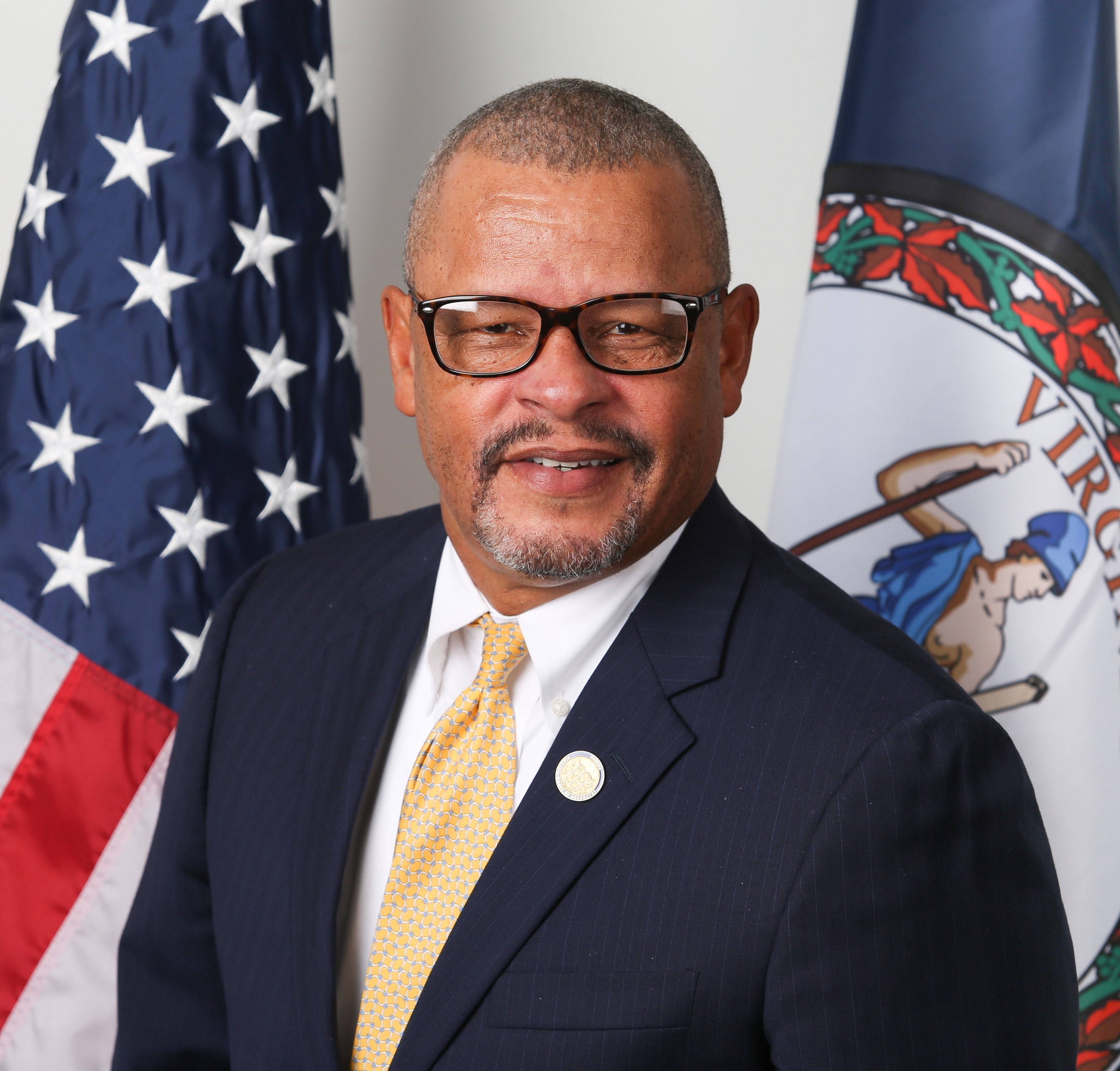
Del. Luke Torian
Sponsored bills
Presidential electors; National Popular Vote Compact. Enters Virginia into an interstate compact known as the Agreement Among the States to Elect the President by National Popular Vote. Article II of the Constitution of the United States gives the states exclusive and plenary authority to decide the manner of awarding their electoral votes. Under the compact, Virginia agrees to award its electoral votes to the presidential ticket that receives the most popular votes in all 50 states and the District of Columbia. The compact goes into effect when states cumulatively possessing a majority of the electoral votes have joined the compact. A state may withdraw from the compact; however, a withdrawal occurring within six months of the end of a President's term shall not become effective until a President or Vice President has qualified to serve the next term. This bill was incorporated into HB 177.
Right to reproductive choice. Provides thatevery individual has a fundamental right to choose or refuse contraceptionand that a pregnant person has a fundamental right to choose to carrya pregnancy to term, give birth to a child, or terminate a pregnancy.The bill states that the Commonwealth shall not, in the regulationor provision of benefits, facilities, services, or information, denyor interfere with an individual's fundamental rights, including individualsunder state control or supervision. The bill states that any stateor local official who is charged with violating provisions of thissection shall be subject to an action in federal or state court forinjunctive relief and damages. Such action may be brought by any person or entity that may be aggrieved by such official's actions.
Constitution of the United States; Equal RightsAmendment. Ratifies the Equal Rights Amendment to the Constitutionof the United States that was proposed by Congress in 1972. The jointresolution advocates the position that the 1972 Equal Rights Amendmentremains viable and may be ratified notwithstanding the expirationof the 10-year ratification period set out in the resolving clause,as amended, in the proposal adopted by Congress.
Commending the United States Women's NationalSoccer Team.
Salaries, contingent and incidental expenses.
Requires the owner or operator of any coal combustion residuals (CCR) unit, defined in the bill to include a coal ash pond or landfill, within the Chesapeake Bay watershed at Bremo Power Station, Chesapeake Energy Center, Chesterfield Power Station, and Possum Point Power Station to close such CCR unit by removing all of the CCR for (i) recycling, known as encapsulated beneficial use, or (ii) deposition in a permitted and lined landfill that meets certain federal standards. The measure requires that any owner or operator beneficially reuse no less than 6.8 million cubic yards in aggregate of such removed CCR from no fewer than two of the sites. Such a closure project shall be completed within 15 years of its initiation and shall be accompanied by an offer by the owner or operator to provide connection to a municipal water supply for every residence within one-half mile, or if such connection is not feasible, the owner or operator shall offer to provide water testing for any such residence.
Extends the benefits of the Virginia Military Survivors and Dependents Education Program to the spouse or child of a veteran with at least a 90 percent permanent, service-related disability. Under current law, the spouse or child would be eligible for benefits only if the veteran's disability was incurred during military operations against terrorism, on a peacekeeping mission, as a result of a terrorist act, or in any armed conflict. Under the provisions of the bill, eligibility for stipends from the Virginia Military Survivors and Dependents Education Fund is unchanged. This bill is identical to
Directs the Department of Medical Assistance Services (DMAS) to report annually by August 1 to the Governor and the Chairmen of the House Committee on Health, Welfare and Institutions and the Senate Committee on Education and Health regarding (i) the number of screenings for eligibility for community-based and institutional long-term care services conducted by DMAS or the public or private entity with which DMAS has entered into a contract to conduct such screenings and (ii) the number of cases in which DMAS or the public or private entity with which DMAS has entered into a contract to conduct such screenings fails to complete such screenings within 30 days.