Department of Corrections; Maternal MortalityReview Team; access to medical records. Directs the Departmentof Corrections to provide the Maternal Mortality Review Team withaccess to medical records of formerly incarcerated decedents fromall medical facilities operated or under contract to the Department.
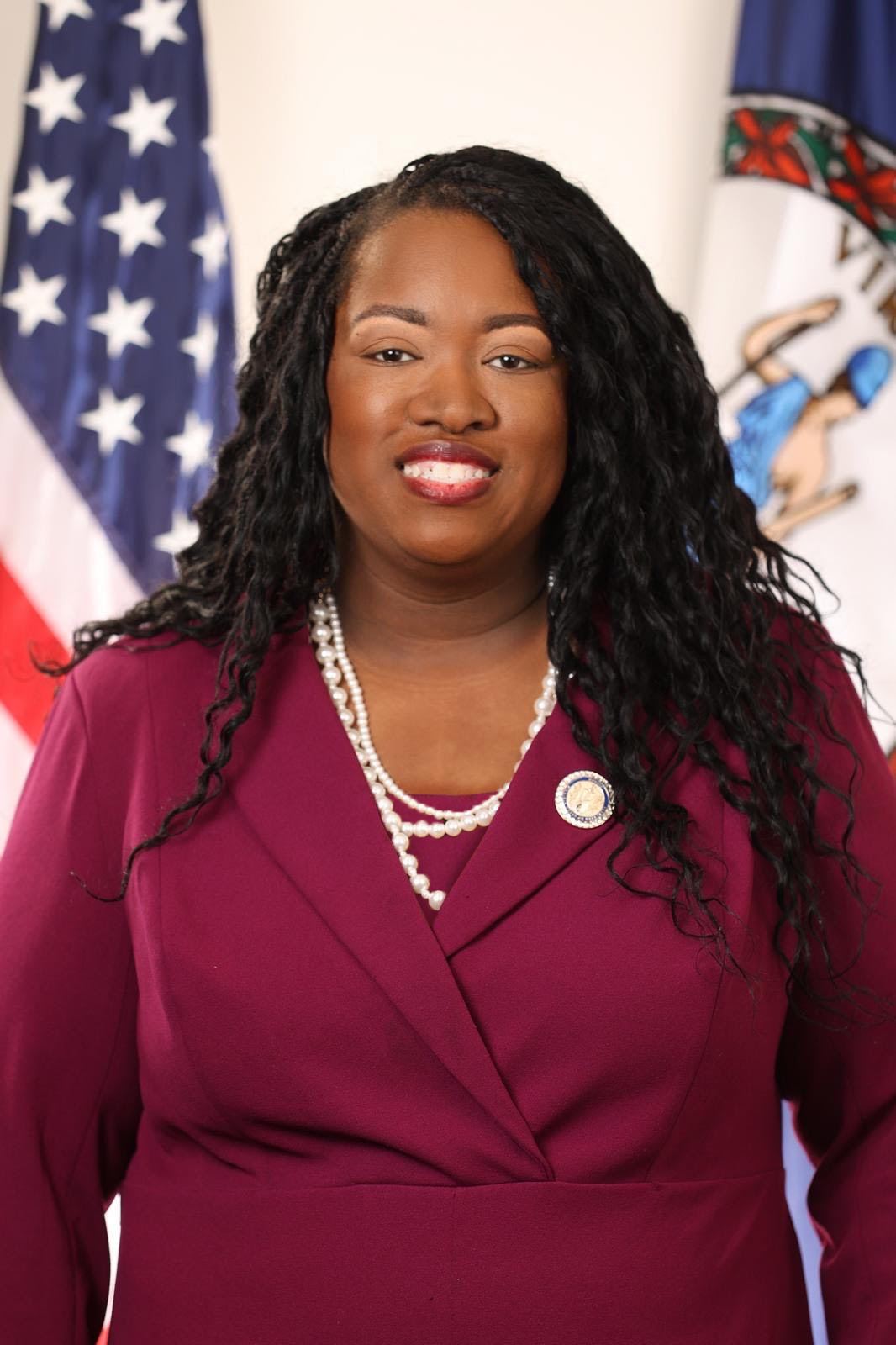
Del. Candi King
Sponsored bills
Board of Medicine; Board of Dentistry; Board of Optometry; Boards of Medicine and Nursing; patient counseling; treatment with opioids. Directs the Board of Medicine, the Board of Dentistry, the Board of Optometry, and the Boards of Medicine and Nursing to amend their regulations to require the provision of certain information to patients being prescribed an opioid for the treatment of acute or chronic pain. The bill requires that the regulations include an exception to the required provision of such information for patients who are (i) in active treatment for cancer, (ii) receiving hospice care from a licensed hospice or palliative care, (iii) residents of a long-term care facility, (iv) being prescribed an opioid in the course of treatment for substance abuse or opioid dependence, or (v) receiving treatment for sickle cell disease. The bill directs the Boards to adopt emergency regulations to implement the provisions of the bill.
Child labor offenses; civil penalties. Increasesfrom $10,000 to $25,000 the civil penalty for each violation of childlabor laws that results in the employment of a child who is seriouslyinjured or dies in the course of employment. The bill also increasesfrom $1,000 to $2,500 the maximum civil penalty for each other violationof child labor laws and provides that such civil penalty shall notbe less than $500. The bill directs the Department of Labor and Industry to convene a stakeholder work group to develop education and outreach plans to inform young workers and employers about child labor laws.
Department of Medical Assistance Services; annual review of medication and treatment for sickle cell disease; report. Directs the Department of Medical Assistance Services to conduct an annual review of all medications and forms of treatment for sickle cell disease, and services for enrollees with a diagnosis of sickle cell disease, that are eligible for coverage under the state plan for medical assistance services. The bill requires the Department to report its findings and recommendations by November 15 each year to the Chairmen of the House Committee of Health, Welfare and Institutions and the Senate Committee on Education and Health and to the Joint Commission on Health Care.
Adult wellness screening; sickle cell disease or sickle cell trait. Provides that every adult resident of the Commonwealth may be offered screening tests for sickle cell disease or the sickle cell trait and requires that the health care professional in charge of an adult's annual health examination provide education and appropriate counseling regarding the results of any such test that is performed.
Superintendent of Public Instruction; pandemicrecovery task force; report. Requires the Superintendent ofPublic Instruction to establish and appoint such members as he deems necessary or appropriate to a pandemic recovery task force (the taskforce) within the Department of Education, the purpose of which isto examine the negative impacts of the COVID-19 pandemic on publiceducation in the Commonwealth and to provide recommendations, guidance,and resources to each local school division in order to enable allenrolled students to thrive academically, socially, and emotionallyand to meet or exceed pre-pandemic levels on all relevant metricsof student achievement and well-being. The bill requires the taskforce to focus particularly on student learning loss, attendance,and mental health and on vulnerable populations of students and toannually submit a report of its findings and recommendations to theBoard, the Governor, the General Assembly, and each school boardno later than November 1.

Health insurance; coverage for colorectal cancer screening. Requires health insurers to provide coverage for examinations and laboratory tests related to colorectal cancer screening in accordance with the most recently published recommendations established by the U.S. Preventive Services Task Force for colorectal cancer screening for which a rating of A or B is in effect with respect to the individual involved. The bill requires such coverage to include coverage of a follow-up colonoscopy after a positive noninvasive stool-based screening test or direct visualization screening test. The bill prohibits such coverage from being subject to any deductible, coinsurance, or any other cost-sharing requirements for services received from participating providers. The provisions of the bill apply to individual or group accident and sickness insurance policies, individual or group accident and sickness subscription contracts, or health care plans delivered, issued for delivery, or renewed in the Commonwealth on and after January 1, 2025.
Early childhood care and education; child day programs; use of office buildings; waiver of zoning requirements. Permits any locality to by ordinance provide for the waiver of any requirements for zoning permits for the operation of a child day program in an office building, as defined by the bill, provided that such facility satisfies the requirements for state licensure as a child day program. This bill is identical to SB 13.
Center for Rural Virginia; name change. Renames the Center for Rural Virginia as the Senator Frank M. Ruff, Jr. Center for Rural Virginia. This bill is identical to SB 704.
Public high schools; research-based hazing prevention instruction. Requires the Board of Education to develop Standards of Learning and curriculum guidelines for research-based hazing prevention instruction to be provided as a part of physical or health education instruction provided to students in grade nine or 10. The bill requires such hazing prevention instruction to include age-appropriate, extensive, and current education about hazing, including (i) examples of hazing; (ii) the dangers of hazing, including the consequences of alcohol intoxication; and (iii) school policies and laws related to hazing, including criminal penalties and bystander intervention. The bill requires such research-based hazing prevention instruction to be offered in-person but requires each school board to provide options for virtual participation for any student who is enrolled in an online or virtual physical or health education program. Finally, the bill requires each school board to provide such research-based hazing prevention instruction beginning with the school year following the Board's adoption of revised Standards of Learning for physical and health education for grades nine and 10 incorporating such research-based hazing prevention instruction and directs the Board to, in the intermediary time, develop and post on its website guidance documents for the purpose of making such research-based hazing prevention instruction available to local school boards. This bill is identical to SB 379.