Maddy summaryThis is a ceremonial resolution (SJ 434), not a policy bill. It formally commends Dr. William Ferguson Reid for his service, with no legal effect or impact on any individuals or policies. The resolution passed both the Senate and House by voice vote in February 2025. As a symbolic gesture, it expresses legislative recognition but does not create any new requirements or change existing law.
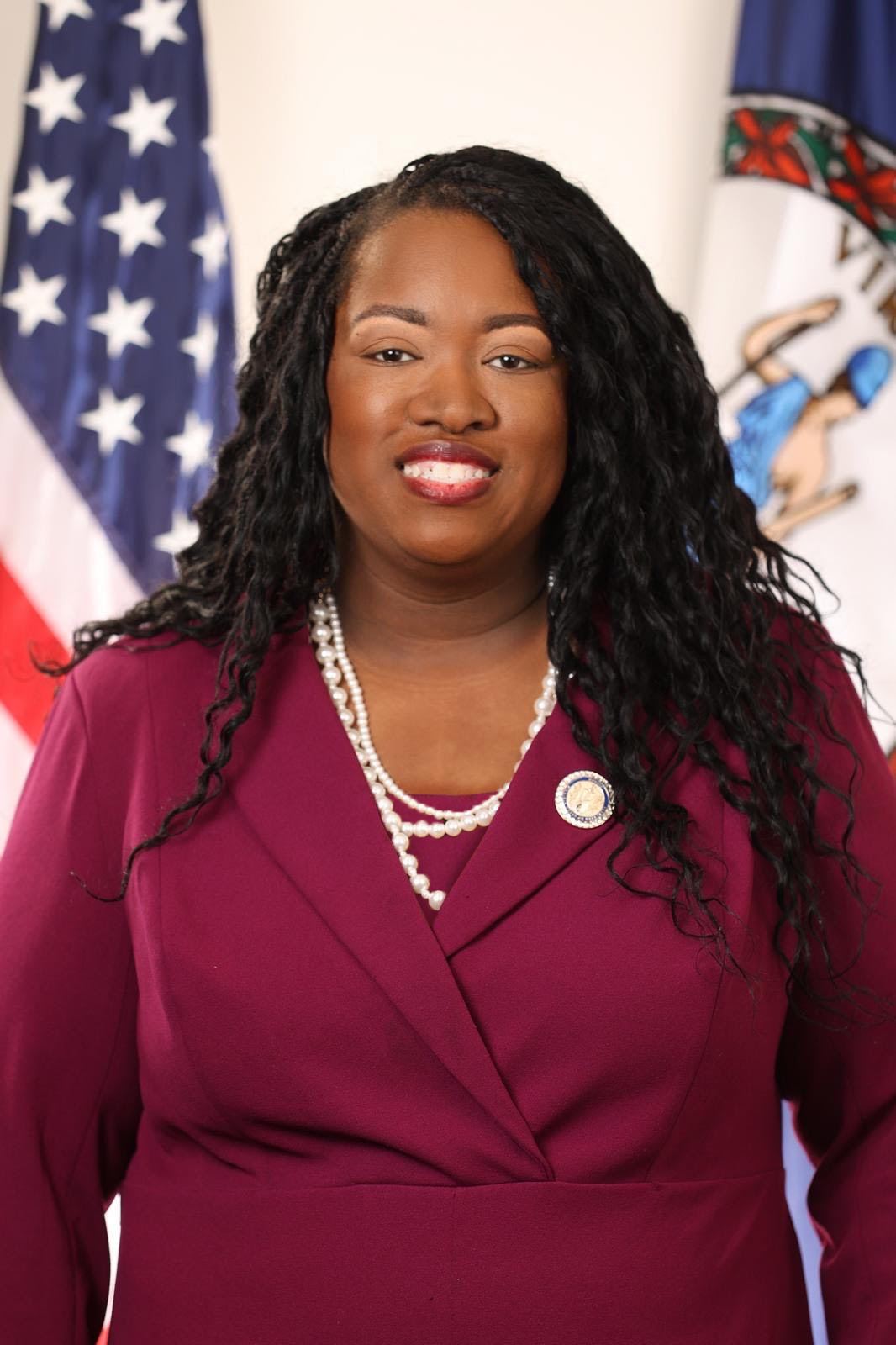
Del. Candi King
Sponsored bills
Maddy summaryThis resolution formally commends Linda Ford for her contributions. It passed unanimously in both the Senate and House via voice vote, with final passage recorded on February 19, 2025. As a ceremonial resolution, it does not create new laws or affect policies, funding, or regulations. It serves solely to recognize an individual's service.
Maddy summaryThis bill (SJ 371) is a ceremonial resolution commending Hoda Kotb, a well-known television host and co-anchor, for her contributions. It does not create any legal requirements or affect any individuals, organizations, or policies. The resolution simply expresses the legislature's appreciation through a formal statement. As a commemorative measure, it has no binding effect and passed unanimously in both chambers.
Local regulation of solar facilities; special exceptions. Provides that a ground-mounted solar energy generation facility to be located on property zoned agricultural, commercial, industrial, or institutional shall be permitted pursuant to various criteria to be included in a local ordinance, such as specifications for setbacks, fencing, solar panel height, visual impacts, and grading, and a decommissioning plan for solar energy equipment and facilities, unless otherwise permitted by right.
Department of Medical Assistance Services; presumptive eligibility for pregnant individuals; qualified entities; performance standards for qualified entities. Directs the Department of Medical Assistance Services to seek federal authority to implement presumptive eligibility for pregnant individuals, in addition to the existing hospital presumptive eligibility program and, if the Department receives such authority, allows the Department to authorize qualified entities to make determinations of presumptive eligibility for pregnant individuals. The bill directs qualified entities to provide (i) the necessary applications for medical assistance on the day in which the presumptive eligibility decision is made and (ii) assistance with completing such applications through available modalities. Under the bill, qualified entities are authorized to make determinations of presumptive eligibility for pregnant individuals who meet eligibility criteria for certain medical assistance programs and have not had a presumptive eligibility period during the current pregnancy. The bill also sets forth certain performance standards that qualified entities must meet to remain a qualified entity, described in the bill.
Department of Medical Assistance Services; sickle cell disease; feasibility of Medicaid benefit and Medicaid Health Homes; report. Directs the Department of Medical Assistance Services to determine the feasibility of participating in an optional Medicaid benefit for sickle cell disease and establishing Medicaid Health Homes to coordinate care and provide treatment for individuals with sickle cell disease. The bill requires the Department to report its findings in its annual review of sickle cell disease treatment and submit such review to the Chairmen of the House Committee on Health and Human Services and the Senate Committee on Education and Health and the Joint Commission on Health Care by November 15, 2025. This bill is a recommendation of the Joint Commission on Health Care.
Department of Education; Child Care Subsidy Program waiting list; additional priority group; target timeline for assigning slots to priority groups. Requires the Department of Education to amend its Child Care Subsidy Program Guidance Manual to add a seventh priority group to the Child Care Subsidy Program waiting list that consists of any family that meets all other Program eligibility criteria and includes a parent who is employed for at least 30 hours per week by a publicly funded child care provider in the Commonwealth that serves children from birth to age five, excluding employment by a local school division but including employment by a Head Start program that is located within a public school building. The bill also directs the Department of Education to require local departments of social services to target a maximum of 30 days for moving priority group families from the waiting list into services; regularly assess, in coordination with the Department of Social Services, the length of time it takes for priority groups to be assigned slots; and provide quarterly updates, beginning October 1, 2025, to the Commission on Early Childhood Care and Education on such timeline and any other barriers experienced by families in priority groups on the waiting list in accessing services.

Public schools; student discipline; Restorative Schools in Virginia Pilot Program; established. Establishes the Restorative Schools in Virginia Pilot Program (the Program), to be administered by the Department of Education (the Department), for the purpose of addressing school discipline issues and promoting evidence-based restorative practices, as that term is defined in the bill, in public schools in the Commonwealth by awarding grants to a school division in each superintendent's region in the Commonwealth to be used in developing and implementing a comprehensive plan to integrate evidence-based restorative practices in such school divisions in accordance with the provisions of the bill. The bill directs the Department to (i) develop the application process by which a school board may apply to receive funds pursuant to the Program; (ii) establish criteria for the selection and award of grants pursuant to the Program; and (iii) develop a process for evaluating the progress and performance of each school division selected to receive a grant pursuant to the Program in implementing such evidence-based restorative practices and satisfying the Program requirements set forth in the bill. The bill requires any such school division to (a) establish a learning collaborative for the purpose of developing a comprehensive plan for implementing evidence-based restorative practices in accordance with the provisions of the bill and (b) submit to the Department by July 1 of each year immediately following any year for which it receives a grant a report on its progress in implementing such evidence-based restorative practices for the preceding school year. The bill has a delayed effective date of July 1, 2026.
Speed safety cameras; placement and operation. Changes the terms "photo speed monitoring device" to "speed safety camera" and "high-risk intersection segment" to "high-risk speed corridor" in provisions related to vehicle speed violations. The bill authorizes localities to provide by ordinance for the placement and operation of a speed safety camera by the law-enforcement agency of such locality in certain locations. The bill authorizes any locality without its own law-enforcement agency to, by ordinance, authorize officers of the law-enforcement agency with jurisdiction within such locality to issue a summons and swear to or affirm a certificate for a vehicle speed violation. For any new speed safety camera placed, the bill provides for a warning by mail instead of a summons and no civil penalty for alleged vehicle speed violations within the first 30 days of such camera's operation. The bill makes various other changes to the requirements for the use of speed safety cameras, including changes related to signs indicating the use of such cameras; the use of funds collected from civil penalties; requirements for private vendors; the periodic review of the use of such cameras; the provision of information to the public related to the use and placement of such cameras; the creation of advisory groups; and consultation with certain entities prior to placement and operation of such cameras.
Employee Child Care Assistance Pilot Program. Establishes the Employee Child Care Assistance Pilot Program (the Program) to provide matching funds to employers in order to incentivize employers to contribute to the child care costs of their employees. The Program shall be administered by the Virginia Early Childhood Foundation (the Foundation). To participate in the Program, an employer shall agree to make child care contributions to the eligible mixed-delivery provider on behalf of the employee and shall provide any other information deemed necessary by the Foundation. To the extent funds are available, the Foundation shall issue a state match directly to such eligible mixed-delivery provider or to a third-party administrator. Program funds shall be awarded on a first-come, first-served basis; however, the Foundation is encouraged to prioritize awards to proposals involving contributions from small businesses. The bill requires the Virginia Early Childhood Foundation to provide an interim report to the General Assembly by September 1, 2026, and a summative report to the General Assembly by September 1, 2027, on the effectiveness and impact of the Program.