

Commending Valerie Braxton-Williams.
Commending Valerie Braxton-Williams.
In committee Feb 11, 2021
1 co-sponsor
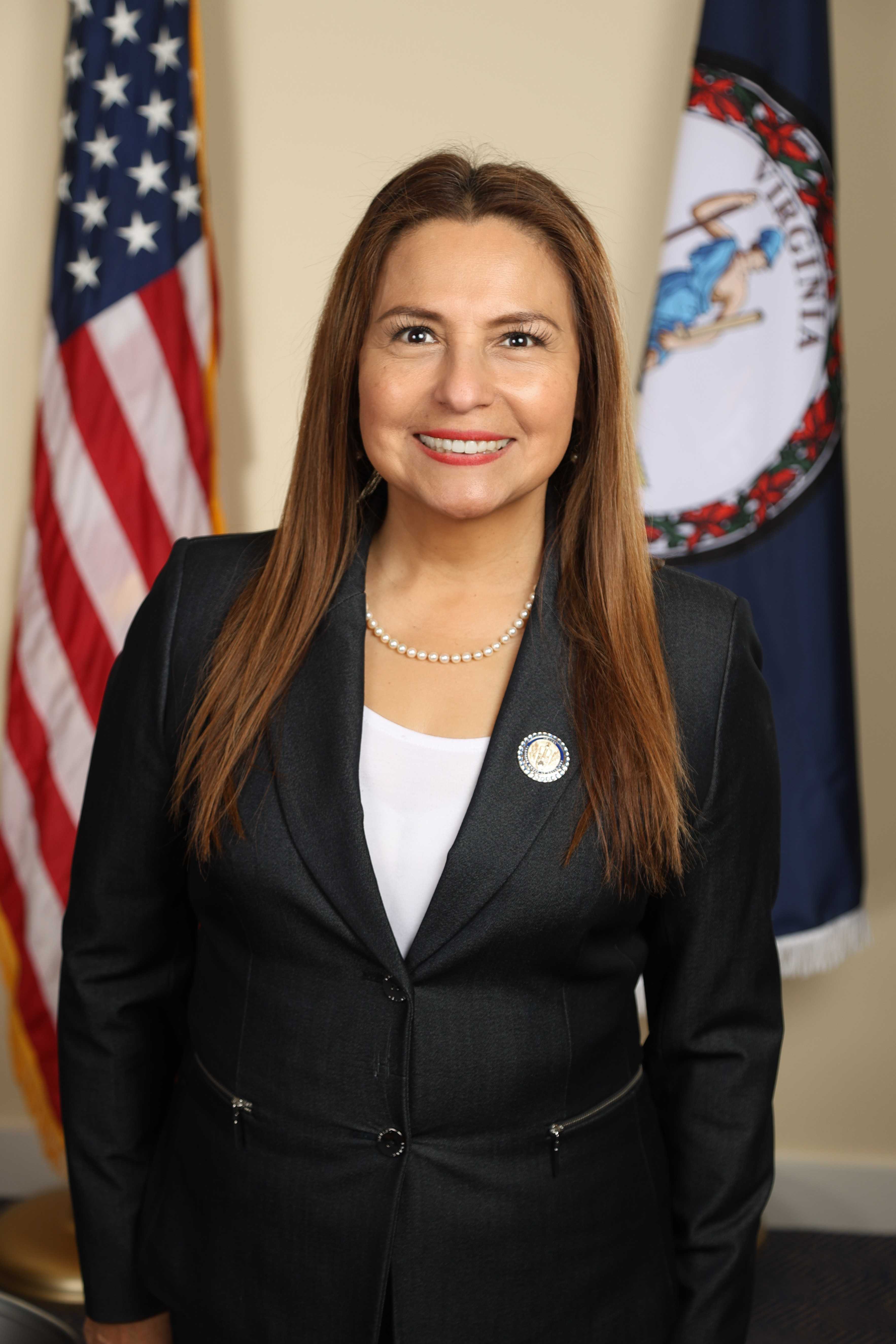
Commending Valerie Braxton-Williams.
Celebrating the life of Andrew D. Washington.
Commending the Virginia State Police.
Summons for unlawful detainer; notice; adverse employment actions prohibited. Requires any summons for unlawful detainer to include a notice to the tenant that it is unlawful for his employer to discharge him from employment or take any adverse personnel action against him for appearing at an initial or subsequent hearing on such summons, provided that he has given reasonable notice of such hearing to his employer.
Celebrating the life of the Honorable JerryM. Wood.
Celebrating the life of German Reyes.
Celebrating the life of the Honorable RobertS. Bloxom, Sr.
Study; efficacy of the Commonwealth's occupational licensing laws; construction trades; report. Establishesa joint subcommittee to (i) determine whether more requirements arenecessary to ensure all workers in relevant crafts are licensed,(ii) determine whether greater occupational licensing enforcementis necessary, (iii) determine whether the Commonwealth's occupationallicensing laws should apply to a broader scope of construction trades,and (iv) make recommendations for new laws or policies that wouldenhance the Commonwealth's occupational licensing regulations. Thejoint subcommittee is required to complete its meetings by November30, 2021, and to submit an executive summary of its findings andrecommendations no later than the first day of the 2022 Regular Sessionof the General Assembly.
Possession of controlled substances; penalties. Reduces the penalty for possession of a Schedule I or II controlled substance from a Class 5 felony to a Class 1 misdemeanor and the penalty for possession of a Schedule IV or V controlled substance from a Class 2 misdemeanor and a Class 3 misdemeanor, respectively, to a Class 4 misdemeanor. Consequently, the bill removes felony violations of possession of a controlled substance from the definition of barrier crime related to criminal history checks for eligibility for various types of employment, to volunteer or provide certain services, or to establish or operate certain types of regulated businesses. The bill also limits the previous convictions that make a person ineligible for disposition under the first offender statute to a previous conviction for possession of a controlled substance or manufacturing, selling, giving, distributing, or possessing with intent to manufacture, sell, give, or distribute a controlled substance or an imitation controlled substance. Under current law, a previous conviction for any drug-related criminal offense, or under any statute of the United States or of any state relating to narcotic drugs, marijuana, or stimulant, depressant, or hallucinogenic drugs makes a person ineligible for such disposition. The bill also amends the required conditions of probation under the first offender statute. The bill changes the penalty for an attempt to commit a felony drug offense from imprisonment for not less than one nor more than 10 years to a Class 6 felony and removes the felony offenses for a prisoner to secrete or have in his possession any chemical compound that he has not lawfully received, any Schedule III controlled substance, or marijuana. The bill makes secreting or possessing a controlled substance or marijuana by a prisoner punishable the same as possession of such controlled substances or marijuana by a person who is not in prison. Lastly, the bill provides that the definition of "controlled substance" for purposes of the Drug Control Act shall not include mere residue of any drug, substance, or immediate precursor in Schedules I through VI that is not a weighable quantity or a countable dosage unit. The bill contains technical amendments.
School Equity and Staffing Act; Standards of Quality; work-based learning; teacher leaders and mentors; principal mentors; certain personnel positions and initiatives. Makes several changes to the Standards of Quality, including requiring the establishment of units in the Department of Education to oversee work-based learning and principal mentorship statewide in Standard 1 and requiring the Board of Education to establish and oversee the local implementation of teacher leader and teacher mentor programs in Standard 5. The bill also makes several changes relating to school personnel in Standard 2, including (i) establishing schoolwide ratios of students to teachers in certain schools with high concentrations of poverty and granting flexibility to provide compensation adjustments to teachers in such schools; (ii) requiring each school board to assign licensed personnel in a manner that provides an equitable distribution of experienced, effective teachers and other personnel among all schools in the local school division; (iii) requiring each school board to employ teacher leaders and teacher mentors at specified student-to-position ratios; (iv) requiring state funding in addition to basic aid to support at-risk students and granting flexibility in the use of such funds by school boards; (v) lowering the ratio of English language learner students to teachers; (vi) requiring each school board to employ reading specialists and establishing a student-to-position ratio for such specialists; (vii) requiring school boards to employ one full-time principal in each elementary school; (viii) lowering the ratio of students to assistant principals and school counselors in elementary, middle, and high schools; and (ix) requiring each school board to provide at least four specialized student support positions, including school social workers, school psychologists, school nurses, licensed behavior analysts, licensed assistant behavior analysts, and other licensed health and behavioral positions, per 1,000 students.