

Abolition of fees; legal representation of indigent defendant; jury trial costs; report. Eliminates the fees for the cost of court-appointed counsel or public defender representation for persons who are determined to be indigent. The bill also eliminates fees for persons who utilize a jury trial. The bill contains a reenactment clause for such elimination of fees.The bill also directs the Indigent Defense Commission, in consultation with the Executive Secretary of the Supreme Court or his designee, to convene a work group with all relevant stakeholders, including the Attorney General or his designee, the Secretary of Health and Human Resources or his designee; representatives from the Compensation Board, the Virginia Crime Commission, the Virginia Joint Legislative Audit and Review Commission, the Virginia Court Clerk's Association, the Virginia Association of Commonwealth's Attorneys, staff from the House Appropriations and the Senate Finance and Appropriations Committees, and the Virginia Probation and Parole Association; and a minimum of two criminal justice reform organizations working on fees and other financial assessments imposed in criminal prosecutions in Virginia; on several topics, including current collection practices, use of funds received as a result of such collections, and the burden of a fee assessment on indigent individuals. The bill requires the work group to submit an executive summary and report of its findings and recommendations to the Governor and the General Assembly by November 1, 2026, and a final report by November 1, 2027.
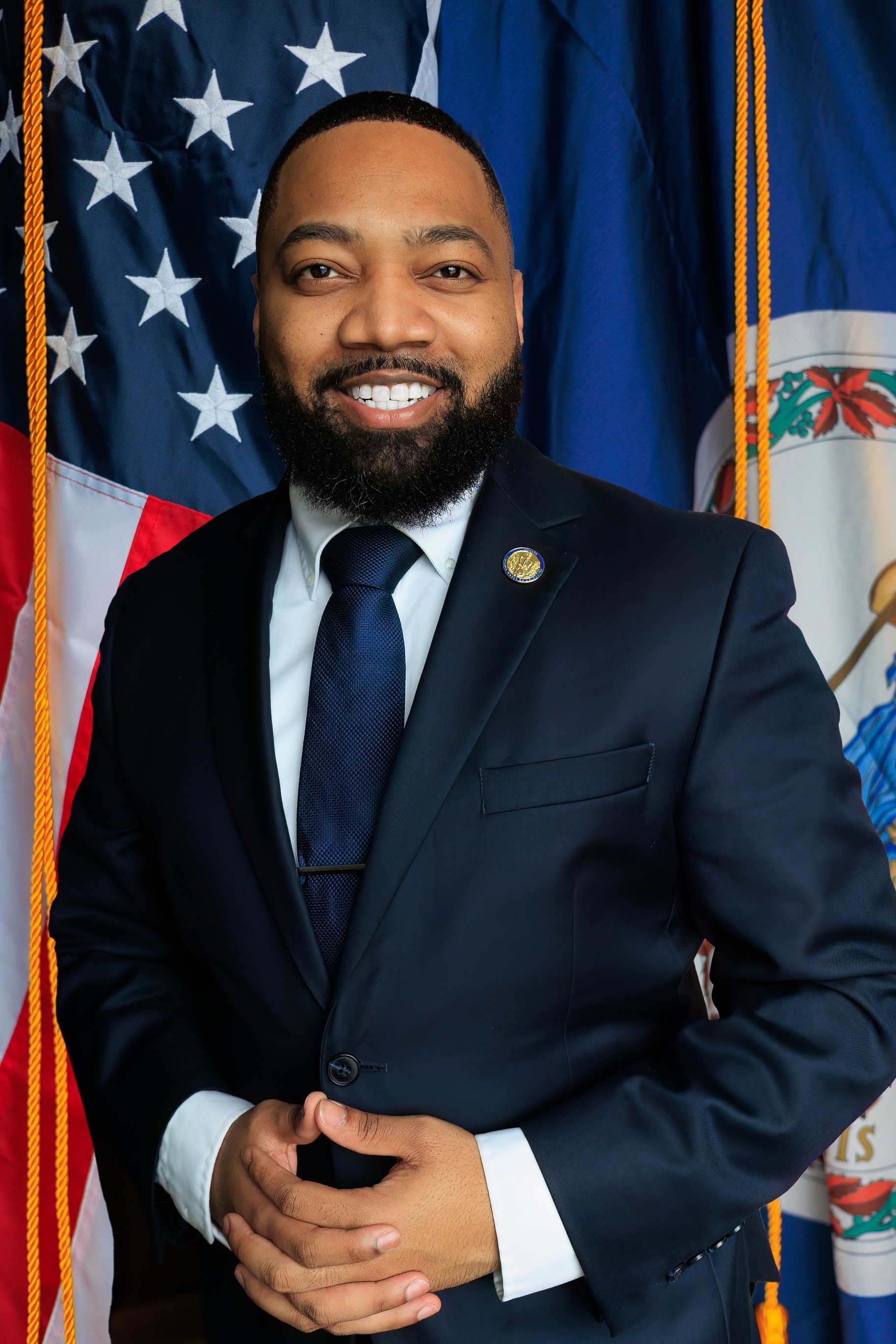
Del. J.R. Henson
Sponsored bills
Artificial Intelligence Chatbots Act established; prohibited practices; penalties. Creates the Artificial Intelligence Chatbots Act, which prohibits an operator from making a companion chatbot, as those terms are defined in the bill, available to a user in the Commonwealth unless the companion chatbot is incapable of certain actions specified in the bill. The bill also requires an operator of a companion chatbot to include a disclaimer to users of all ages that a companion chatbot is not a human via a static, persistent disclosure and notify a user via a pop-up that he is not engaging with a human counterpart at specified intervals. The bill makes it unlawful for any operator of a companion chatbot to operate or provide a companion chatbot to a user unless such companion chatbot contains a protocol to take reasonable efforts for detecting and addressing expressions of suicidal ideation or self-harm by a user to the companion chatbot. The bill also includes certain data privacy and transparency requirements. The bill provides that a violation of its provisions constitutes a prohibited practice under the Virginia Consumer Protection Act.
Recognition of the Wolf Creek Cherokee Tribe of Virginia. Extends state recognition to the Wolf Creek Cherokee Tribe of Virginia within the Commonwealth.
Voter registration; regular periodic review of registration records. Requires the Department of Elections to complete, not later than 90 days prior to the date of a primary or general election, any program the purpose of which is to systematically remove the names of ineligible voters from the voter registration system based on evidence of ineligibility, including evidence of lack of eligible residence or evidence of noncitizenship. This restriction is not to be construed to preclude (i) the removal of names from the voter registration system at the request of the registrant or as provided by existing law by reason of criminal conviction or mental incapacity or the death of the registrant if the triggering conviction, incapacity order, or death occurred within 120 days of the election or (ii) the correction of details, such as name and address, in a voter's registration record that does not result in the removal of a voter from the voter registration system. Under current law, such restriction only applies to federal primaries and federal general elections. The bill also provides a process for confirming a voter's citizenship status prior to cancellation based on a report of non-citizen status and extends (a) the period of time registrars have to cancel registrations from 30 days to 60 days after notification of the need to cancel by the Department of Elections and (b) the period of time a registered voter has to respond to a notice of cancellation related to citizenship status from 14 days to 28 days.
Military leaves of absence for employees of the Commonwealth or political subdivisions; law-enforcement officers. Provides that any person who is employed by the Commonwealth or a political subdivision of the Commonwealth as a law-enforcement officer shall receive paid leaves of absence for up to 388 hours for which a leave of absence is required, during which such person is engaged in federally funded military duty, to include training duty, or is called forth by the Governor for military duty.
Earned income tax credit. Removes the sunset from and makes permanent the increase in Virginia's refundable earned income tax credit from 15 percent to 20 percent of the allowable federal earned income tax credit. Under current law, the Virginia refundable earned income tax credit expires in taxable year 2027, and Virginia's nonrefundable earned income tax credit, which has no expiration date, is equal to 20 percent of the federal credit.
Maddy summaryThis bill formally commends Colonel James T. O'Kelley, a retired member of the U.S. Marine Corps Reserve, for his service. It is a ceremonial measure that does not create new laws, allocate funds, or change existing policies. The legislation simply expresses appreciation for his contributions to the military.
Maddy summaryThis bill formally recognizes the contributions of four women leaders within Caroline County Public Schools. It serves as a commendation resolution rather than establishing new laws or altering school policies. The measure was passed by the House of Representatives through a voice vote to honor these specific individuals.
Maddy summaryThis bill is a resolution of commendation that formally recognizes the National Black Caucus of State Legislators for its contributions to the legislative process. It does not create new laws, impose regulations, or affect any specific groups of people beyond honoring the organization. The primary mechanism is a symbolic gesture where the House of Representatives expresses its appreciation through a vote. As a procedural measure, it serves to acknowledge the caucus's work rather than to change existing policies.
Maddy summaryThis bill formally commends Reverend Dr. Raymond A. Bell for his contributions. It is a procedural measure that does not create new laws or affect public policy. The text simply expresses appreciation and was passed by the House of Representatives.