

Public school teachers; teacher compensation; Professionally Licensed Teacher Supplemental Pay Program established. Establishes the Professionally Licensed Teacher Supplemental Pay Program for the purpose of addressing shortages of professionally licensed teachers and reducing reliance on provisionally licensed teachers in public schools in the Commonwealth by providing, with such funds as are appropriated for such purpose, an annual supplemental payment to each professionally licensed teacher, as that term is defined by the bill, employed in any high-vacancy public school in the Commonwealth, defined by the bill as any public school that, based on the most recent data in the positions and exits collection, also defined by the bill, has a teacher vacancy rate that places it in the top 10 percent of public schools with the highest teacher vacancy rates in the Commonwealth. The bill directs the Department of Education to administer and oversee the Program and, in doing so, requires it to (i) identify and develop a list, and update such list every four years, of each high-vacancy public school in the Commonwealth; (ii) ensure that, each year, funds are disbursed in a timely manner and in an amount sufficient to provide the supplemental payment to each professionally licensed teacher employed in a high-vacancy public school in each school division; and (iii) annually submit to the Governor and publish on its website a report detailing the effect of the Program on recruitment and retention of professionally licensed teachers and the overall success of the Program in addressing teacher vacancy rates.
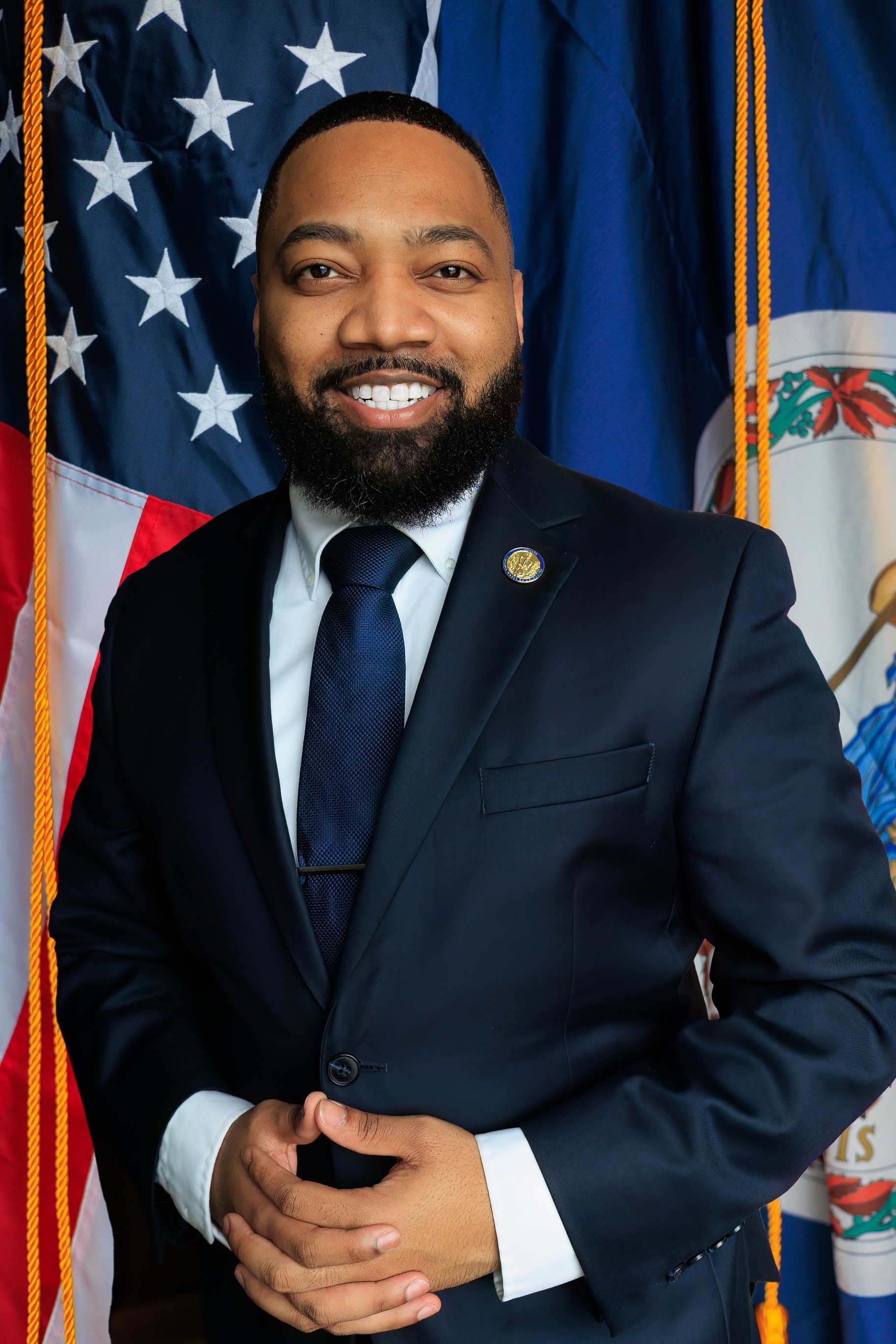
Del. J.R. Henson
Sponsored bills
Study; Department of Transportation; needs and capacity for expanded tractor-trailer parking near and along the I-66 and I-95 corridors; report. Requests the Department of Transportation to study the needs and capacity for expanded tractor-trailer parking near and along the I-66 and I-95 corridors.
Health insurance; coverage for speech therapy as a treatment for stuttering. Requires health insurance carriers whose health care plans include coverage for habilitative services and rehabilitative services, as such terms are defined in the bill, to provide coverage for habilitative speech therapy and rehabilitative speech therapy, as such terms are defined in the bill, as a treatment for stuttering. The bill provides that such coverage is not (i) subject to any maximum annual benefit limit, including any limits on the number of visits an insured may make to a speech-language pathologist; (ii) limited based on the type of disease, injury, disorder, or other medical condition that resulted in the stuttering; or (iii) subject to utilization review or utilization management requirements, including prior authorization or a determination that the habilitative or rehabilitative speech therapy services are medically necessary. The bill applies to health care plans delivered, issued for delivery, or renewed on and after January 1, 2027.
Law-enforcement officers; restrictions on wearing of facial coverings; exceptions; civil liability; penalty. Prohibits certain state and federal law-enforcement officers from wearing facial coverings, defined in the bill, while engaged in the performance of their official duties. The bill sets out several exceptions to such prohibition, including protective facial coverings to protect against disease, infection, and exposure to toxic substances and facial coverings worn by any law-enforcement officer assigned to a special weapons and tactics team while engaged in the performance of his official duties with such team. The bill subjects the law-enforcement officer to disciplinary action, including dismissal, demotion, suspension, transfer, or decertification, and creates a Class 1 misdemeanor for any law-enforcement officer who wears a facial covering in violation of the provisions of the bill unless the law-enforcement agency that employs such law-enforcement officer has adopted and established a written policy for and restrictions on the use of facial coverings. The bill also directs the Department of Criminal Justice Services to develop a model policy for and restrictions on the use of facial coverings by law-enforcement officers. Finally, the bill creates a civil cause of action for any person injured as a result of tortious conduct by a law-enforcement officer who knowingly and intentionally wears a facial covering in violation of the provisions of the bill. The bill provides that sovereign immunity shall not be a defense to civil liability for such tortious conduct.
Maddy summarySJ 83 is a ceremonial resolution commending the Greater Washington Society for Clinical Social Work for its contributions to mental health services in the region. It has no policy provisions or direct impact on laws, regulations, or constituents - its purpose is solely to express legislative recognition. The bill passed unanimously in both the Senate and House via voice vote in February 2026 and was sent to the Governor. As a non-binding resolution, it does not alter any existing laws or create new obligations. This type of bill is common for honoring organizations but has no practical effect beyond symbolic acknowledgment.
Elections; duties of the Department of Elections; Systematic Alien Verification for Entitlements Program (SAVE Program). Provides that the Department of Elections' use of the Systematic Alien Verification for Entitlements Program (SAVE Program) operated by U.S. Citizenship and Immigration Services of the U.S. Department of Homeland Security is for the sole purpose of individually verifying that voters listed in the Virginia voter registration system are United States citizens. The Department of Elections is prohibited from (i) using information received from the SAVE Program as the sole reason for rejecting a registration application, (ii) uploading lists of registered voters to the SAVE Program for verifying their citizenship status in bulk, or (iii) transferring any information to the U.S. Department of Homeland Security or any subdivision thereof beyond the minimum information necessary. This bill was incorporated into HB 972.
Virginia Health Care Fund; additional funding and uses; emergency. Expands allowable funding sources of the Virginia Health Care Fund to include appropriated state general fund moneys and moneys from public and private sources. The bill allows moneys from the Fund to be used for financial assistance to organizations and service providers that provide health care services, or expand the provision of health care services, to populations protected by the Virginia Human Rights Act. The bill contains an emergency clause.
Pesticides; manufacture, distribution, use, or sale of paraquat prohibited. Prohibits any person from manufacturing, distributing, using, or selling any pesticide containing paraquat, defined in the bill, as an active ingredient. The bill allows the Department of Agriculture and Consumer Services to seize any such pesticide containing paraquat on complaint to the circuit court in the area where the pesticide is located.
Earned income tax credit. Removes the sunset from and makes permanent the increase in Virginia's refundable earned income tax credit from 15 percent to 20 percent of the allowable federal earned income tax credit. Under current law, the Virginia refundable earned income tax credit expires in taxable year 2027, and Virginia's nonrefundable earned income tax credit, which has no expiration date, is equal to 20 percent of the federal credit.
Imposition of income tax. Establishes a new income tax bracket beginning in taxable year 2026, that taxes income in excess of $1 million at a rate of 10 percent. Currently, all income in excess of $17,000 is taxed at the rate of 5.75 percent. The bill provides that, from the additional revenue generated from such increased tax rate upon income in excess of $1 million, 50 percent will be dedicated to providing additional basic aid funding for public schools, 30 percent will be dedicated to the Child Care Subsidy Program, and 20 percent will be dedicated to the Virginia Housing Trust Fund. The bill contains technical amendments.