

Discovery; methods of delivery. Requires the Commonwealth, upon request by the accused or his counsel, to copy or photograph any discovery materials or evidence the accused is permitted to inspect and review, including relevant police reports, criminal records, dashboard camera footage, and body-worn camera footage, and requires the Commonwealth to provide copies to the accused or his counsel, subject to the redaction, restricted dissemination, and protective order provisions of the relevant Rules of the Supreme Court of Virginia and unless such material is prohibited from being distributed by law.The bill requires the attorney for the Commonwealth in any district court to provide to counsel of record for the accused, if requested, a copy of any relevant police report at least 10 days prior to the date the case is set for trial or preliminary hearing, and such report is subject to limitations on dissemination. The bill further provides that if such materials are provided to counsel of record for the accused in district court for a preliminary hearing, the circuit court shall order such counsel to provide discovery to the attorney for the Commonwealth subject to the relevant Rules of the Supreme Court of Virginia prior to trial in circuit court. Lastly, the bill provides that if at any time during the course of the proceedings it is brought to the attention of the court that the attorney for the Commonwealth has failed to comply with such provisions, the court may order the Commonwealth to permit discovery or inspection, grant a continuance, or prohibit the Commonwealth from introducing evidence not disclosed, or the court may enter such other order as it deems just under the circumstances.
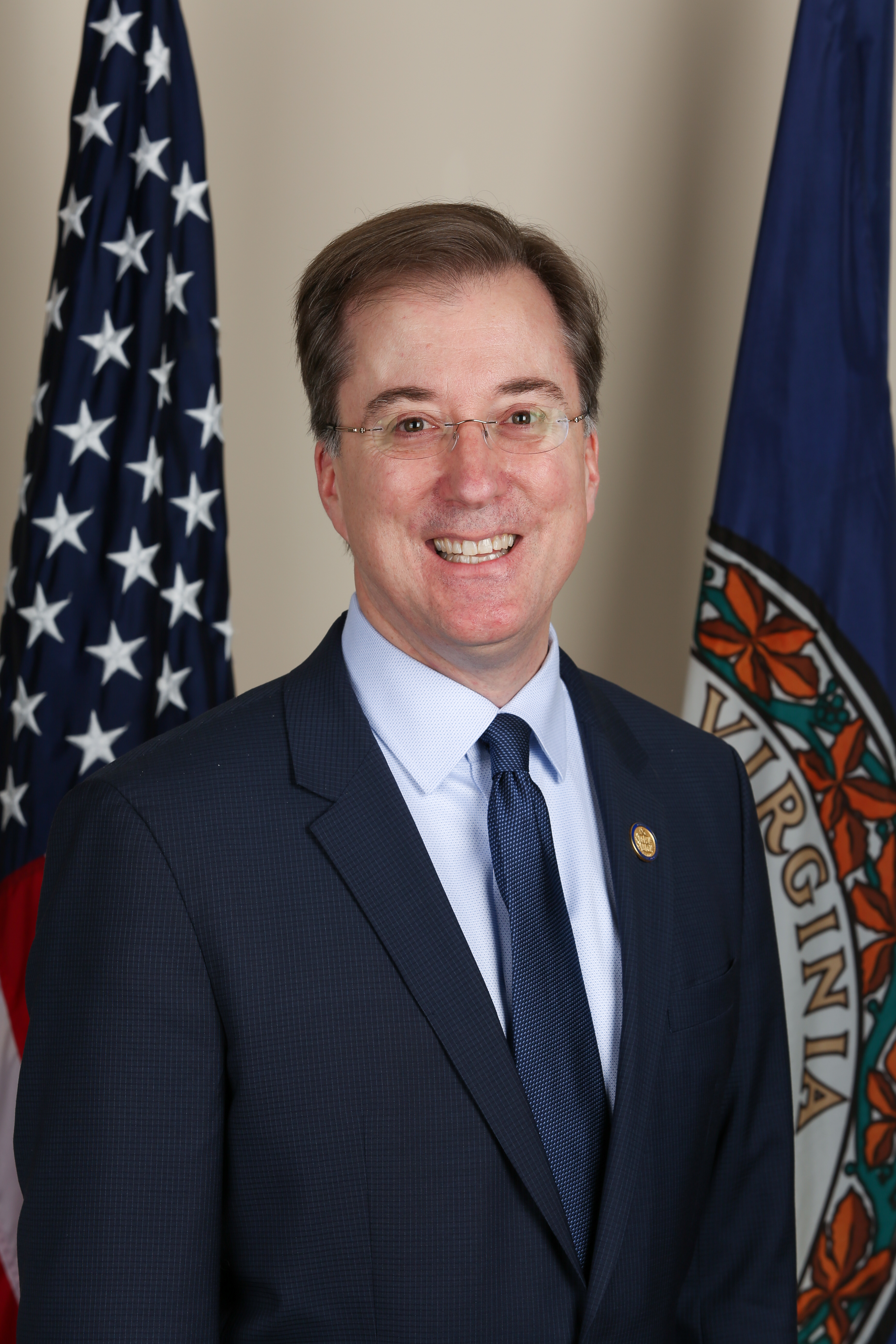
Del. Paul Krizek
Sponsored bills
Virginia National Guard; reports to the General Assembly; state militias; work group; report. Requires the Adjutant General to submit an annual report to the General Assembly detailing federal and state deployments of the Virginia National Guard and other matters relating to retention, readiness, funding, and resources. The bill prohibits the Governor from calling forth the Virginia National Guard for the purpose of intimidating, threatening, or coercing, or attempting to intimidate, threaten, or coerce, a person in giving his vote or ballot or to deter or prevent such person from voting. The bill additionally prohibits armed militia from another state, territory, or district from entering the Commonwealth for the purpose of active military duty over the objection of the Governor without meeting certain conditions. The bill allows certain members of the General Assembly to request that the Attorney General assess the legality of the deployment of the (i) National Guard of another state within the Commonwealth or (ii) Virginia National Guard. Finally, the bill directs the Secretary of Veterans and Defense Affairs to convene a work group to assess the most appropriate manner and process by which the Governor and members of the General Assembly should respond to deployments of the Virginia National Guard. This bill is identical to SB 337.
Elections; challenges to a voter or voter's registration. Eliminates the process by which any voter could challenge, in a polling place on the day of an election, the right of any other voter to cast a ballot. The bill also eliminates the process by which any three voters could challenge a voter's registration before the general registrar; such challenges may still be made by filing a petition with the circuit court of the county or city where the voter is registered.
Paid family and medical leave insurance program; notice requirements; civil action. Requires the Virginia Employment Commission to establish and administer a paid family and medical leave insurance program with benefits beginning April 1, 2028. Under the program, benefits are paid to covered individuals, as defined in the bill, for family and medical leave. Funding for the program is provided through premiums assessed to employers and employees beginning April 1, 2028. The bill provides that the amount of a benefit is 80 percent of the employee's average weekly net earnings, not to exceed 100 percent of the statewide average weekly net earnings, which amount is required to be adjusted annually to reflect changes in the statewide average weekly wage. The bill caps the duration of paid leave at 12 weeks in any application year and provides self-employed individuals the option of participating in the program. This bill is identical to SB 2.
Department of Education; culturally responsive and language-appropriate mental health support and services; guidance and policies. Requires, no later than October 1, 2027, the Department of Education to develop, adopt, and provide to each local school board guidance on the adoption of policies governing the provision of culturally responsive and language-appropriate mental health support and services for students in the local school division and permits any school board to develop and adopt policies in the local school division that are consistent with the guidelines adopted and provided by the Department of Education.
Commission on Federally Recognized Tribes; purpose; powers; sunset extended. Renames the Commission on Updating Virginia Law to Reflect Federal Recognition of Virginia Tribes as the Commission on Federally Recognized Tribes and expands its purpose. The bill extends the sunset of the Commission to July 1, 2027. As introduced, this bill was a recommendation of the Commission on Updating Virginia Law to Reflect Federal Recognition of Virginia Tribes.
Commissioner of Behavioral Health and Developmental Services; duties; Problem Gambling Treatment and Support Advisory Committee; appointment of members. Requires the Commissioner of Behavioral Health and Developmental Services to appoint two additional members of the Problem Gambling Treatment and Support Advisory Committee: an employee of the Department of Behavioral Health and Developmental Services who specializes in recovery and treatment services and a representative from the Virginia State Police Gaming Enforcement Unit.
Modification of sentence for marijuana-related offenses. Creates a process by which a person adjudicated delinquent or convicted of certain felony offenses involving, or violations of probation or community supervision related to, the possession, manufacture, selling, giving, distribution, transportation, or delivery of marijuana committed prior to July 1, 2021, who remains incarcerated or on probation or community supervision on July 1, 2026, may receive an automatic hearing to consider modification of such person's sentence. The bill sunsets on July 1, 2029. This bill is identical to SB 62.
Overtime for certain employees; domestic workers. Adds domestic workers, as defined in the bill, to provisions related to overtime pay. The bill has a delayed effective date of July 1, 2027. This bill is identical to SB 28.
Employment; paid sick leave; civil penalties; civil actions. Requires one hour of paid sick leave for every 30 hours worked for all employees of private employers and state and local governments, with certain exceptions. The bill requires that employees who are employed and compensated on a fee-for-service basis accrue paid sick leave in accordance with regulations adopted by the Commissioner of Labor and Industry. The bill provides that employees transferred to a separate division or location remain entitled to previously accrued paid sick leave and that employees retain their accrued paid sick leave under any successor employer. The bill allows employers to provide a more generous paid sick leave policy than prescribed by its provisions and specifies that employees, in addition to using paid sick leave for their physical or mental illness or to care for a family member, may use paid sick leave to seek or obtain certain services or to relocate or secure an existing home due to domestic abuse, sexual assault, or stalking. The bill requires the Commissioner to promulgate regulations for the implementation and enforcement of the bill's provisions by July 1, 2027.The bill authorizes the Commissioner, in the case of a knowing violation, to subject an employer to a civil penalty not to exceed $150 for the first violation, $300 for the second violation, and $500 for each successive violation. The Commissioner or Attorney General may commence administrative proceedings or bring a civil action to enforce the bill's provisions. Additionally, the bill authorizes an aggrieved employee to bring a civil action against the employer in which he may recover double the amount of any unpaid sick leave and the amount of any actual damages suffered as the result of the employer's violation. Certain provisions of the bill have a delayed effective date of July 1, 2027. This bill is identical to SB 199.