

Equity in public school funding; student need; English language learner, special education, and at-risk students. Places several parameters on Standards of Quality funding calculations performed by the Department of Education, including (i) requiring the Department, when calculating the cost of salaries under the Standards of Quality funding formula, to include facilities staff and transportation staff salaries in the calculation of any cost of competing adjustment to salaries for instructional and support positions that is provided as part of the state share of basic aid pursuant to the general appropriation act; (ii) requiring the Department, when estimating the cost of any compensation supplement for instructional and support positions under the Standards of Quality funding formula, to include and estimate the cost of such a compensation supplement for facilities staff; (iii) prohibiting the Department from applying any cap on inflation rate adjustments to non-personal cost categories during the biennial process of rebenchmarking the direct aid to public education budget; and (iv) requiring the Department to utilize a three-year average of the most recently available data to calculate the composite index of local ability-to-pay for each school division. The bill also amends Standard of Quality 2 by (a) including in the definition of "support services position" any central office clerical position that is not otherwise set forth in such definition, (b) requiring a per-pupil Standards of Quality funding add-on to be provided for English language learner and special education students, (c) requiring, in addition to the positions supported by basic aid, state funding, pursuant to the general appropriation act, to be provided to cover the actual average school division cost to educate children with disabilities, and (d) establishing the At-Risk Program, defined in the bill as any state funding provided for programs of prevention, intervention, or remediation or pursuant to the at-risk add-on for the purpose of supporting programs for students who are educationally at risk. The bill requires (1) the determination of the amount of state funding for which a school division is eligible pursuant to such At-Risk Program to be based on the school division's identified student percentage, defined in the bill as the fraction, expressed as a percentage, that results from dividing the number of identified students enrolled in a school division by the total number of students enrolled in such school division, weighted by the factor of 1.5, and then adjusted by the addition of a percentage that corrects for undercounting English language learner students as identified students and (2) such funding to be distributed as follows: 60 percent on a flat per-student rate and 40 percent on a variable rate set out in the general appropriation act based on the concentration of poverty in the school division. The bill is a recommendation of the Joint Legislative Audit and Review Commission.
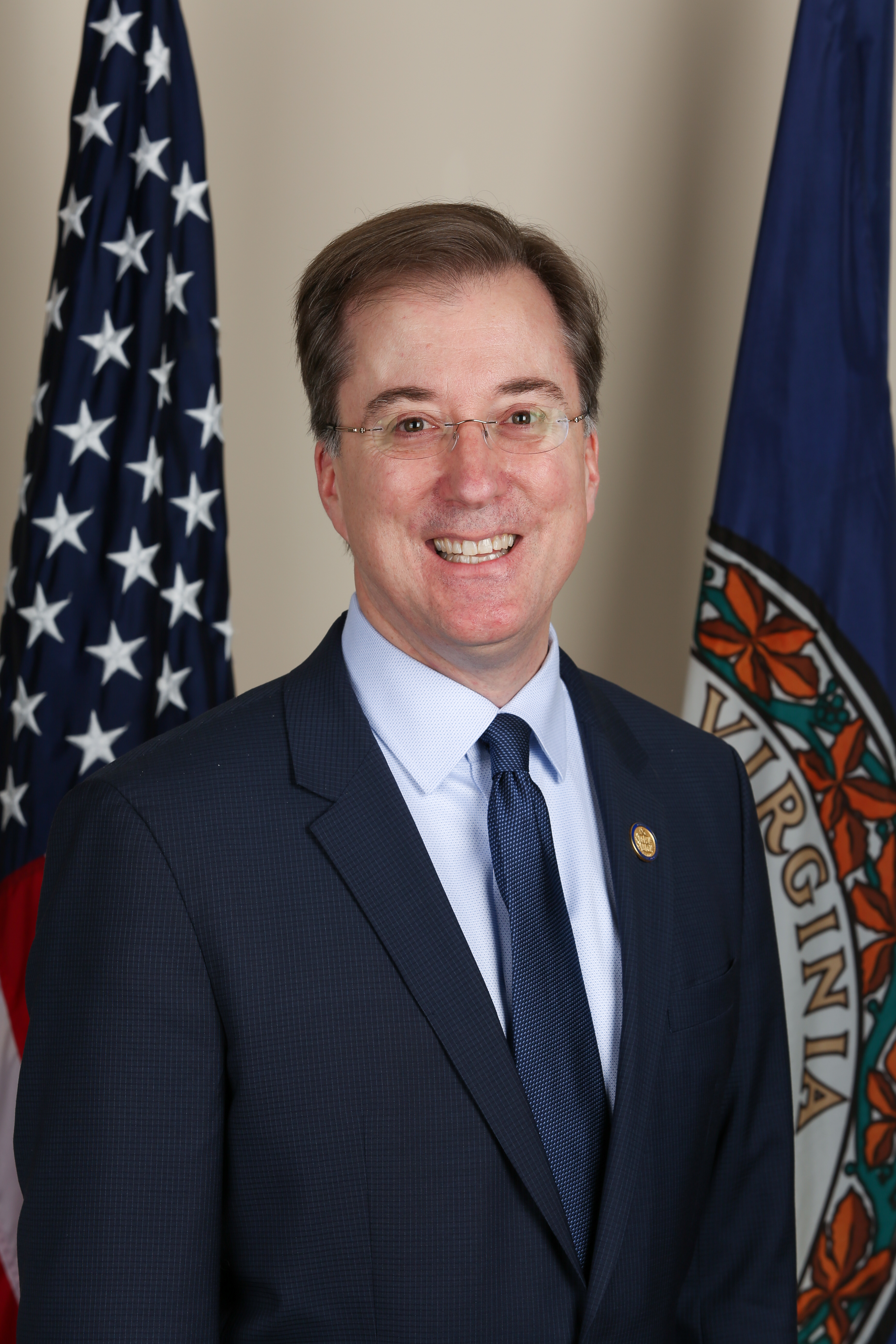
Del. Paul Krizek
Sponsored bills
Virginia Residential Landlord and Tenant Act; prohibited fees. Prohibits landlords subject to the Virginia Residential Landlord and Tenant Act from requiring a tenant to (i) pay any fee for the maintenance or repair of any unit subject to such rental agreement unless necessitated by the tenant's violation of a requirement of the Act or (ii) pay any fee to submit periodic rent payments or other amounts due, unless the landlord offers an alternative method of payment that does not include additional fees. This bill is identical to HB 993.
Consultation with federally recognized Tribal Nations in the Commonwealth; permits and reviews with potential impacts on environmental, cultural, and historic resources. Requires the Department of Conservation and Recreation, the Department of Environmental Quality, the Department of Historic Resources, and the Virginia Marine Resources Commission to establish policies and procedures for consulting with federally recognized Tribal Nations in the Commonwealth when evaluating certain permits and reviews relating to environmental, cultural, or historic resources that potentially impact those federally recognized Tribal Nations in the Commonwealth. The bill directs the Secretary of the Commonwealth to designate an Ombudsman for Tribal Consultation to facilitate communication and consultation with federally recognized Tribal Nations in the Commonwealth and requires the Ombudsman to develop by September 1, 2024, a list of localities in which federally recognized Tribal Nations in the Commonwealth shall be consulted to effectuate the provisions of the bill. The bill codifies Executive Order 82 (2021).
Electors for President and Vice President; bindingof electors; vacancies. Provides that an elector who is selectedby the state convention of any political party and who, at the conveningof the electors after the election, refuses to present a ballot,presents an unmarked ballot, or presents a ballot marked in violationof his oath stating that he would, if elected, cast his ballot forthe candidates for President and Vice President nominated by theparty that selected the elector, or as the party may direct in theevent of the death, withdrawal, or disqualification of the party nominee,is deemed to vacate the office of elector. The bill provides thatthe other electors present shall immediately fill such vacancy inthe same manner as a vacancy due to an elector's death or failureor inability to attend. The bill applies the same provisions to electorswho are named in a petition of qualified voters not constitutinga political party. The bill contains technical amendments that consolidateinto a single chapter the provisions of Title 24.2 relating to presidentialelectors.
Manufactured Home Lot Rental Act; manufactured home park; notice of sale and relocation expenses. Requires a manufactured home park owner to provide notice to the Department of Housing and Community Development and each manufactured home park tenant 90 days prior to unconditionally accepting an offer to purchase a manufactured home park. The bill permits an entity of tenants to negotiate for purchase of the manufactured home park. The bill also requires the manufactured home park owner provide notice to the locality in which the manufactured home park is located if the locality delivers a proposed purchase agreement with substantially similar terms and conditions as the entity of tenants to the manufactured home park owner. The bill provides an additional 60-day period for an entity to obtain financing for the purchase of a manufactured home park. The bill requires that its provisions be liberally construed to preserve affordable housing and expand the opportunities for owners of manufactured homes to purchase a manufactured home park. The bill provides for $5,000 in relocation expenses for a manufactured home owner if a rental agreement is terminated due to the sale of the manufactured home park to a buyer that is going to redevelop the park and change its use. The provisions of the bill do not become effective unless reenacted by the 2025 Session of the General Assembly.
Certain transportation entities; membership. Requires, rather than permits, the four members of the Northern Virginia Transportation Commission, the two members of the Potomac and Rappahannock Transportation Commission, and the two members of the Northern Virginia Transportation Authority who are appointed by the Speaker of the House of Delegates to be members of the House of Delegates. This bill incorporates HB 1173 and HB 1175.
Annual retail sales and use tax holiday. Establishes an annual retail sales and use tax holiday that takes place on the first full weekend in August beginning on July 1, 2025, through July 1, 2030. During such weekend, state retail sales and use tax will not apply to certain (i) school supplies, (ii) clothing and footwear, (iii) qualified products designated as Energy Star or WaterSense, (iv) portable generators, or (v) hurricane preparedness equipment. This bill is identical to SB 116.
Barrier crimes; adult substance abuse and mental health services; exception. Permits the Department of Behavioral Health and Developmental Services, providers of substance abuse or mental health services to adults, and community services boards and behavioral health authorities to hire applicants convicted of certain barrier crimes of misdemeanor assault and battery or involving controlled substances provided that such conviction occurred more than four years prior to the application date for employment. This bill is identical to SB 626.
Conservation of trees during land developmentprocess in certain localities. Expands authority of certain localitiesto adopt an ordinance providing for the planting and replacementof trees during the development process by allowing a tree canopyfund that currently applies to the planting of trees on public propertyto include maintenance of trees on public property and planting andmaintenance of trees on private property. The bill removes a provisionthat requires that any funds collected for the purposes of the tree canopy fund be returned to the original contributor if not spentwithin five years but maintains the requirement that such finds be spent within five years. The bill also includes an expansion ofthe canopy credit and a provision that will require a local treeconservation ordinance to meet the standards set out in the statute.
Prescription drugs; labels; blind and disabledusers. Requires pharmacies to notify any person receiving a prescription drug that an accessible prescription label is availableupon request at no cost and to provide to individuals who are blind,visually impaired, or otherwise print disabled accessible prescriptionlabels that meet specified accessibility requirements. The bill requiresthe Board of Pharmacy to promulgate regulations implementing theprovisions of the bill no later than April 1, 2025.