

Law-enforcement officers; restrictions on wearing of facial coverings; exceptions; civil liability; penalty. Prohibits certain state and federal law-enforcement officers from wearing facial coverings, defined in the bill, while engaged in the performance of their official duties. The bill sets out several exceptions to such prohibition, including protective facial coverings to protect against disease, infection, and exposure to toxic substances and facial coverings worn by any law-enforcement officer assigned to a special weapons and tactics team while engaged in the performance of his official duties with such team. The bill subjects the law-enforcement officer to disciplinary action, including dismissal, demotion, suspension, transfer, or decertification, and creates a Class 1 misdemeanor for any law-enforcement officer who wears a facial covering in violation of the provisions of the bill unless the law-enforcement agency that employs such law-enforcement officer has adopted and established a written policy for and restrictions on the use of facial coverings. The bill also directs the Department of Criminal Justice Services to develop a model policy for and restrictions on the use of facial coverings by law-enforcement officers. Finally, the bill creates a civil cause of action for any person injured as a result of tortious conduct by a law-enforcement officer who knowingly and intentionally wears a facial covering in violation of the provisions of the bill. The bill provides that sovereign immunity shall not be a defense to civil liability for such tortious conduct.
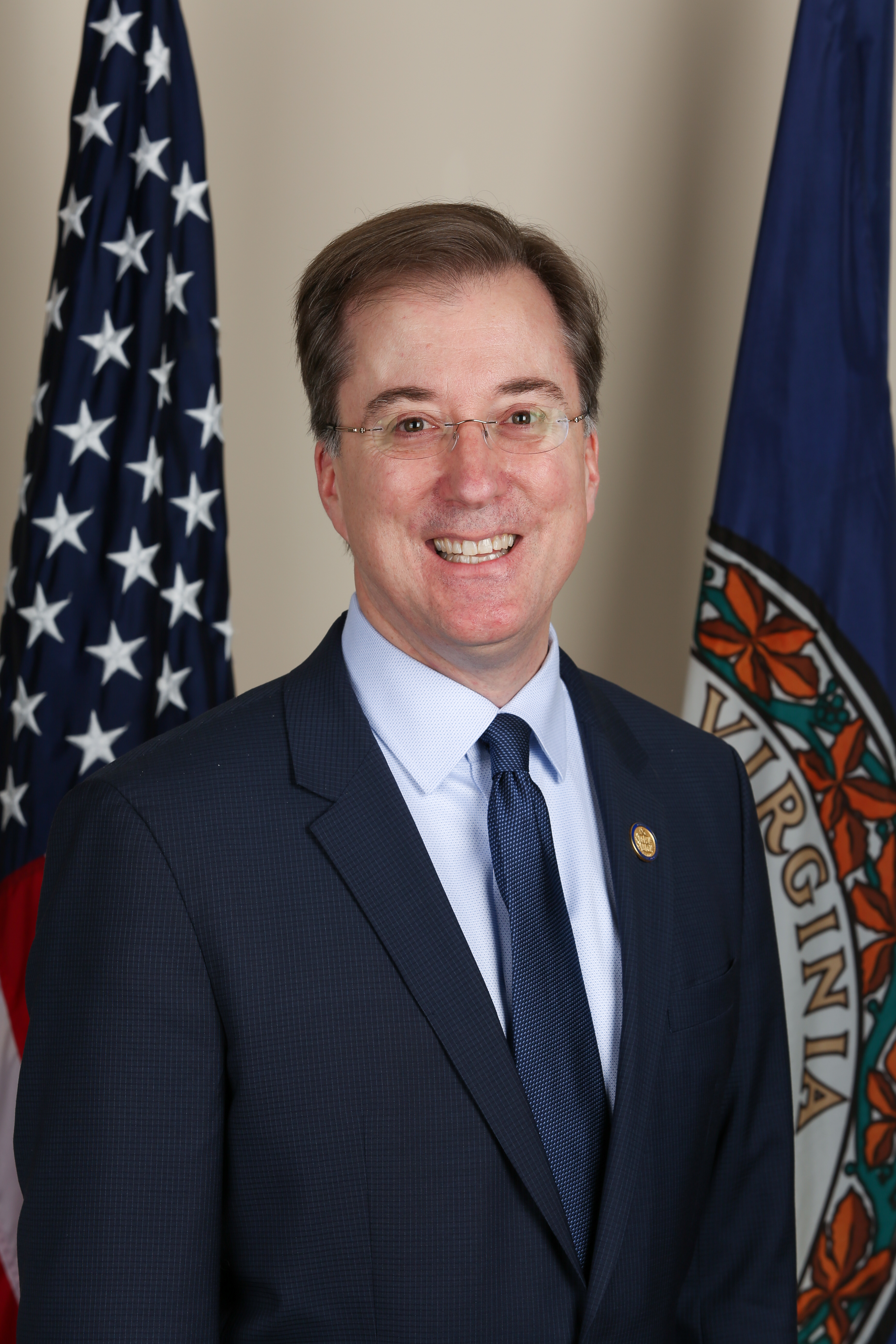
Del. Paul Krizek
Sponsored bills
Maddy summarySJ 83 is a ceremonial resolution commending the Greater Washington Society for Clinical Social Work for its contributions to mental health services in the region. It has no policy provisions or direct impact on laws, regulations, or constituents - its purpose is solely to express legislative recognition. The bill passed unanimously in both the Senate and House via voice vote in February 2026 and was sent to the Governor. As a non-binding resolution, it does not alter any existing laws or create new obligations. This type of bill is common for honoring organizations but has no practical effect beyond symbolic acknowledgment.
Maddy summarySJ 97 is a ceremonial resolution commending the Fairfax Bar Association for its contributions to the legal community and public service. It does not create new laws or affect any individuals or policies, as it is purely a symbolic gesture of recognition. The resolution passed unanimously in both the Senate and House via voice vote in February 2026. This type of bill typically honors an organization without implementing concrete policy changes.
Maddy summarySJ 90 is a ceremonial resolution commending Penney S. Azcarate for her service, with no policy or legal impact. It does not create new laws, alter regulations, or affect any individuals or groups. The bill serves solely as a symbolic gesture of recognition, passing unanimously in both chambers as a formal honor.
Virginia Public Procurement Act; additional public works contract requirements. Provides that public bodies shall require the contractor and its subcontractors for any capital outlay project, as defined in the bill, to complete certain safety training programs, maintain records of compliance with applicable laws, and participate in approved apprenticeship training programs. The bill provides exemptions from such requirements for reasons related to lack of availability of apprentices and high costs. The provisions of the bill do not apply to transportation-related construction projects. The bill has a delayed effective date of July 1, 2027.
Department of Medical Assistance Services; consultation with federally recognized tribes. Establishes a Tribal Medicaid Advisory Group to work collaboratively on (i) plan amendments, waiver requests, and policies affecting tribal health programs at least 60 days prior to submitting them for public notice and comment and (ii) a tribal health program billing manual. The advisory group is required to meet in person on at least a quarterly basis. The bill also requires the Department of Medical Assistance Services to (a) recognize the eligibility of any tribal health program to participate as a provider in the state plan, (b) consult with any tribal health program participating in the state plan at least 60 days prior to taking any adverse action, including suspension of payments or investigation regarding the participation of any tribal health program in the state plan, and (c) engage in ongoing consultation with federally recognized tribes and tribal health programs to address the needs of the state and tribal governments. This bill is a recommendation of the Commission on Updating Virginia Law to Reflect Federal Recognition of Virginia Tribes.
Occoquan Reservoir; low-flow protections for drinking water safe yield. Requires any Virginia Pollutant Discharge Elimination System Permit issued after July 1, 2026, authorizing the diversion of sewage or reclaimed water from a publicly owned treatment works for reuse that would otherwise discharge into the Occoquan Reservoir, the Occoquan River, Bull Run, or any of their tributaries above the Occoquan Reservoir to incorporate certain low-flow protection requirements for drinking water safe yield if the total diversion amount allowed by the permit exceeds 500,000 gallons per day. The bill also prohibits the issuance of any Virginia Water Protection Permit after July 1, 2026, authorizing the withdrawal of water for consumptive uses from the Occoquan Reservoir, the Occoquan River, Bull Run, or any of their tributaries above the Occoquan Reservoir for any purpose other than agricultural or irrigation purposes or for continued operation, expansion, or relocation of existing public water supply withdrawals.
Virginia's Great Outdoors Act established; data center land conservation tax; land preservation distributions and appropriations. Creates a data center land preservation tax on and after January 1, 2027, in an amount equal to $3 per square foot of each data center facility footprint, as defined in the bill, and directs no less than $250 million of revenues from the tax to be distributed for various land protection and preservation purposes, including into the Virginia Tribal Commitment Fund, as created in the bill. The bill also repeals provisions requiring the Governor to include in the budget bill or in his amendments to the general appropriation act a recommended appropriation from the general fund, up to $20 million, for land preservation as follows: (i) 80 percent of the unissued credits to the Virginia Land Conservation Fund, of which at least 50 percent must be used for acquisitions with public access; (ii) 10 percent to the Virginia Battlefield Preservation Fund; and (iii) 10 percent to the Virginia Farmland and Forestland Preservation Fund.
Earned income tax credit. Removes the sunset from and makes permanent the increase in Virginia's refundable earned income tax credit from 15 percent to 20 percent of the allowable federal earned income tax credit. Under current law, the Virginia refundable earned income tax credit expires in taxable year 2027, and Virginia's nonrefundable earned income tax credit, which has no expiration date, is equal to 20 percent of the federal credit.
Uniform Statewide Building Code; amendments; energy efficiency and conservation. Requires the Board of Housing and Community Development to adopt amendments to the Uniform Statewide Building Code within 18 months of publication of a new version of the International Code Council's International Energy Conservation Code (IECC) to incorporate the latest IECC standards related to energy efficiency and conservation. The bill requires the Board to adopt Building Code standards that are at least as stringent as those contained in the new version of the IECC.