

Facilitate the administration of the COVID-19 vaccine; emergency. Facilitates the administration of the COVID-19 vaccine. The bill requires the Department of Health (the Department) to establish a program to enable eligible health care providers to volunteer to administer the COVID-19 vaccine to residents of the Commonwealth during a state of emergency related to the COVID-19 pandemic declared by the Governor. The bill defines "eligible health care provider" and provides that the program shall include (i) a process by which an eligible health care provider may register to participate in the program and (ii) the training requirements for participating eligible health care providers related to the administration of the COVID-19 vaccine, including training on the intramuscular injection of the COVID-19 vaccine and contraindications and side effects of the COVID-19 vaccine. The bill specifies requirements that the Department shall ensure that each site at which COVID-19 vaccinations are administered by eligible health care providers satisfies. The bill also requires the Department to establish a process by which entities, including medical care facilities, hospitals, hospital systems, corporations, businesses, pharmacies, public and private institutions of higher education, localities, and any other professional or community entity operating in the Commonwealth, may volunteer their facilities as sites at which the COVID-19 vaccine may be administered to residents of the Commonwealth. The bill permits a public institution of higher education or a private institution of higher education in the Commonwealth to volunteer to provide assistance to the Department and local health departments for data processing, analytics, and program development related to the COVID-19 vaccine through the use of its employees, students, technology, and facilities. The bill also permits localities with fire departments, emergency medical services departments, and volunteer rescue squads to establish and staff vaccine administration clinics. The bill provides civil and criminal immunity to individuals and professional entities acting pursuant to the bill and contains an emergency clause. This bill is identical to SB 1445.
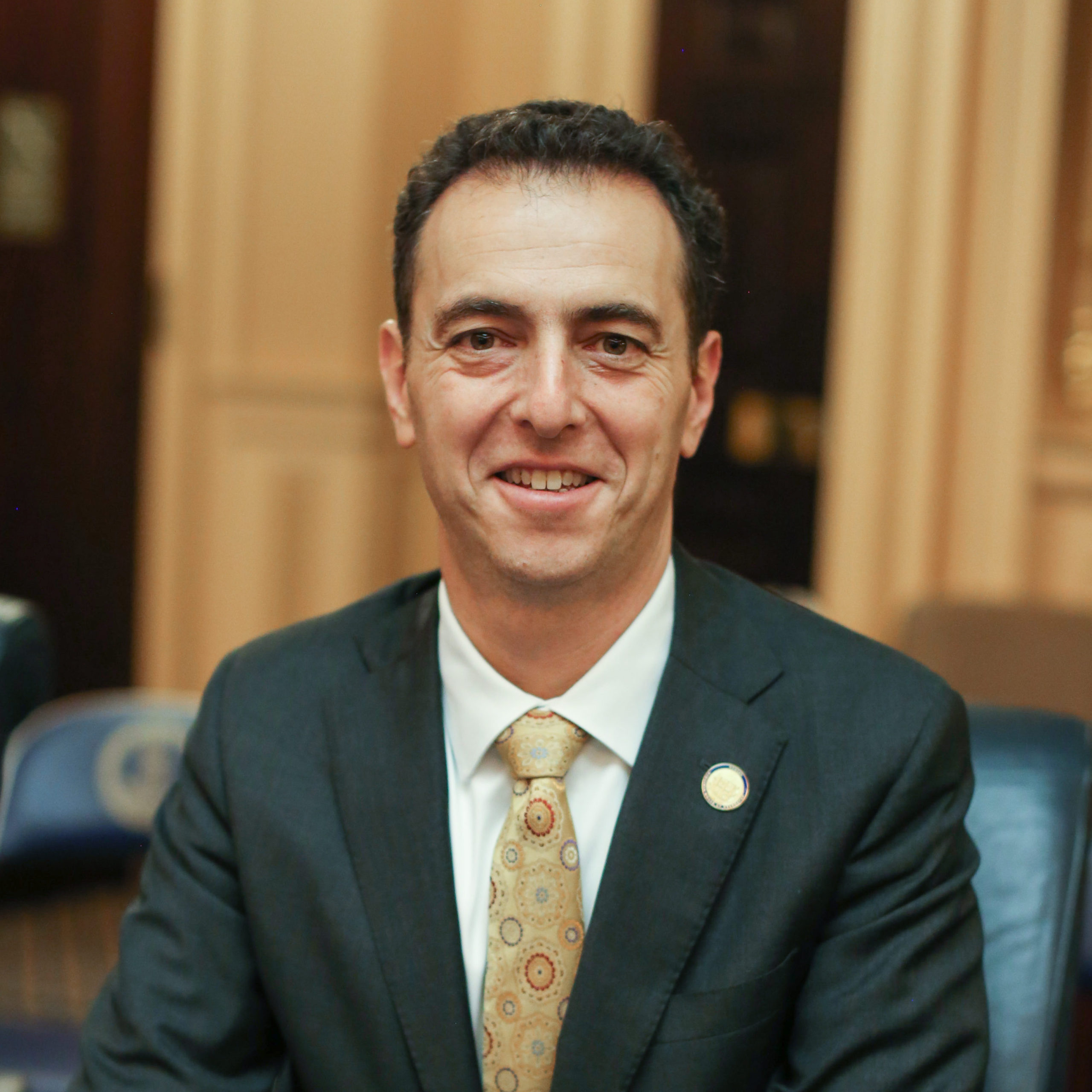
Del. Marcus Simon
Sponsored bills
Celebrating the life of Katherine BridgforthHooker.
Commending Danny TK Avula, M.D.
Celebrating the life of Thomas Henry Francis.
Commending Sharon Stark.
Commending Edwin C. Roessler, Jr.
Study: joint subcommittee to study recurrentinland and urban flooding across the Commonwealth; report. Establishesa two-year joint subcommittee, consisting of eight legislative membersand five nonlegislative citizen members, to study the developmentof a comprehensive and coordinated planning effort to address recurrentflooding in inland and urban areas across the Commonwealth. The joint subcommittee shall complete its work by November 30, 2022, and submitits findings and recommendations by the first day of the 2023 Sessionof the General Assembly.
Study; efficacy of the Commonwealth's occupational licensing laws; construction trades; report. Establishesa joint subcommittee to (i) determine whether more requirements arenecessary to ensure all workers in relevant crafts are licensed,(ii) determine whether greater occupational licensing enforcementis necessary, (iii) determine whether the Commonwealth's occupationallicensing laws should apply to a broader scope of construction trades,and (iv) make recommendations for new laws or policies that wouldenhance the Commonwealth's occupational licensing regulations. Thejoint subcommittee is required to complete its meetings by November30, 2021, and to submit an executive summary of its findings andrecommendations no later than the first day of the 2022 Regular Sessionof the General Assembly.
Alcoholic beverage control; local outdoor refreshment areas. Defines "outdoor refreshment area" and permits the governing body of any locality in the Commonwealth to designate, by ordinance, up to three outdoor refreshment areas within such locality. The bill provides that such ordinance would permit the consumption of alcoholic beverages within the outdoor refreshment area, provided that such alcoholic beverages are purchased from a permanent retail on-premises licensee located within such designated area and are contained in disposable containers with a maximum capacity of no more than 16 fluid ounces that clearly display the selling licensee's name or logo. The bill requires the locality, prior to adopting such an ordinance, to create a public safety plan for each outdoor refreshment area. This bill was incorporated into HB 2266.
Creation of Office of the Department of Corrections Ombudsman. Creates the Office of the Department of Corrections Ombudsman (the Office). The bill enumerates the duties and powers of the Office, which include (i) providing information, as appropriate, to inmates, family members, representatives of inmates, Department of Corrections employees and contractors, and others regarding the rights of inmates; (ii) monitoring conditions of confinement and assessing compliance with applicable federal, state, and local rules, regulations, policies, and best practices as related to the health, safety, welfare, and rehabilitation of inmates; (iii) providing technical assistance to support inmate participation in self-advocacy; (iv) providing technical assistance to local governments in the creation of correctional facility oversight bodies, as requested; (v) establishing a statewide uniform reporting system to collect and analyze data related to complaints received by the Department and data related to (a) deaths, suicides, and suicide attempts in custody; (b) physical and sexual assaults in custody; (c) the number of inmates placed in solitary confinement; (d) the number of facility lockdowns lasting longer than 24 hours; (e) the number of staff vacancies at each facility; (f) the inmate-to-staff ratios at each facility; (g) staff tenure and turnover; and (h) the number of in-person visits to inmates that were made and denied at each facility; (vi) establishing procedures to gather stakeholder input into the Office's activities and priorities, which must include, at a minimum, an annual 30-day period for receipt of and Office response to public comment; (vii) inspecting each state correctional facility at least once every three years and at least once every year for any maximum security facility and any facility where the Office has found cause for more frequent inspection or monitoring; and (viii) issuing publicly periodic facility inspection reports and an annual report with recommendations on the state correctional facilities and a summary of data and recommendations arising from any complaints investigated and resolved. The bill also establishes a Corrections Oversight Committee, which is responsible for selecting the Department of Corrections Ombudsman. The bill additionally outlines the Office's authority to conduct inspections of each Department or Board facility and requires the submission of an annual report to the Governor, the Attorney General, the Senate Committee on the Judiciary, the House Committee for Courts of Justice, and the Director of the Department. The bill also provides for the authority of the Office to conduct investigations of complaints made by inmates, family members or friends, and advocates.