

In committee Feb 13, 2018
1 co-sponsor
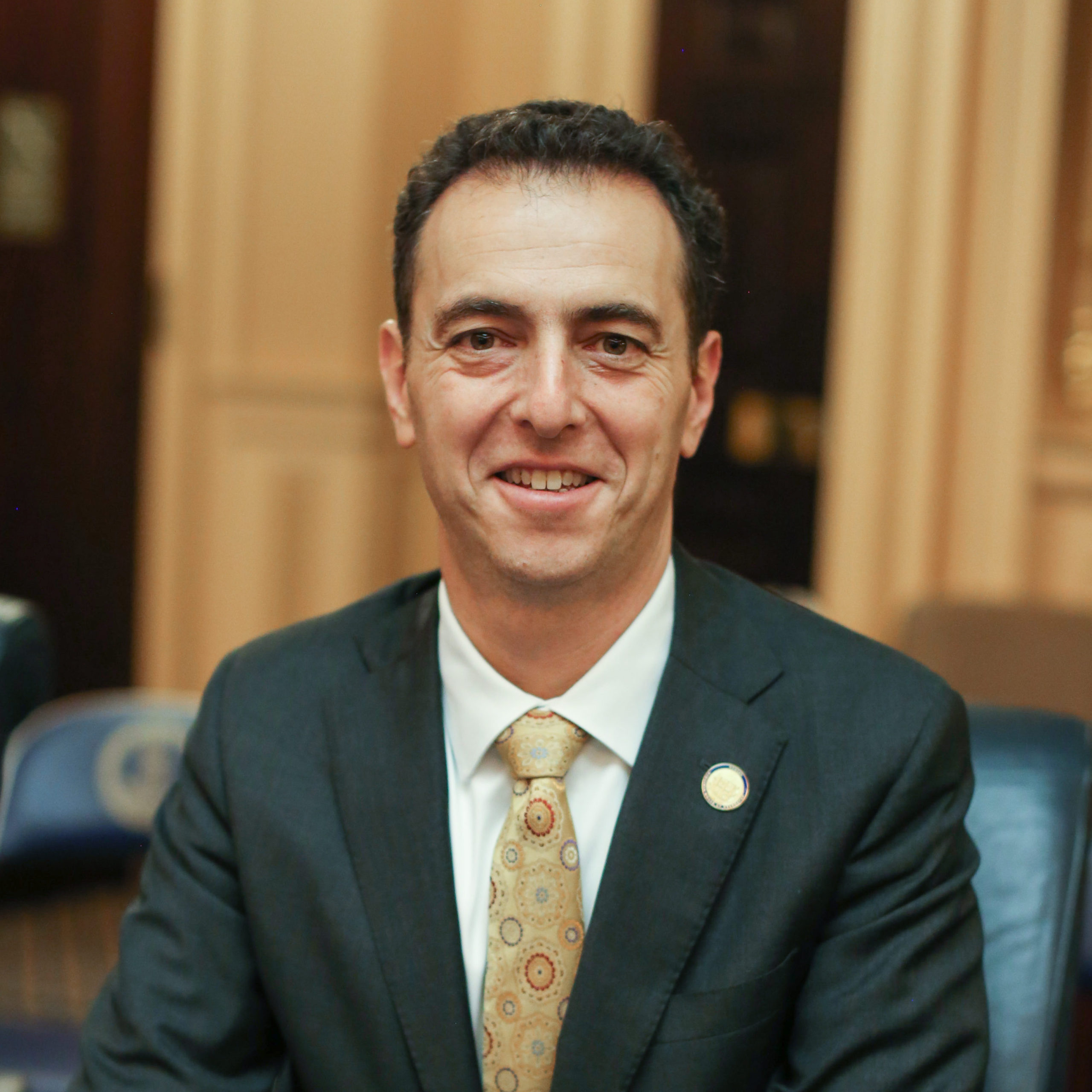
D
Virginia House of Delegates
·
District 13
Del. Marcus Simon
Total votes
14,137
all sessions
Attendance
100%
38 missed
Near the chamber average
With party
97%
of cast votes
Near the chamber average
Bipartisan score
1%
crosses aisle rarely
Near the chamber average
Sponsored
1,721
bills & resolutions
Near the chamber average
Committees
4
assignments
1,721 bills and resolutions
Sponsored bills
Total
1,721
Primary
324
Co-sponsor
1,397
This page
1,721
matching current filters
In committee Feb 13, 2018
1 co-sponsor
In committee Feb 13, 2018
1 co-sponsor
In committee Feb 13, 2018
1 co-sponsor
In committee Feb 13, 2018
1 co-sponsor
In committee Feb 13, 2018
1 co-sponsor
Qualified education loan servicers; person must obtain license from State Corporation Commission.
Prohibits any person from acting as a qualified education loan servicer without first obtaining a license from the State Corporation Commission (SCC) and establishes procedures pertaining to such licenses. Banks, credit unions, and nonprofit institutions of higher education are exempt from the licensing provisions. The servicing of a qualified education loan encompasses (i) receiving any scheduled periodic payments from a qualified education loan borrower pursuant to the terms of a qualified education loan; (ii) applying the payments of principal and interest and such other payments, with respect to the amounts received from a qualified education loan borrower, as may be required pursuant to the terms of a qualified education loan; and (iii) performing other administrative services with respect to a qualified education loan. Qualified education loan servicers are prohibited from, among other things, (a) misrepresenting the amount, nature, or terms of any fee or payment due or claimed to be due on a qualified education loan, the terms and conditions of the loan agreement, or the borrower's obligations under the loan; (b) knowingly misapplying or recklessly applying loan payments to the outstanding balance of a qualified education loan; and (c) failing to report both the favorable and unfavorable payment history of the borrower to a nationally recognized consumer credit bureau at least annually if the loan servicer regularly reports information to such a credit bureau. Violations are subject to a civil penalty not exceeding $2,500. The bill has a delayed effective date of January 1, 2019, but provides that applications shall be accepted, and investigations commenced, by the SCC beginning October 1, 2018.
In committee Feb 13, 2018
0 co-sponsors
In committee Feb 13, 2018
1 co-sponsor
Virginia Public School Improvement Program; created, report.
Creates the Virginia Public School Improvement Program to offer maximum educational options and flexibility for parents, teachers, and students. The bill authorizes any local school board to designate or approve any public school within its school division to participate in the Program if (i) a majority of parents and teachers of students at the school have petitioned the school board to participate in the Program, (ii) it does not meet the requirements to be fully accredited, or (iii) the school's pass rates for English and mathematics are below the division-wide average. Local school boards would continue to receive state basic school aid funding for participating schools, and participating schools would be exempt from certain school division policies and state regulations but would have to meet Standards of Quality, Standards of Learning, Standards of Accreditation, and certain federal requirements. Participation in the Program can be rescinded (a) by petition of a majority of parents and teachers, (b) if the school makes application to operate as a charter school, (c) if the school violates the stipulated contract with the local school board, or (d) if students at a participating school fail to achieve satisfactory academic progress each year for two consecutive school years. The bill requires the Board of Education to establish guidelines to assist school boards in implementing the Program in the school division and provide technical assistance to school boards upon request.
In committee Feb 13, 2018
1 co-sponsor
In committee Feb 13, 2018
1 co-sponsor
Ask Maddy
·
AI policy assistant
Ask Maddy about Marcus Simon
Scope: virginia
Hi! I can help you understand Marcus Simon's legislative record. What would you like to know?
Try one of these
i
Maddy answers using official bill text and legislative records. Always verify before sharing.
Sources cited inline