Board of Behavioral Health and Developmental Services; regulations; service providers; emergency medical simulations; cardiopulmonary resuscitation. Directs the Board of Behavioral Health and Developmental Services to adopt regulations requiring certain providers to (i) conduct regular emergency medical simulations and train employees that regularly engage with people receiving services to prepare such employees to recognize and respond to situations where individuals receiving services require emergency medical treatment and (ii) require at least one employee trained in cardiopulmonary resuscitation to be on duty at each location where services are delivered.
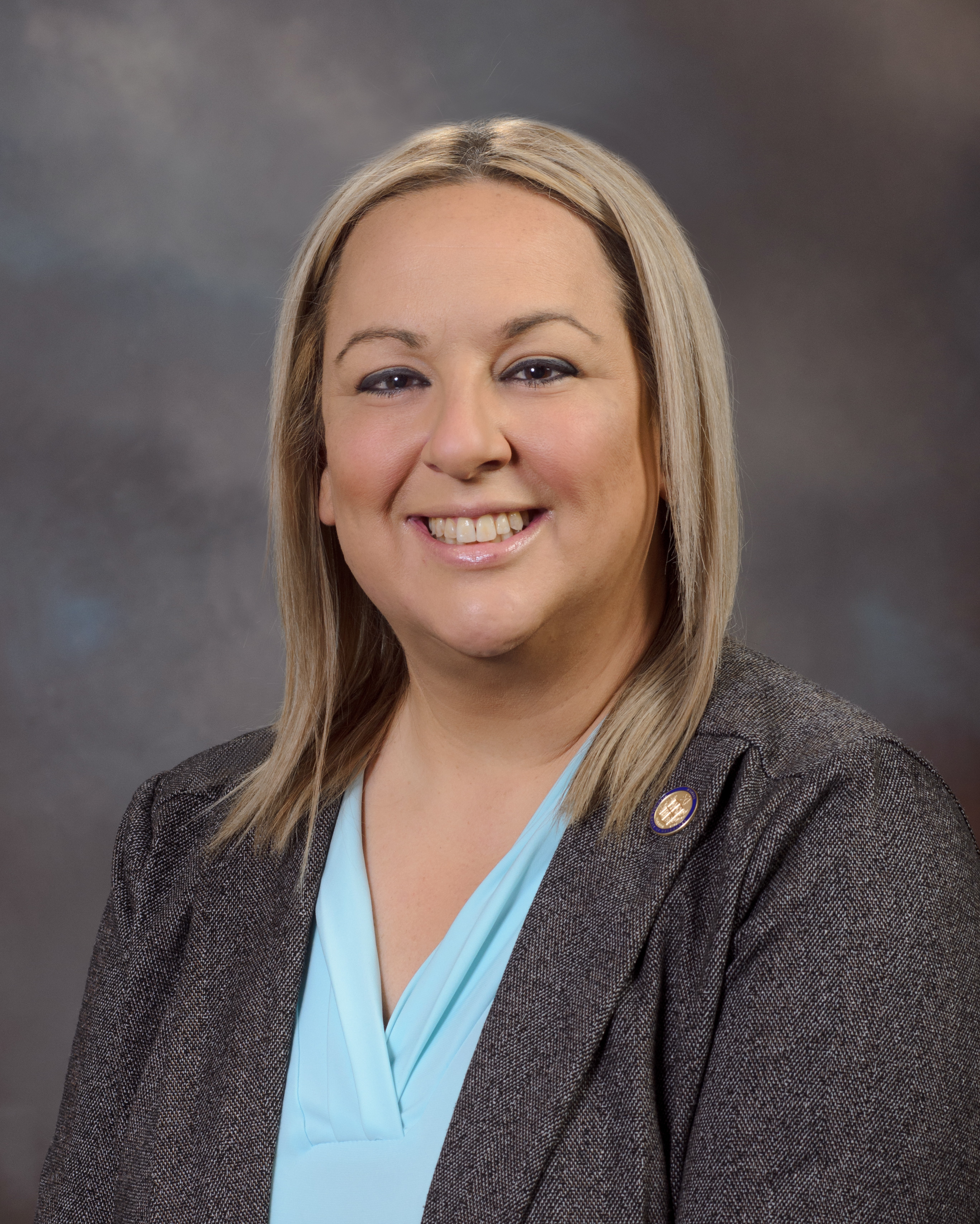
Del. Holly Seibold
Sponsored bills
Collective bargaining by public employees; individual home care providers; Virginia Home Care Council established; Public Employee Relations Board established; exclusive bargaining representatives. Repeals the existing prohibition on collective bargaining by public employees. The bill creates the Public Employee Relations Board, which shall determine appropriate bargaining units and provide for certification and decertification elections for exclusive bargaining representatives of state employees and local government employees. The bill requires public employers and employee organizations that are exclusive bargaining representatives to meet at reasonable times to negotiate in good faith with respect to wages, hours, and other terms and conditions of employment. The bill establishes the Virginia Home Care Council within the Department of Medical Assistance Services to promote the stability of the individual provider workforce in the Commonwealth and tasks the Council with serving as the public employer of individual providers, as defined in the bill, for purposes of collective bargaining pursuant to the bill's provisions. The bill repeals a provision that declares that in any procedure providing for the designation, selection, or authorization of a labor organization to represent employees the right of an individual employee to vote by secret ballot is a fundamental right that shall be guaranteed from infringement. The bill directs the Department of Labor and Industry to promulgate any regulations necessary to effectuate the bill's provisions by July 1, 2028, and provides that upon the establishment of the Public Employee Relations Board, such regulations shall be transferred to the Board. The bill provides that until such regulations are adopted, no petitions or elections shall take place pursuant to the bill's provisions except pursuant to an ordinance or resolution adopted under current law. This bill is identical to SB 378.
Conservation and replacement of trees during development process; work group; report. Expands certain existing local government authority to plant or replace trees during the development process by expanding such authority statewide. The bill allows localities to establish higher tree canopy replacement percentages based on density per acre. The bill also alters the current process for granting exceptions to a local ordinance by modifying a provision that requires the granting of an exception when the strict application of the ordinance would result in unnecessary or unreasonable hardship to the developer, and replacing it with a requirement that the locality concur with such a determination. The bill permits localities to monitor and assess the condition and coverage of tree canopies at development sites during a period of up to 20 years after the trees are planted. The bill also allows any town within Planning District 8 belonging to an eight-hour nonattainment area for air quality standards to require, by ordinance, that a subdivision or development provide for the preservation or replacement of trees on the development site such that the minimum tree canopy or cover 10 years after development is projected to meet specified coverage criteria. Under current law, the criteria apply to tree canopy coverage 20 years after development. Finally, the bill directs the Institute for Coastal Adaptation and Resilience to convene a work group to conduct a comprehensive review of the tree canopy laws and regulations and report the work group's findings and recommendations to the Chairs of the House Committee on Counties, Cities and Towns and Senate Committee on Local Government by November 1, 2026. This bill incorporates HB 995 and is identical to SB 589.
Earned sentence credits; incarceration while awaiting trial or pending an appeal. Provides that a person's eligibility for earned sentence credits includes any period of time actually spent in any state or local correctional facility, state hospital, or juvenile detention facility awaiting trial or pending an appeal that was deducted from such person's term of incarceration or detention. The bill provides that the provisions apply retroactively to any person who is confined in any state or local correctional facility on July 1, 2028. The bill has a delayed effective date of July 1, 2028.
Virginia Residential Landlord and Tenant Act; essential services. Adds central air conditioning when supplied by the landlord and operating or represented as operating as of the effective date of the rental agreement to the list of what constitutes an essential service for purposes of the Virginia Residential Landlord and Tenant Act.
Department for Aging and Rehabilitative Services; Department of Education; Postsecondary Education Rehabilitation Transition Program. Directs the Department for Aging and Rehabilitative Services, in collaboration with the Department of Education, to develop a plan to expand the Postsecondary Education Rehabilitation Transition (PERT) Program to increase the number of students assisted in the transition from high school to postsecondary programs. The bill requires such plan to equip local community services boards with the resources to assist an increased number of students in such transition, publish online resources about the transition process, and develop an online dashboard to provide information about possible postsecondary education programs.
Reporting requirements of state, regional, and local correctional facilities; pregnant and postpartum inmates. Requires the warden or other official in charge of a state correctional facility that houses women prisoners to compile a monthly summary and the sheriff in charge of a local correctional facility, or his designee, or the jail superintendent of a regional correctional facility, or his designee, to compile a quarterly summary of all of the following and submit such summary to the Director of the Department of Corrections or State Board of Local and Regional Jails, as applicable: (i) the number of prisoners known to be pregnant in the facility, (ii) the number of prisoners in postpartum recovery in the facility, (iii) the number of women prisoners in the facility, (iv) the total number of prisoners in the facility, (v) the number of deaths of prisoners known to be pregnant in the facility, and (vi) the number of deaths of prisoners in postpartum recovery in the facility. The bill also requires such summary to be submitted to the Maternal Mortality Review Team and the Chairs of the House and Senate Committees for Courts of Justice. Lastly, the bill requires the sheriff in charge of a local correctional facility, or his designee, or the jail superintendent of a regional correctional facility, or his designee, to compile a quarterly summary of all written reports received pursuant to relevant law regarding use of restraints on any prisoner known to be pregnant or any prisoner who is in postpartum recovery and any body cavity search of a pregnant prisoner and submit such summary to the Board each quarter.

Paid family and medical leave insurance program; notice requirements; civil action. Requires the Virginia Employment Commission to establish and administer a paid family and medical leave insurance program with benefits beginning April 1, 2028. Under the program, benefits are paid to covered individuals, as defined in the bill, for family and medical leave. Funding for the program is provided through premiums assessed to employers and employees beginning April 1, 2028. The bill provides that the amount of a benefit is 80 percent of the employee's average weekly net earnings, not to exceed 100 percent of the statewide average weekly net earnings, which amount is required to be adjusted annually to reflect changes in the statewide average weekly wage. The bill caps the duration of paid leave at 12 weeks in any application year and provides self-employed individuals the option of participating in the program. This bill is identical to SB 2.
Manufacturing or sale of cosmetic products with certain ingredients prohibited. Prohibits any person from manufacturing, selling, delivering, offering for sale, or using in connection with a consumer transaction any cosmetic product that contains certain ingredients that are listed in the bill. The bill exempts retailers that do not (i) manufacture cosmetics containing prohibited ingredients or (ii) knowingly sell or offer for sale cosmetics containing prohibited ingredients. The bill provides that a violation of its provisions constitutes a prohibited practice under the Virginia Consumer Protection Act and specifies that its provisions do not apply to or restrict the continued sale by a retailer of cosmetics in existing inventory before July 1, 2026. This bill incorporates HB 864.
Department of Juvenile Justice; limiting room or cell confinement for minors committed to a juvenile correctional facility; report. Directs the Department of Juvenile Justice, in collaboration with relevant stakeholders, to establish clear standards to maximize the amount of time that a minor committed to a juvenile correctional facility spends out of the confinement of his room or cell. The bill directs the Department to study and consider the benefits to minors of limiting such confinement and the impact of such benefits on factors such as the safety of the facility and successful reentry into the community, and, in considering and studying such benefits, to develop a minimum number of hours per day that minors committed to a juvenile correctional facility shall spend out of the confinement of their rooms or cells. The bill directs the Department to report on certain data collected after developing and implementing such standards and other related training and programming to the Commission on Youth and the Chairs of the Senate Committee on Rehabilitation and Social Services and the House Committees on Health and Human Services and Public Safety by November 1, 2026. As introduced, this bill was a recommendation of the Commission on Youth.