

Standards for attorneys appointed to represent parents or guardians; child dependency cases; compensation; multidisciplinary law offices or programs; report. Requires the Judicial Council of Virginia, in conjunction with the Virginia State Bar, beginning July 1, 2026, to adopt standards for the qualification and performance of attorneys appointed to represent a parent or guardian of a child when such child is the subject of a child dependency case, as defined in the bill. The bill also requires the Judicial Council of Virginia, beginning July 1, 2026, to maintain a list of attorneys admitted to practice law in Virginia who are qualified to be appointed to represent indigent parents involved in a child dependency case. Prior to July 1, 2026, counsel must be appointed from the list of attorneys qualified to serve as guardians ad litem. The bill provides that beginning January 1, 2025, court-appointed counsel for a parent, guardian, or other adult in a child dependency case will be compensated in an amount no greater than $330, or in a case for the termination of residual parental rights, $680.The bill authorizes the establishment of up to two multidisciplinary law offices or programs in localities, jurisdictions, or judicial districts that affirm they have met specified criteria for the purpose of representing parents in a child dependency court proceeding or in a child protective services assessment or investigation prior to such proceeding. During any calendar year that such an office or program is in effect for at least six months, the office or program must submit a report on program outcomes, expenses, recommendations, and other pertinent information to the Office of the Children's Ombudsman and the Chairmen of the House Committees for Courts of Justice and on Health and Human Services and Appropriations and the Senate Committees for Courts of Justice and on Education and Health and Finance and Appropriations by November 1.
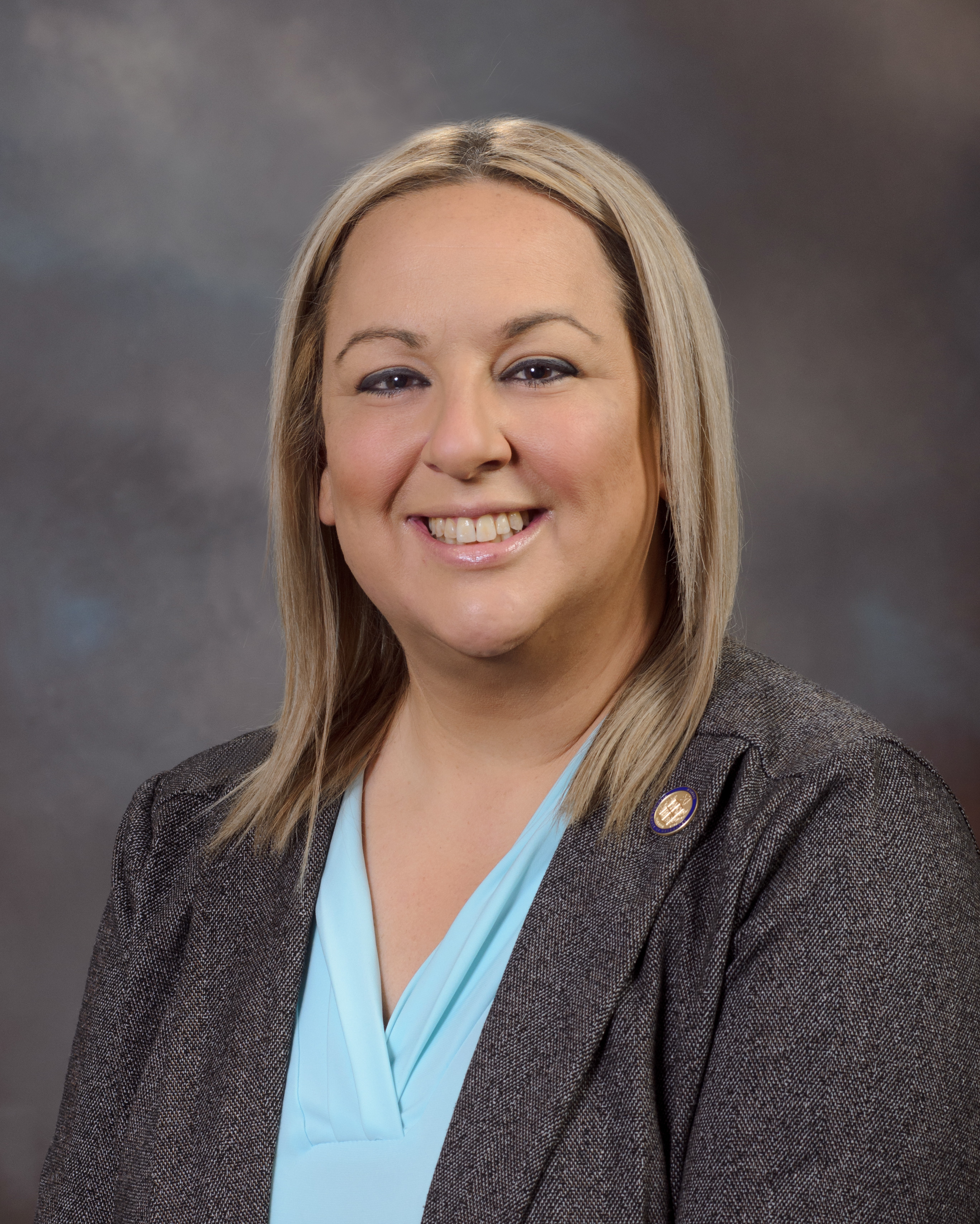
Del. Holly Seibold
Sponsored bills
Board of Housing and Community Development; stakeholder advisory group; report. Directs the Board of Housing and Community Development (the Board) to convene a stakeholder advisory group including fire code officials to evaluate and recommend revisions to the Uniform Statewide Building Code to permit Group R-2 occupancies to be served by a single exit, provided that the building has not more than six stories above grade plane. The bill requires the stakeholder advisory group to submit its findings and recommendations to the Board and to the Chairmen of the House Committee on General Laws and the Senate Committee on General Laws and Technology no later than December 1, 2024. This bill is identical to SB 195.
State Council of Higher Education for Virginia; public institutions of higher education; policies for establishing eligibility for accommodations; report. Requires the State Council of Higher Education for Virginia, in consultation with representatives of public institutions of higher education, disability advocacy organizations, students enrolled at public institutions of higher education, higher education disability accommodation professionals, and a subject matter expert, to (i) study the processes by which each public institution of higher education in the Commonwealth determines the eligibility for accommodations of an admitted or enrolled student with a temporary or permanent disability, (ii) identify in such processes any potential barriers to establishing eligibility, and (iii) make recommendations on reducing any such barriers and on the development and establishment of a uniform accommodations eligibility determination in the Commonwealth. This bill is identical to HB 509.
Child labor offenses; civil penalties. Increasesfrom $10,000 to $25,000 the civil penalty for each violation of childlabor laws that results in the employment of a child who is seriouslyinjured or dies in the course of employment. The bill also increasesfrom $1,000 to $2,500 the maximum civil penalty for each other violationof child labor laws and provides that such civil penalty shall notbe less than $500. The bill directs the Department of Labor and Industry to convene a stakeholder work group to develop education and outreach plans to inform young workers and employers about child labor laws.
Office of the Children's Ombudsman; children's residential facility. Authorizes the Office of the Children's Ombudsman to request that the Department of Social Services, the local department of social services, a children's residential facility, or a child-placing agency grant access and provide consent to interview children in foster care who are the subject of or the complainant in an investigation. The bill also contains technical amendments.
Public schools; certain local school divisions; youth and community violence prevention; Community Builders Pilot Program established; report. Establishes the Community Builders Pilot Program for the purpose of reducing youth involvement in behaviors that lead to gun violence and increasing community engagement among public school students by providing to students who are entering the eighth grade and enrolled in Roanoke City Public Schools and Petersburg City Public Schools opportunities during the school year after regular school hours and during the summer months for community engagement, workforce development, postsecondary education exploration, and social-emotional education and development. The bill provides that the school boards of Roanoke City Public Schools and Petersburg City Public Schools shall be responsible for the administration of the Program and are directed to collect data and report to the Governor and relevant committees of the General Assembly by November 1 of each year on the progress of the Program. The bill has an expiration date of July 1, 2027. This bill is identical to SB 484.
Hate crimes and discrimination; ethnic animosity; penalties. Provides that it is the policy of the Commonwealth to safeguard all individuals within the Commonwealth from unlawful discrimination in employment and in places of public accommodation because of such individual's ethnic origin and prohibits such discrimination. The bill also adds victims who are intentionally selected because of their ethnic origin to the categories of victims whose intentional selection for a hate crime involving assault, assault and battery, or trespass for the purpose of damaging another's property results in a higher criminal penalty for the offense. The bill also provides that no provider or user of an interactive computer service on the Internet shall be liable for any action voluntarily taken by it in good faith to restrict access to material that the provider or user considers to be intended to incite hatred on the basis of ethnic origin. This bill is identical to SB 7.
Virginia Commission to End Hunger established;report. Establishes the Virginia Commission to End Hunger. Thebill states that the purpose of the Commission is to develop anaction plan every two years for ending hunger in the Commonwealth,review the progress of such plan, and ensure cross-collaborationamong government entities and community partners toward the goalof ending hunger in the Commonwealth.
Child Care Subsidy Program; categorical eligibility for certain families. Provides that any family that receives public assistance through Medicaid or the Special Supplemental Nutrition Program for Women, Infants, and Children shall be deemed to categorically satisfy income eligibility requirements to receive assistance through the Child Care Subsidy Program.
Center for Rural Virginia; name change. Renames the Center for Rural Virginia as the Senator Frank M. Ruff, Jr. Center for Rural Virginia. This bill is identical to SB 704.