Minimum wage; farm laborers or farm employees;temporary foreign workers. Eliminates the exemptions from Virginia'sminimum wage requirements for (i) persons employed as farm laborers or farm employees and (ii) certain temporary foreign workers. This bill incorporates HB 866.
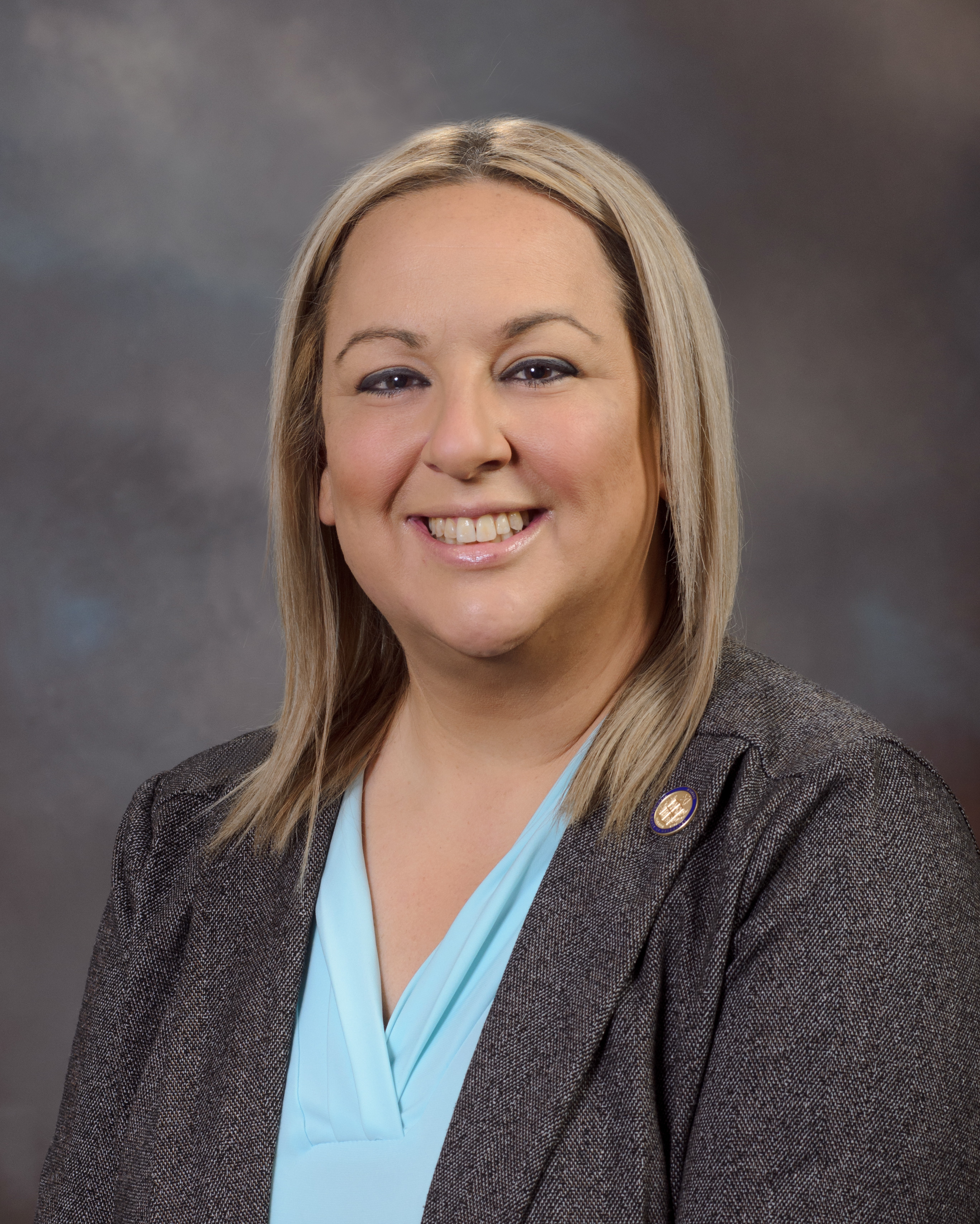
Del. Holly Seibold
Sponsored bills
Registration of tobacco products retailers; purchase, possession, and sale of retail tobacco products; retail tobacco products and liquid nicotine tax; penalties. Prohibits any person from selling any retail tobacco product, as defined in the bill, at retail without first obtaining a permit from the Department of Taxation and prohibits such sale at a location within 1,000 feet of a youth-oriented facility, as defined in the bill. The bill prohibits Internet sales of retail tobacco products, except to a permit-holding retailer, and prohibits the sale of retail tobacco products from vending machines. Under the bill, permits are subject to annual renewal and subject to revocation for violations of federal, state, or local laws related to tobacco products. The bill imposes recordkeeping requirements and makes it a Class 1 misdemeanor to engage in fraud or misrepresentation in connection with an application for a permit. The bill updates, for the purpose of the crime of selling or distributing tobacco products to a person younger than 21 years of age, the definition of "retail tobacco products" by including in such definition products currently defined as "nicotine vapor products" or "alternative nicotine vapor products." The bill also removes provisions prohibiting the attempt to purchase, the purchase, or the possession of tobacco products by persons younger than 21 years of age. The bill provides that the punishment of a retail establishment that sells, gives, or furnishes a tobacco product to a person younger than 21 years of age or to a person who does not demonstrate that such person is at least 21 years of age is (i) a civil penalty of $1,000 for a first offense, (ii) a civil penalty of $5,000 for a second offense and a 30 day suspension of such establishment's distributor's license, and (iii) a civil penalty of $10,000, revocation of such license, and such distributor shall be ineligible to hold a license for a period of three years following the most recent violation. Under current law, such penalties apply only to the sale, distribution, or purchase of a bidi and do not require a suspension or revocation of the establishment's distributor's license, while violations involving all other products are punishable by a civil penalty of $100 for a first offense, $200 for a second offense, and $500 for a third or subsequent offense. The bill also removes the exception allowing the sale, giving, or furnishing of any tobacco product, nicotine vapor product, or alternative nicotine vapor product to active-duty military personnel who are 18 years of age or older. The bill requires the Department, in collaboration with the Virginia Alcoholic Beverage Control Authority and local law enforcement, to conduct a compliance check every 24 months on any retailer selling retail tobacco products and to use a person younger than 21 years of age to conduct such checks. The bill also imposes a tax upon liquid nicotine in closed systems, as defined in the bill, at the rate of $0.066 per milliliter and upon liquid nicotine in open systems, as defined in the bill, at the rate of 20 percent of the wholesale price. The bill applies licensing requirements to manufacturers, distributors, and retail dealers of liquid nicotine and creates new safety requirements related to the advertising, marketing, and labeling of liquid nicotine and nicotine vapor products.

Public elementary and secondary schools; programs of instruction; mental health education; curriculum guidelines; instruction required. Requires each public elementary, middle, and high school to provide at each grade level, in addition to health instruction, an additional age-appropriate course of instruction on mental health. The bill directs the Board of Education to develop mental health curriculum guidelines for an age-appropriate, sequential mental health curriculum for each grade level and requires such curriculum guidelines to include instruction on (i) general themes of social and emotional learning, including self-awareness, self-management, responsible decision making, relationship skills, and social awareness; (ii) the signs and symptoms of common mental health challenges; (iii) mental health wellness and healthy strategies for coping with stress and negative feelings, including conflict resolution skills; (iv) the importance of and guidance on seeking assistance from an adult or mental health professional, including information on services offered within the school or the local school division; (v) the prevalence of mental health challenges and the importance of overcoming common stigmas surrounding such mental health challenges; (vi) the importance of mental health to a student's overall well-being, including physical health and academic success; and (vii) at such grade levels as the Board deems appropriate, the connection between mental health and substance use disorders and the safe use of and risks of abuse of prescription drugs. The bill permits the Board to consult with the Department of Behavioral Health and Developmental Services and other mental health experts in developing such curriculum guidelines and requires the Board to submit such guidelines to the State Board of Health for approval. The bill requires the Board to review and update by the beginning of the 2025–2026 school year the health Standards of Learning for each grade level to include such instruction on the mental health curriculum guidelines.
Liquid nicotine and nicotine vapor products; certification and directory; penalties. Requires every manufacturer of liquid nicotine or nicotine vapor products that are sold for retail sale in the Commonwealth to certify to the Attorney General that (i) the manufacturer has received a marketing authorization or similar order for the liquid nicotine or nicotine vapor product from the U.S. Food and Drug Administration (FDA) or (ii) (a) the liquid nicotine or nicotine vapor product was marketed in the United States as of August 8, 2016, or (b) the manufacturer submitted a premarket tobacco product application for the liquid nicotine or nicotine vapor product to the FDA on or before September 9, 2020, and such application either remains under review by the FDA or a final decision on the application has not otherwise taken effect. The bill requires a manufacturer to submit such a form for each liquid nicotine or nicotine vapor product that such manufacturer sells for retail sale in the Commonwealth. Under the bill, any manufacturer that falsely represents any of the information required by the certification requirement is guilty of a Class 3 misdemeanor for each false representation.The bill requires the Attorney General to establish and maintain a directory that lists all liquid nicotine or nicotine vapor product manufacturers and liquid nicotine and nicotine vapor products for which current and accurate certification forms have been submitted. The bill requires the Attorney General to remove or exclude from such directory any such product that is not in compliance and to notify the manufacturer of such noncompliance. The bill allows a 10-business-day period for a manufacturer to establish compliance. The bill requires that any such products that are removed from the list be sold or removed from retail sale within 30 days or become subject to seizure and requires a manufacturer, wholesaler, or retail dealer to notify each purchaser of a removed product that it has been removed from the directory at the time of delivery of such product. The bill entitles such a purchaser to a refund of the purchase price and creates a cause of action to recover such refund.The bill prohibits the sale, distribution, importation, or offer for sale of any liquid nicotine or nicotine vapor product that is not listed in the directory. The bill provides for a civil penalty of $1,000 per day for each product offered for sale in violation of the bill's provisions until the offending product is removed from the market or until the offending product is properly listed on the directory.The bill requires any person that receives, stores, sells, handles, or transports liquid nicotine or nicotine vapor products to preserve all records relating to the purchase, sale, exchange, receipt, or transportation of all liquid nicotine or nicotine vapor products for a period of three years. The bill provides that all such records are subject to audit or inspection at any time by any duly authorized representative of the Attorney General. Any person who violates the recordkeeping provisions of the bill is guilty of a Class 2 misdemeanor.Additionally, the bill provides that the Department of Taxation, the Attorney General, any other law-enforcement agency of the Commonwealth, or any federal law-enforcement agency conducting a criminal investigation involving the trafficking of liquid nicotine or nicotine vapor products may access at any time such records. The bill requires the Department of Taxation to impose a penalty of $1,000 for each day that a person fails or refuses to allow or cooperate with an audit, inspection, or investigation of such records.The bill authorizes the Attorney General and, with the concurrence of the Attorney General, any attorney for the Commonwealth, or the attorney for any city, county, or town to cause an action to enjoin any violation of the provisions of the bill. The circuit courts are authorized by the bill to (a) issue temporary or permanent injunctions to restrain and prevent violations of the provisions of the bill and (b) order forfeiture on any property seized for such a violation. The bill authorizes the Attorney General to issue a civil investigative demand.Under the bill, any retailer and wholesaler that sells or distributes any liquid nicotine or nicotine vapor product in the Commonwealth is subject to scheduled or unscheduled compliance checks carried out by the Attorney General, or an agent thereof, for enforcement purposes.The bill requires the Attorney General to provide an annual report to the General Assembly regarding the status of the directory, manufacturers and products included in the directory, and revenues and expenditures related to and enforcement activities undertaken pursuant to the requirements of the bill.Finally, the bill makes a violation of its provisions a prohibited practice under the Consumer Protection Act. The provisions of the bill do not become effective unless reenacted by the 2025 Session of the General Assembly.
Civilian deaths in custody; report. Requires every law-enforcement agency and state or juvenile correctional facility to report to the Department of Criminal Justice Services and every local or regional adult correctional facility to report to the State Board of Local and Regional Jails certain information regarding the death of any person who is detained, under arrest or in the process of being arrested, en route to be incarcerated, incarcerated, or otherwise in the custody of such law-enforcement agency or correctional facility. The bill provides that any law-enforcement agency or state or juvenile correctional facility that fails to comply may, at the discretion of the Department, be declared ineligible for state grants or funds. The bill also requires the Department and the Board to analyze the submitted data to determine the means by which such information can be used to reduce the number of such deaths. The bill requires the Director of the Department and the Board to each annually report the findings and recommendations resulting from the analysis and interpretation of the data to the Governor, the General Assembly, and the Attorney General beginning on or before July 1, 2025, and each July 1 thereafter. The bill also provides that upon request, the Board shall provide the submitted data to the Department to meet federal reporting requirements. This bill incorporates HB 423.
Public institutions of higher education; Hunger-FreeCampus Grant Program established; report. Establishes the Hunger-FreeCampus Grant Program (the Program) to address student food insecurityat public institutions of higher education. The bill provides thatthe Program shall be managed by the State Council of Higher Educationfor Virginia and available for participation by public institutions of higher education; however, participation in the Program shallbe optional for such institutions. Under the bill, if a public institutionof higher education satisfies certain criteria set out in the bill,including creating initiatives on campus to address student foodinsecurity, it shall be designated as a "Hunger-Free Campus" andthe Council shall award a grant to such institution. A public institutionof higher education that receives a grant under the bill shall utilizethe funds to support on-campus efforts and initiatives to eliminatestudent food insecurity at such institution. The bill requires theCouncil to submit a report to the Chairmen of the Senate Committeeon Education and Health and the House Committee on Education no laterthan two years after the establishment of the Program.
Annual retail sales and use tax holiday. Establishes an annual retail sales and use tax holiday that takes place on the first full weekend in August beginning on July 1, 2025, through July 1, 2030. During such weekend, state retail sales and use tax will not apply to certain (i) school supplies, (ii) clothing and footwear, (iii) qualified products designated as Energy Star or WaterSense, (iv) portable generators, or (v) hurricane preparedness equipment. This bill is identical to SB 116.
Barrier crimes; adult substance abuse and mental health services; exception. Permits the Department of Behavioral Health and Developmental Services, providers of substance abuse or mental health services to adults, and community services boards and behavioral health authorities to hire applicants convicted of certain barrier crimes of misdemeanor assault and battery or involving controlled substances provided that such conviction occurred more than four years prior to the application date for employment. This bill is identical to SB 626.
School boards; meetings; public comment or citizen participation; enrolled students. Requires each school boardto permit any student enrolled in a public elementary or secondaryschool in the local school division who provides acceptable proofof identification, including any current student identification cardor other school document such as a report card or a personal schoolemail address, and who signs up at least 12 hours in advance of thescheduled start of a school board meeting or is physically presentat a school board meeting to submit oral comments during any publiccomment or citizen participation portion of such meeting.
Board of Education; Standards of Learning; familylife education; health education; menstrual education curriculumguidelines and instruction. Requires the Board of Education todevelop Standards of Learning objectives and accompanying curriculumguidelines for instruction on menstrual education, to be providedat grade levels four through eight and to be required of all students,regardless of gender. The bill requires such Standards of Learningobjectives and accompanying curriculum guidelines on menstrual educationto include instruction on the biological processes and functionsof the menstrual cycle, menstrual cycle symptoms, side effects, andmanagement, societal and cultural attitudes toward the menstrualcycle, and other topics relating to the menstrual cycle. The bill requires each school board to provide at grade levels four througheight instruction on the menstrual education, consistent with theStandards of Learning objectives and accompanying curriculum guidelinesdeveloped by the Board. The bill permits each school board to providesuch instruction on menstrual education as a part of an existingfamily life education program or an existing health education program,provided that such instruction is provided to each student at eachgrade level, four through eight, regardless of gender.