First-time Homebuyer Grant Program. Establishes a First-time Homebuyer Grant Program for the purpose of assisting first-time homebuyers with first-time homebuyer expenses, as those terms are defined in the bill. The bill provides that the Department of Housing and Community Development shall award eligible first-time homebuyers a grant in an amount equal to five percent of such expenses incurred during a calendar year, not to exceed $10,000. Any grant awarded pursuant to the Program shall be repaid to the Commonwealth if the property for which expenses were incurred is sold within three years from the purchase date, unless the sale is made following a natural disaster or other act of God.
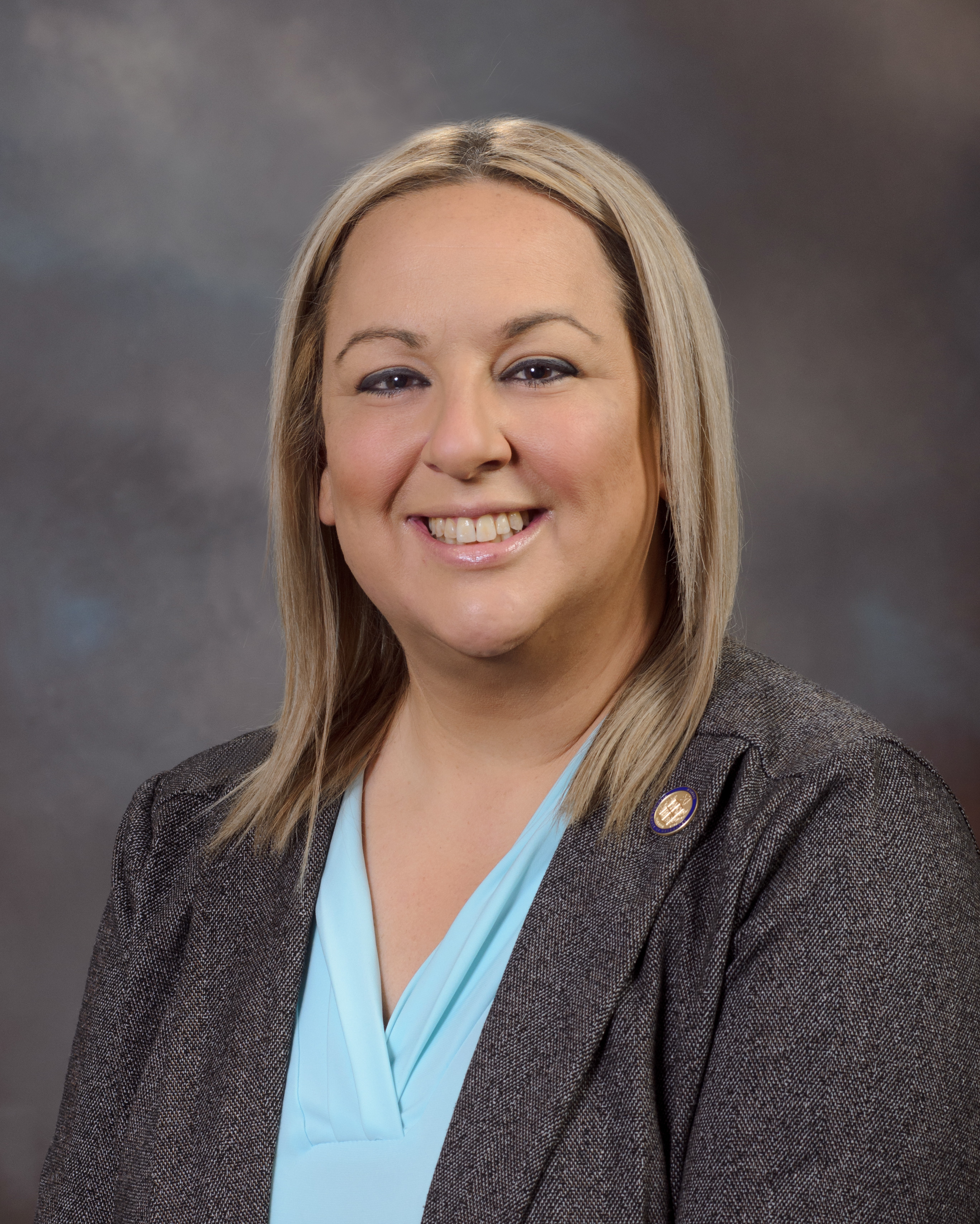
Del. Holly Seibold
Sponsored bills
Collective bargaining by firefighters and emergency medical services providers. Authorizes firefighters and emergency medical services providers employed by a political subdivision of the Commonwealth to engage in collective bargaining through labor organizations or other designated representatives. The bill establishes the Fire Service Cooperation Board to administer its provisions. The bill provides for the appointment of a three-member board of arbitration regarding any dispute arising between an employer and firefighters or emergency medical services providers. Under the bill, determinations made by such board of arbitration are final on a disputed issue and are binding on the parties involved. The bill has a delayed effective date of January 1, 2026.
State Board of Local and Regional Jails; oversight of local and regional jails; powers and duties. Increases from 11 to 19 the membership of the State Board of Local and Regional Jails (the Board) by requiring the appointment of (i) two members of the Senate and two members of the House of Delegates and (ii) four additional nonlegislative citizen members, including (a) one representative of a nonprofit organization that provides training or rehabilitation programs for incarcerated inmates; (b) one male citizen and one female citizen who were formerly incarcerated within the Commonwealth; and (c) one person who is a grandparent, parent, child, sibling, or spouse or domestic partner of a person currently incarcerated within the Commonwealth.The bill also adds numerous additional duties for the Board, including to (1) provide information, as appropriate, to inmates, family members, representatives of inmates, and local, regional, and community correctional facility employees and contractors and others regarding the rights of inmates; (2) establish policies for a statewide uniform reporting system to collect and analyze data related to complaints received in or about local, regional, and community correctional facilities; (3) monitor, document, review, and report on the operation of stores and commissaries in local correctional facilities and systems for providing electronic visitation and messaging and telephone calls; and (4) review, monitor, and report and make recommendations on policies related to (A) attorney access to clients for calls and visitation; (B) access to voting for incarcerated individuals who are eligible to vote; and (C) the collection of data on suicides, suicide attempts, and self-harm in custody. The bill also specifies additional information to be included in the Board's currently required annual report to the General Assembly and the Governor and requires such report to be made available to the public online.The bill enumerates certain items for assessment that may be included in the Board's annual inspection of each local correctional facility, as required by current law, and also specifies the Board's authority and right to access such facilities, interview persons, and access certain information and documents. Upon completion of an inspection, the bill requires the Board to produce a report, including information enumerated in the bill, to be made available to the public online and to be delivered to the Governor, the Attorney General, the Senate Committee on Rehabilitation and Social Services, the House Committee on Public Safety, and the sheriff in charge of the local correctional facility or superintendent of the regional correctional facility.Finally, the bill allows the Board to initiate and attempt to resolve an investigation upon its own initiative, or upon receipt of a complaint from an inmate, a family member or representative of an inmate, or a local, regional, or community correctional facility employee or contractor, or others, regarding various concerns as enumerated in the bill. The bill has a delayed effective date of July 1, 2026.

Safeguarding American Veteran Empowerment Act; prohibited practices; penalties. Creates the Safeguarding American Veteran Empowerment Act to regulate the practices of persons seeking to receive compensation for preparing, presenting, prosecuting, advising, consulting, or assisting any individual regarding any veterans' benefits matter, as defined in the bill. The bill provides that a violation of its provisions constitutes a prohibited practice under the Virginia Consumer Protection Act.
Common interest communities; amateur radio antennas permitted. Prohibits certain common interest community associations from prohibiting the installation of an amateur radio antenna on the roof of the unit owned by the unit owner or on a roof appurtenant to the unit owned by the unit owner or, in the case of a property owners' association, a lot owner's property, and sets forth provisions governing the installation and removal of such amateur radio antennas.
Health insurance; coverage for cancer follow-up testing; report. Requires health insurers and other carriers to provide coverage for cancer follow-up testing, as defined in the bill, and prohibits the imposition of deductibles, coinsurance, or any other cost-sharing requirements specifically on cancer follow-up testing. The bill directs the Bureau of Insurance to annually report to the General Assembly on (i) the number of individuals benefiting from the removal of copayments for cancer follow-up testing, (ii) the financial impact on health insurance premiums as a result of the provisions of the bill, and (iii) recommendations for further policy adjustments.
A BILL to amend and reenact § 59.1-200, as it is currently effective and as it shall become effective, of the Code of Virginia and to amend the Code of Virginia by adding in Title 59.1 a chapter numbered 58, consisting of sections numbered 59.1-607 through 59.1-610, relating to Fair Voice Purchasing Act established; penalties.
Retail sales and use tax exemption; motor vehicle child restraint device. Creates an exemption from the retail sales and use tax for the purchase of a child restraint device for personal use in a passenger car beginning July 1, 2025.
Health insurance; coverage for at-home blood pressure monitors. Requires health insurers, health maintenance organizations, and corporations providing health care coverage subscription contracts to provide coverage for at-home blood pressure monitors to individuals who (i) have a diagnosis of hypertension, (ii) are at risk of developing hypertension, or (iii) have been recommended for at-home blood pressure monitoring by a licensed health care provider. The coverage provided under the bill shall not be subject to any copayment or fees for an at-home blood pressure monitor. The bill directs the Bureau of Insurance, in consultation with the Department of Health, to establish guidelines for implementing the coverage required by the bill, to monitor compliance of such requirements by health care providers, and to submit a report of its findings and recommendations to the Governor and General Assembly by December 1, 2026.
State plan for medical assistance services; recovery residences; work group; report. Directs the Board of Medical Assistance Services to amend the state plan for medical assistance services to include a provision for payment of care provided at certain recovery residences for individuals diagnosed with a substance use disorder. The bill also directs the Department of Behavioral Health and Developmental Services to (i) convene a work group of relevant stakeholders to (a) establish a monitoring and evaluation framework to assess the effectiveness and impact of recovery residences on long-term recovery outcomes and (b) study the economic impact of recovery residences on the Commonwealth and (ii) in consultation with such work group, promulgate regulations to ensure recovery residences are operating in compliance with American Society of Addiction Medicine standards. The bill directs the work group to report its findings and recommendations to the Chairs of the House Committee on Health and Human Services and the Senate Committee on Education and Health by November 1, 2025.