Hospitals; price transparency. Requires every hospital to make information about standard charges for items and services provided by the hospital available on the hospital's website by July 1, 2023. The bill directs the Secretary of Health and Human Resources to develop recommendations for implementation of the bill and to report those recommendations to the Governor and the Chairmen of the House Committee on Health, Welfare and Institutions and the Senate Committee on Education and Health by November 1, 2022.
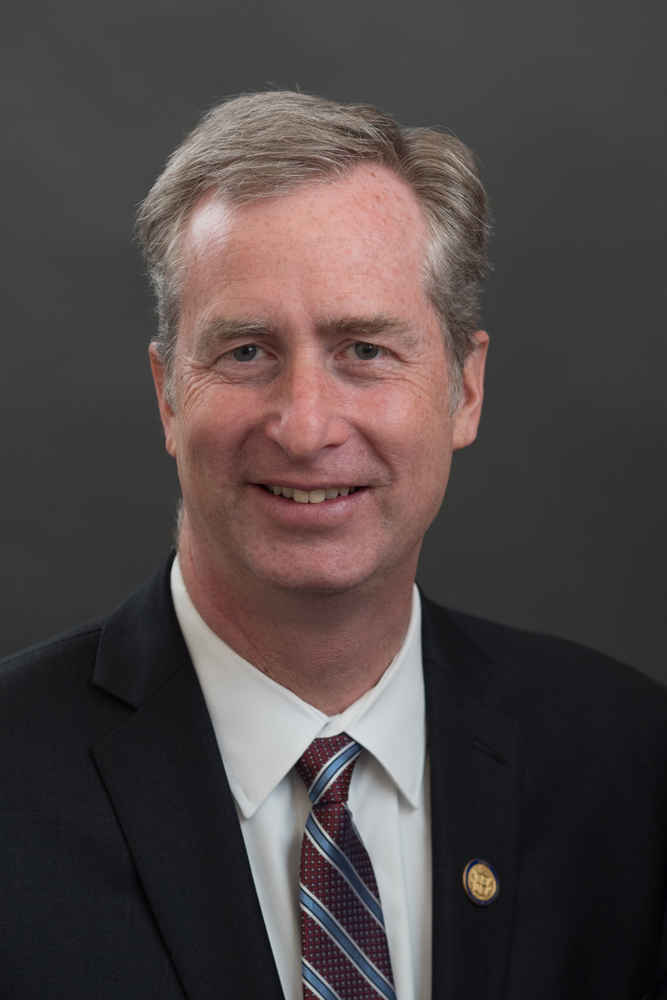
Del. David Bulova
Sponsored bills
Exhaust systems; excessive noise. Prohibitsany individual from operating a motor vehicle with a gross weightof 6,500 pounds or less with an exhaust system that emits noise in excess of 85 decibels. The bill also allows the governing body ofany county, city, or town located within the Northern Virginia Planning District or Richmond Regional Planning District to provide by ordinancethat no person shall operate any motor vehicle on a highway or onpublic or private property within 500 feet of any residential districtunless such motor vehicle is equipped with an exhaust system of atype installed as standard equipment, or comparable to that designedfor use on that particular vehicle or device as standard factoryequipment, in good working order and in constant operation to preventexcessive noise.
Flood resiliency and protection. Implements recommendations from the first Virginia Coastal Resilience Master Plan. The bill provides guidelines for the development of a Virginia Flood Protection Master Plan for the Commonwealth and requires that the Coastal Resilience Master Plan be updated by December 31, 2022, and every five years thereafter. The bill establishes the Virginia Coastal Resilience Technical Advisory Committee to assist with the updates and requires the development of a community outreach and engagement plan to ensure meaningful involvement by affected and vulnerable community residents. The bill also requires that the Chief Resilience Officer report every two years, beginning July 1, 2023, on the status of flood resilience in the Commonwealth. This bill is identical to SB 551.
Localities; public meeting; state project planningphase. Allows a locality the option to request a public meetingin the locality during the planning phase of a public facilities stateproject from the state agency or institution of higher education responsible for such project.
Early childhood care and education; regionalentities; Child Care Subsidy Program Overpayment Fund established.Requires the Board of Education to establish a system of regionalentities that will be responsible for coordinating early childhoodcare and education services, guiding quality improvement of suchservices and coordinated access to such services for families, andimplementing the uniform measurement and improvement system. Thebill establishes the Child Care Subsidy Program Overpayment Fund,consisting of all overpayment moneys collected or recovered by theDepartment of Education or any state or local agency contracted toadminister the Child Care Subsidy Program, net of any refunds due to the federal government, to be used solely for the purpose ofcovering the cost of providing training and supports to early childhoodcare and education entities.
Virginia Public Procurement Act; architectural and professional engineering term contracting; limitations. Provides that the sum of all projects performed in an architectural and professional engineering contract term shall not exceed $10 million, and the fee for any single project shall not exceed $2.5 million. The bill allows a contract for multiple architectural or professional engineering projects to be renewable for up to three additional terms at the option of the public body. Current law limits the sum of all projects performed in a one-year contract term to $750,000, with up to four additional one-year terms at the option of the public body, and limits the fee for any single project to $150,000, with specific exceptions to those limits, including a limit for total projects for rail projects of $5 million and for highway projects, $8 million. The bill also removes specific agency and locality exceptions to such current limits. This bill incorporates HB 438 and is identical to SB 225.
Virginia Literacy Act; early student literacy; evidence-based literacy instruction; science-based reading research. Makes several changes relating to early student literacy, including requiring (i) each education preparation program offered by a public institution of higher education or private institution of higher education or alternative certification program that provides training for any individual seeking initial licensure with an endorsement in a certain area, including as a reading specialist, to demonstrate mastery of science-based reading research and evidence-based literacy instruction, as such terms are defined in the bill; (ii) the literacy assessment required of individuals seeking initial teacher licensure with endorsements in certain areas to include a rigorous test of science-based reading research and evidence-based literacy instruction; (iii) each local school board to establish a divisionwide literacy plan; (iv) each local school board to employ one reading specialist for each 550 students in kindergarten through grade three; and (v) each local school board to provide a program of literacy instruction whereby, among other things, (a) the program provides reading intervention services to students in kindergarten through grade three who demonstrate deficiencies based on their individual performance on the Standards of Learning reading assessment or an early literacy screener provided or approved by the Department of Education; (b) a reading specialist, in collaboration with the teacher of any student who receives such reading intervention services, develops, oversees implementation of, and monitors student progress on a student reading plan; and (c) each student who receives such reading intervention services is assessed utilizing either the early literacy screener provided or approved by the Department or the grade-level reading Standards of Learning assessment again at the end of that school year. The provisions of the bill become effective beginning with the 2024–2025 school year. This bill is identical to SB 616.

Park authorities; electric vehicle chargingstations. Gives park authorities created by a locality the authorityto locate, operate, regulate the use of, and install signage relatingto electric vehicle (EV) charging stations on property under itsjurisdiction. The bill adds park authorities to the list of entitiesfor which provision of electricity for EV charging is exempt fromthe definition of retail sale of electricity. The bill adds park authorities to the list of entities that the State Corporation Commissioncannot regulate or prescribe the rates, charges, and fees for retailEV charging service.
Dissemination of consumer information about noxious weeds and invasive plants. Requires the Commissioner of Agriculture and Consumer Services to develop model signs for retail establishments that sell plants that may be used to explain the benefits of native plants and the harm of noxious weeds and other invasive plants. The bill also directs the Commissioner to develop model labels that may be used for the wholesale and retail sale of plants that indicate the common and scientific name of the plant, as well as whether it is native or invasive.
Campaign finance; record retention requirements and reviews of campaign finance disclosure reports. Requires campaign committee treasurers to retain certain records that may be used in reviews of campaign committee accounts. The bill gives the Department of Elections the authority and duty to conduct reviews of a percentage of campaign committees and to report the results of such reviews annually to the State Board of Elections, the Governor, and the General Assembly and make such report available on the Department's website. The bill has a delayed effective date of January 1, 2024, and provides that campaign finance reports filed prior to January 1, 2024, are not subject to the provisions of the bill.