

Solar and energy storage projects; siting agreements throughout the Commonwealth. Expands existing provisions relatedto siting agreements for solar projects located in an opportunityzone to include energy storage projects and makes the provisionsstatewide. The bill provides that its provisions shall not applyto any energy storage project that has received zoning and site planapproval, preliminary or otherwise, from the host locality beforeJanuary 1, 2021. The bill also provides that its provisions shallnot become effective with respect to energy storage projects unlessthe General Assembly approves legislation that authorizes localitiesto adopt an ordinance for taxation of energy storage projects suchas solar projects with a local option for machinery and tools taxor solar revenue share. The bill further provides that a locality may grant a special exception for an energy storage project.
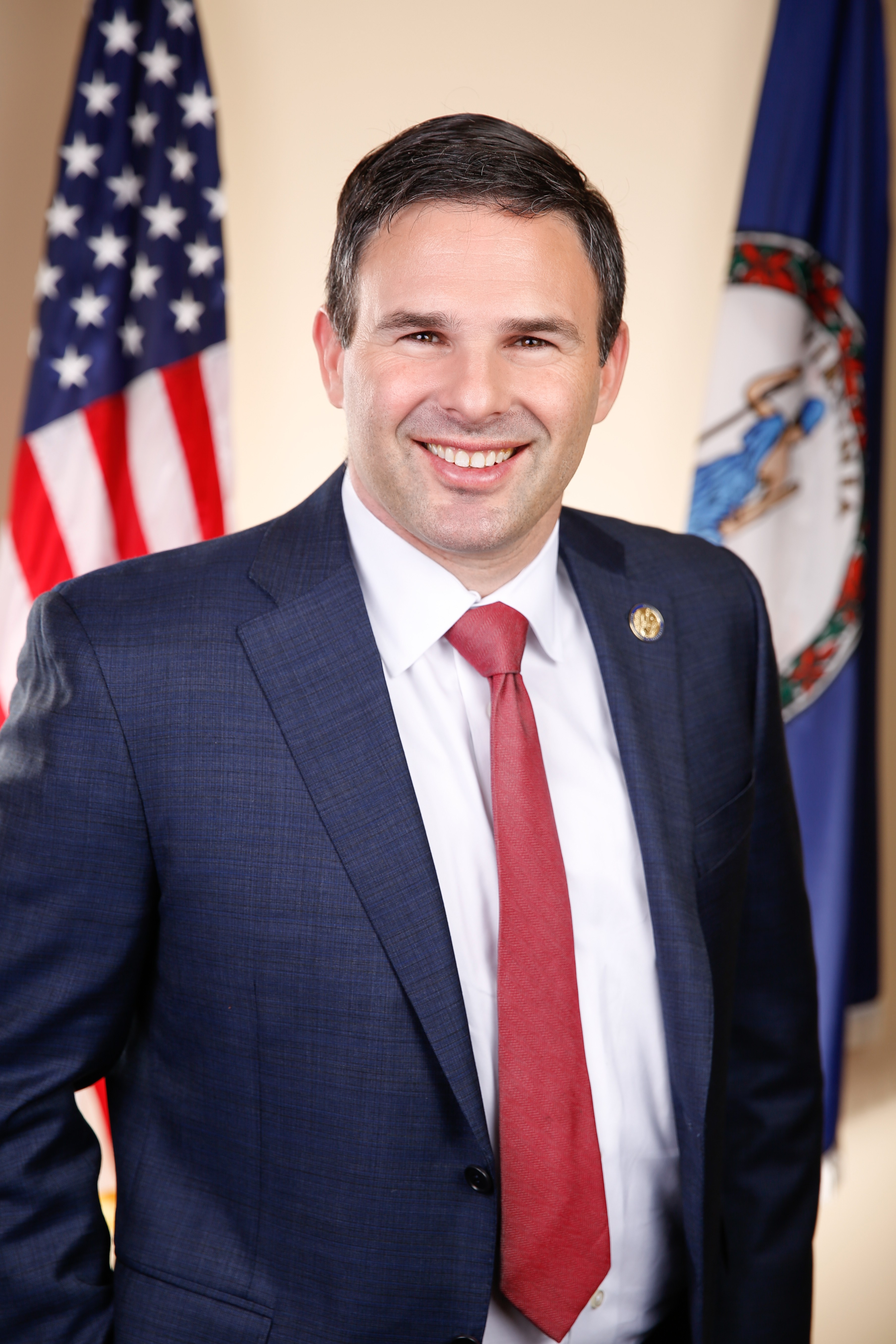
Del. Dan Helmer
Sponsored bills
Alcoholic beverage control; license fee reform;delay; emergency. Delays the effective date of the 2020 alcoholicbeverage control license and fee reform from July 1, 2021, to January1, 2022. During the period of delay and subject to certain requirements,the bill allows on-premises wine or beer licensees to sell wine orbeer for off-premises consumption and allows such licensees, as wellas off-premises wine or beer licensees, to deliver wine or beer thatthe licensee is authorized to sell without a delivery permit. The bill contains a technical amendment and an emergency clause.
Manufacture, import, sale, transfer, or possession of plastic firearms and unfinished frames or receivers and unserialized firearms; penalties. Creates a Class 5 felony for any person who manufactures, imports, sells, transfers, or possesses any firearm that, after removal of all parts other than a major component, as defined in the bill, is not detectable as a firearm by the types of detection devices, including X-ray machines, commonly used at airports for security screening. The bill updates language regarding the types of detection devices that are used at airports for detecting plastic firearms. The bill also creates several Class 1 misdemeanors, which are punishable as a Class 4 felony for a second or subsequent offense, making it unlawful (i) for any person to possess, sell, offer to sell, transfer, purchase, transport, or receive an unfinished frame or receiver or firearm, unless the party possessing or receiving the unfinished frame or receiver or firearm is a federal firearms importer or manufacturer or the unfinished frame or receiver or firearm is imprinted with a serial number issued by a federal firearms importer or manufacturer and (ii) for any person to manufacture, cause to be manufactured, assemble, or cause to be assembled a firearm that is not imprinted with a serial number issued by a federal firearms importer or manufacturer in compliance with all federal laws and regulations regulating the manufacture and import of firearms. The bill creates exceptions for (i) any firearm that has been rendered permanently inoperable, (ii) an antique firearm, or (iii) any firearm or unfinished frame or receiver manufactured before October 22, 1968.
Health insurance; association health plan for real estate salespersons. Provides that a licensed insurer may issue a policy of group accident and sickness insurance to an association of real estate salespersons (association), which association shall be deemed the policyholder, and that such association health plan is not considered to be insurance and is not subject to the existing requirements for insurance if certain requirements are met. The bill requires that (i) all members of the association be eligible for coverage and membership, including employer members with at least one employee that is domiciled in the Commonwealth or self-employed individuals; (ii) membership in the association not be conditioned on any health status–related factor; (iii) the coverage offered through the association be available to all members regardless of any health status–related factor; (iv) the association not make health insurance coverage offered through the association available other than in connection with a member of the association; and (v) premiums for the policy be paid from funds contributed by the association or associations, or by employer members, or by both, or from funds contributed by the covered persons or from both the covered persons and the association, associations, or employer members. The bill also requires the association (a) has at the outset a minimum of 100 members; (b) has been organized and maintained in good faith for purposes other than that of obtaining insurance; (c) has been in active existence for at least five years; and (d) has a constitution and bylaws that provide that the association hold regular meetings not less than annually to further purposes of the members, that the the association collects dues or solicits contributions from members, and that the members have voting privileges and representation on the governing board and committees.The bill provides that any such policy shall (1) be considered a large group market plan subject to all coverage mandates applicable to a large group market plan, (2) be subject to the group health plan coverage requirements under the federal Patient Protection and Affordable Care Act, (3) be prohibited from denying coverage under the policy on the basis of a pre-existing condition, (4) shall be guaranteed issue and guaranteed renewable, (5) provide essential health benefits and cost-sharing requirements, and (6) offer a minimum level of coverage designed to provide benefits that are actuarially equivalent to 60 percent of the full actuarial value of the benefits provided under the plan.The bill requires an insurer issuing such policy to an association to (A) treat all of the members and employees of employer members who are enrolled in coverage under the policy as a single risk pool; (B) set premiums on the basis of the collective group experience of the members and employees of employer members who are enrolled in coverage under the policy; (C) not vary premiums by age, except that the rate shall not vary by more than four to one for adults; (D) not vary premiums on the basis of gender; (E) not vary premiums on the basis of the health status of an individual employee of an employer member or a self-employed individual member; and (F) not establish discriminatory rules based on the health status of an employer member, an individual employee of an employer member, or a self-employed individual for eligibility or contribution.Finally, the bill provides that the State Corporation Commission retains its regulatory authority over any such association health plan and may impose insurance requirements, as it deems appropriate.
Compensation Board determining staffing and salaries for an attorney for the Commonwealth. Provides that the Compensation Board shall consider workload totals comprehensively, including the use of diversion programs and specialty dockets, when determining staffing and funding levels for an attorney for the Commonwealth and the office. The provisions of the bill are contingent on funding in a general appropriation act.
Study; Department of Rail and Public Transportation; transit equity and modernization; report. Requests the Department of Rail and Public Transportation to conduct a two-year study of transit equity and modernization in the Commonwealth,with emphasis on transit services and engagement opportunities for underserved and underrepresented communities.