

Nomination of candidates for elected offices;restrictions on nomination method selected by political party. Providesthat a method of nomination for elected office may not be selected if such method will have the practical effect of excluding participationin the nominating process by qualified voters who are unable to attendmeetings because they are (i) a member of a uniformed service onactive duty, (ii) temporarily residing outside of the United States,(iii) a student attending a school or institution of higher education,(iv) a person with a disability, or (v) a person who has a communicabledisease of public health threat or who may have come in contact witha person with such disease.. However, such restriction does not applywhen selecting a candidate for a special election or nominating acandidate, or in the event that no candidate files the required paperworkby the prescribed deadline. The bill has a delayed effective dateof January 1, 2024.
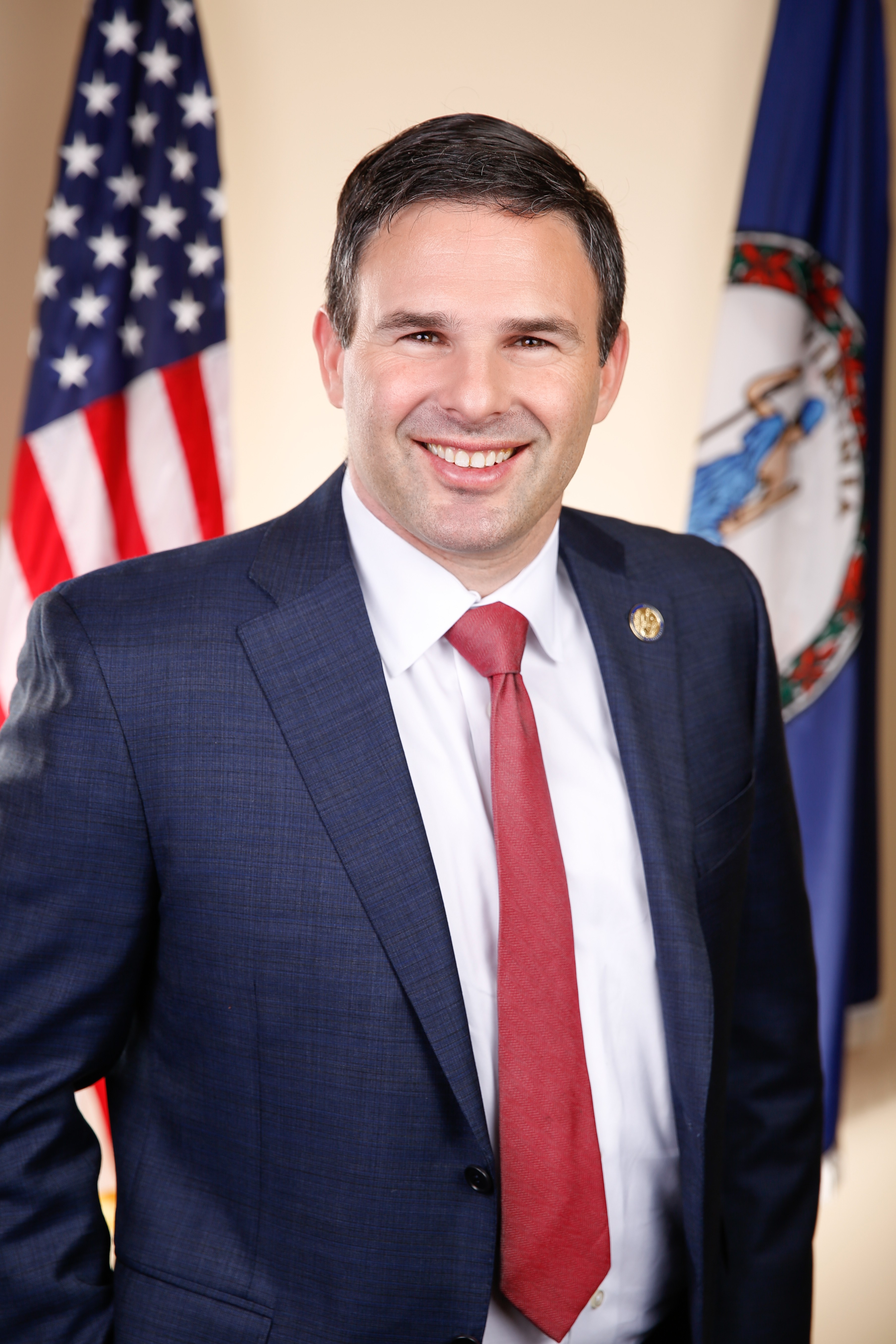
Del. Dan Helmer
Sponsored bills
Commonwealth Health Reinsurance Program. Requires the State Corporation Commission (Commission) to establish, upon approval of a state innovation waiver request pursuant to § 1332 of the Affordable Care Act, a reinsurance program, known as the Commonwealth Health Reinsurance Program (the Program). The bill provides that the Program is funded through federal funding provided under the state innovation waiver, an assessment on carriers, and state appropriations. The bill requires that the Commission impose an annual assessment of one percent of a carrier's net written premiums on entities authorized to issue individual and group health insurance overage including grandfathered plans but excluding plans offered in the small group market. The bill provides requirements for payment parameters, data submissions, recordkeeping, reporting, and audits of health carriers. The bill requires the Secretary of Health and Human Resources to convene a work group to develop recommendations for developing a state-based subsidy program to increase affordability of health plans to individuals and to increase enrollment in the Virginia Health Benefit Exchange. The bill requires the Commission to evaluate the program following its second year of operation.The provisions of the bill, other than the requirements that the Commission apply for the state innovation waiver, will become effective 30 days after notice of approval of the waiver request.
Virginia Freedom of Information Act; law-enforcementcriminal incident information; criminal investigative files. Adds criminal investigative files, defined in the bill, relatingto a criminal investigation or proceeding that is not ongoing, alsodefined in the bill, to the types of law-enforcement and criminalrecords required to be released in accordance with the provisionsof the Virginia Freedom of Information Act. Under current law, therelease of criminal investigative files is discretionary. The billalso provides that the mandatory release of criminal incident informationrelating to felony offenses and criminal investigative files shallbe enjoined if a court finds by a preponderance of the evidence thatthe release of such information would likely effect certain results,outlined in the bill. The bill contains technical amendments. Thisbill is a recommendation of the Virginia Freedom of Information AdvisoryCouncil.
Homicides and assaults and bodily woundings; certain matters not to constitute defenses. Provides that the discovery of, perception of, or belief about another person's actual or perceived sex, gender, gender identity, or sexual orientation, whether or not accurate, is not a defense to any charge of capital murder, murder in the first degree, murder in the second degree, voluntary manslaughter, or assault and bodily wounding-related crimes and is not provocation negating or excluding malice as an element of murder.
Department of Medical Assistance Services; testing for, treatment of, and vaccination against COVID-19; emergency services. Directs the Department of Medical Assistance Services to, during a public health emergency related to COVID-19 declared by the United States Secretary of Health and Human Services, deem testing for, treatment of, and vaccination against COVID-19 to be emergency services for which payment may be made pursuant to federal law for certain aliens not lawfully admitted for permanent residence.
Building standards for certain state and local buildings. Requires that any executive branch agency or institution or locality entering the design phase for the construction of a new building greater than 5,000 gross square feet in size or the renovation of a building where the cost of the renovation exceeds 50 percent of the value of the building ensure that such building has sufficient electric vehicle charging infrastructure, defined in the bill, and has features that permit the agency or institution to track the building's energy efficiency and carbon emissions. The bill authorizes the Director of the Department of General Services to grant exemptions to such standards, in writing and with certain terms. The bill requires agencies to annually report to the Governor the energy efficiency and carbon emissions metrics for each such building built or renovated. The bill requires localities to design such building projects according to the same or similar standards, or more stringent standards if adopted by ordinance. The bill also requires that localities incorporate appropriate resilience and distributed energy features. The bill requires that any exemption from the standards granted by resolution of the governing body of a locality be made in writing and explain the basis for granting the exemption.
Active military or a military spouse; prohibits discrimination in public accommodations, etc. Prohibits discrimination in public accommodations, employment, and housing on the basis of a person's military status, defined as a member of the uniformed services of the United States or a reserve component thereof or a spouse or other dependent of the same. The bill also prohibits terms in a rental agreement in which the tenant agrees to waive remedies or rights under the federal Servicemembers Civil Relief Act prior to the occurrence of a dispute between the landlord and the tenant.
Prohibited discrimination; status as activemilitary or a military spouse. Prohibits discrimination in publicaccommodations, employment, and housing on the basis of a person'sstatus as active military or a military spouse.
Workers' compensation; presumption of compensability for COVID-19. Establishes a presumption that COVID-19 causing the death or disability of health care providers is an occupational disease compensable under the Workers' Compensation Act. The bill provides that the COVID-19 virus is established by a positive diagnostic test for COVID-19, an incubation period consistent with COVID-19, and signs and symptoms of COVID-19 that require medical treatment. The bill provides that such presumption applies to any death or disability occurring on or after March 12, 2020, caused by infection from the COVID-19 virus, provided that for any such death or disability that occurred on or after March 12, 2020, and prior to December 31, 2021, the claimant received a positive diagnosis of COVID-19 from a licensed physician, after either a presumptive positive test or a laboratory-confirmed test for COVID-19, and presented with signs and symptoms of COVID-19 that required medical treatment. The bill provides that such presumptions do not apply to any person offered by his employer a vaccine for the prevention of COVID-19 unless the person's physician determines in writing that immunization would pose a significant risk to the person's health.
Absentee voting; procedural and process reforms; availability and accessibility reforms; penalty. Makes various reforms to absentee voting processes and procedures, including those related to availability and accessibility. The bill requires certain actions to be taken to process absentee ballots returned before the day of an election, including verifying the correct completion of the voter affirmation statement, and provides for an opportunity for an absentee voter to make corrections to the statement in certain circumstances. The bill requires the establishment of drop-off locations for the return of voted absentee ballots. Additionally, a central absentee voter precinct is required to be established in each locality; currently, establishment is optional. On the day of the election, officers of election are required to begin processing absentee ballots in the central absentee voter precincts prior to the close of polls, but no ballot vote counts are permitted to be transmitted outside of the central absentee voter precinct before the close of polls; a violation of such prohibition is a Class 1 misdemeanor. When reporting election results to the Department of Elections, the general registrars are required to report absentee ballots cast early in person separately from all other absentee ballots. Additionally, a voter who has applied for and received an absentee ballot may choose to instead vote at his polling place on election day, and such voter shall be entitled to cast a provisional ballot. The bill requires a ballot marking tool with screen reader assistive technology to be made available for absentee voters with a print disability. Restrictions on the availability of absentee voting for first-time voters who registered by mail are repealed. The bill contains technical amendments for organizational and readability purposes.