

Employment; determining wage of tipped employee.Provides that an employer shall increase the amount paid to itstipped employees by an amount determined by the employer in accordancewith the federal Fair Labor Standards Act and that, notwithstandingany other provision of law, a tipped employee who regularly performsservices in the course of his employment for which there is no reasonableexpectation of receiving tips shall receive an amount not less thanthe minimum wage for the time that he performs such services. Thebill provides that tipped employees shall receive a cash wage ofnot less than $3.50 per hour starting on January 1, 2025. Startingon January 1, 2026, a tipped employee shall receive a cash wage ofnot less than $4.75 per hour, and starting on January 1, 2027, theamount of cash wage shall be not less than $6.00 per hour. StartingJanuary 1, 2028, tips shall be excluded from any determination ofwage paid to a tipped employee and the amount paid to such employeeshall be not less than the minimum wage.
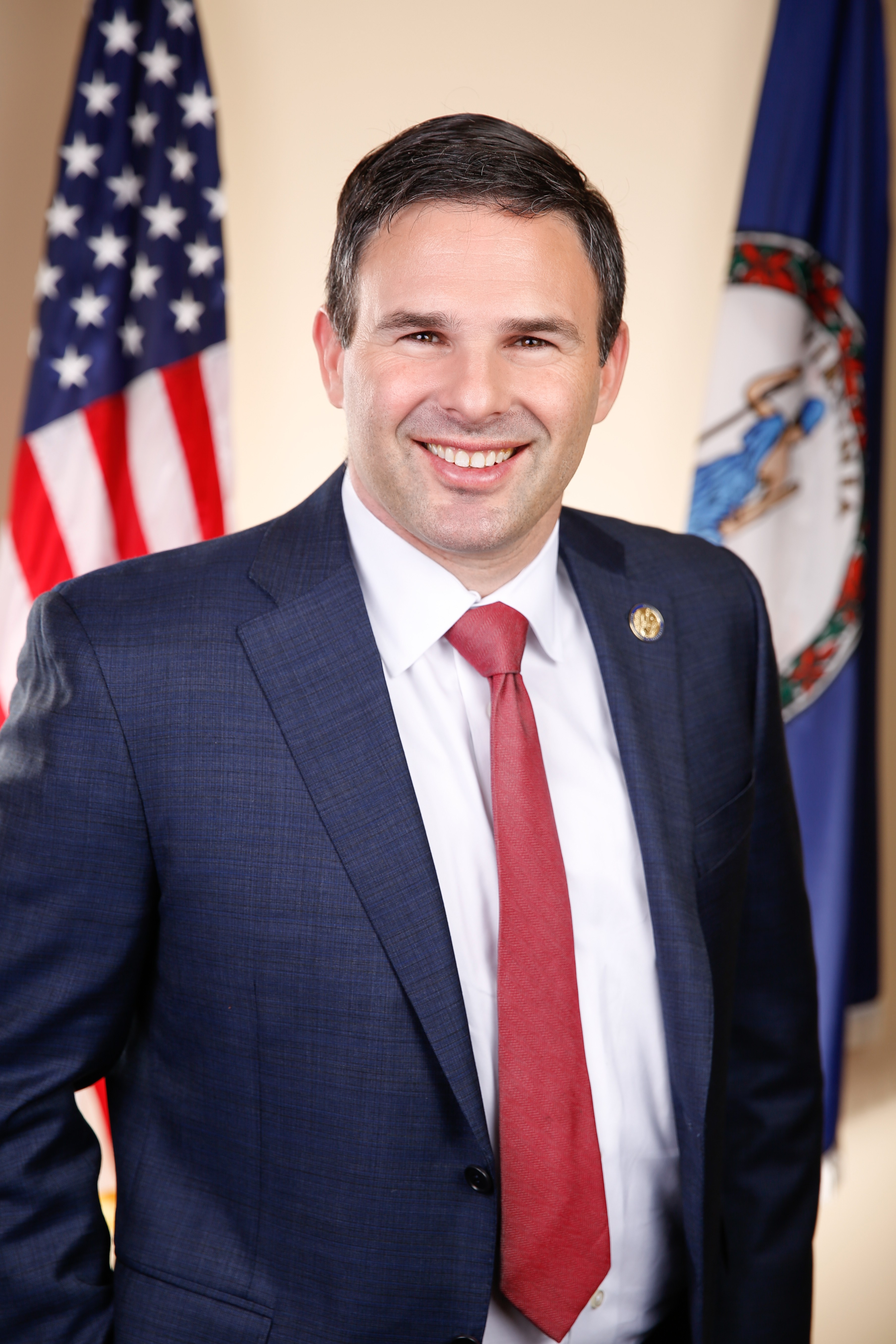
Del. Dan Helmer
Sponsored bills
Manufacture, import, sale, transfer, or possession of plastic firearms and unfinished frames or receivers and unserialized firearms prohibited; penalties. Creates a Class 5 felony for any person who knowingly manufactures or assembles, imports, purchases, sells, transfers, or possesses any firearm that, after removal of all parts other than a major component, as defined in the bill, is not detectable as a firearm when subjected to inspection by the types of detection devices, including X-ray machines, commonly used at airports, government buildings, schools, correctional facilities, and other locations for security screening. The bill updates language regarding the types of detection devices that are used at such locations for detecting plastic firearms. Under current law, it is unlawful to manufacture, import, sell, transfer, or possess any plastic firearm and a violation is punishable as a Class 5 felony. The bill also creates a Class 1 misdemeanor, which is punishable as a Class 4 felony for a second or subsequent offense, making it unlawful for any person to knowingly possess a firearm or any completed or unfinished frame or receiver that is not imprinted with a valid serial number or to knowingly import, purchase, sell, offer for sale, or transfer ownership of any completed or unfinished frame or receiver, unless the completed or unfinished frame or receiver (i) is deemed to be a firearm pursuant to federal law and (ii) is imprinted with a valid serial number. The bill creates a Class 1 misdemeanor, which is punishable as a Class 4 felony for a second or subsequent offense, making it unlawful for any person to manufacture or assemble, cause to be manufactured or assembled, import, purchase, sell, offer for sale, or transfer ownership of any firearm that is not imprinted with a valid serial number. The portions of the bill prohibiting unfinished frames or receivers and unserialized firearms have a delayed effective date of January 1, 2025; however, the portions of the bill prohibiting the knowing possession of a firearm or any completed or unfinished frame or receiver that is not imprinted with a valid serial number have a delayed effective date of July 1, 2025. This bill is identical to SB 100.
Firearm locking device required for purchase of a firearm; warning against accessibility to children; penalty. Requires any person who purchases a firearm to either (i) obtain or purchase from a licensed dealer a locking device for such firearm if a minor is present in such person's residence for 14 days or more in a calendar month or (ii) complete a certification statement on a form provided by the Department of State Police certifying that a minor is not present in such person's residence for 14 days or more in a calendar month, with exceptions enumerated in the bill. Accordingly, the bill provides that it is unlawful for any licensed manufacturer, licensed importer, or licensed dealer to sell, deliver, or transfer any firearm to any person, other than a licensed manufacturer, licensed importer, or licensed dealer, unless (a) the firearm is accompanied by a warning, in conspicuous and legible type in capital letters printed on a separate sheet of paper included within the packaging enclosing the firearm, that firearms should be locked and kept away from children and that there may be civil and criminal liability for failing to do so and (b) the transferee (1) obtains or purchases a locking device for such firearm if a minor is present in such person's residence for 14 days or more in a calendar month or (2) completes the certification statement. A violation of either provision is a Class 3 misdemeanor.
Purchase, possession, sale, transfer, etc.,of assault firearms and certain ammunition feeding devices prohibited;penalty. Creates a Class 1 misdemeanor for any person who imports,sells, manufactures, purchases, possesses, transports, or transfersan assault firearm, as that term is defined in the bill, and prohibitsa person who has been convicted of such violation from purchasing,possessing, or transporting a firearm for a period of three yearsfrom the date of conviction. The bill provides that an assault firearmdoes not include any firearm that is an antique firearm, has been rendered permanently inoperable, is manually operated by bolt, pump,lever, or slide action, or was manufactured before July 1, 2024.The bill also prohibits the sale of a large capacity ammunition feedingdevice, as that term is defined in the bill. The bill provides thatany person who willfully and intentionally (i) sells an assault firearmto another person or (ii) purchases an assault firearm from anotherperson is guilty of a Class 1 misdemeanor and that any person whoimports, sells, barters, or transfers a large capacity ammunition feeding device is guilty of a Class 1 misdemeanor. The bill alsomakes it a Class 1 misdemeanor for any person younger than 21 yearsof age to import, sell, manufacture, purchase, possess, transport,or transfer an assault firearm regardless of the date of manufactureof such assault firearm.
Firearm industry members; standards of responsible conduct; civil liability. Creates standards of responsible conduct for firearm industry members and requires such members to establish and implement reasonable controls regarding the manufacture, sale, distribution, use, and marketing of the firearm industry member's firearm-related products, as those terms are defined in the bill. Such reasonable controls include reasonable procedures, safeguards, and business practices that are designed to (i) prevent the sale or distribution of a firearm-related product to a straw purchaser, a firearm trafficker, a person prohibited from possessing a firearm under state or federal law, or a person who the firearm industry member has reasonable cause to believe is at substantial risk of using a firearm-related product to harm themselves or unlawfully harm another or of unlawfully possessing or using a firearm-related product; (ii) prevent the loss of a firearm-related product or theft of a firearm-related product from a firearm industry member; (iii) ensure that the firearm industry member complies with all provisions of state and federal law and does not otherwise promote the unlawful manufacture, sale, possession, marketing, or use of a firearm-related product; and (iv) ensure that the firearm industry member does not engage in an act or practice in violation of the Virginia Consumer Protection Act. The bill also provides that a firearm industry member may not knowingly or recklessly create, maintain, or contribute to a public nuisance, as defined in the bill, through the sale, manufacturing, importing, or marketing of a firearm-related product. The bill creates a civil cause of action for the Attorney General or a local county or city attorney to enforce the provisions of the bill or for any person who has been injured as a result of a firearm industry member's violation to seek an injunction and to recover costs and damages. This bill is identical to SB 491.
Health insurance; coverage for contraceptivedrugs and devices. Requires health insurance carriers to providecoverage, under any health insurance contract, policy, or plan thatincludes coverage for prescription drugs on an outpatient basis,for contraceptive drugs and contraceptive devices, as defined inthe bill, approved for use as prescribed products or for over-the-counteruse. The bill prohibits a health insurance carrier from imposingupon any person receiving contraceptive benefits pursuant to theprovisions of the bill any copayment, coinsurance payment, or fee, except in certain circumstances. The provisions of the bill applyto health insurance contracts, policies, or plans delivered, issuedfor delivery, or renewed on and after January 1, 2025.
Firearm transfers to another person from a prohibited person. Provides that a person who is prohibited from possessing a firearm because such person is subject to a protective order or has been convicted of an assault and battery of a family or household member may transfer a firearm owned by such prohibited person to any person who is not otherwise prohibited by law from possessing such firearm, provided that such person who is not otherwise prohibited by law from possessing such firearm is 21 years of age or older and does not reside with the person who is subject to the protective order. Under current law, there is no requirement that such transferee cannot be younger than 21 years of age and cannot reside with such prohibited person. The bill also provides that such prohibited person who transfers, sells, or surrenders a firearm pursuant to the provisions of the bill shall inform the clerk of the court of the name and address of the transferee, the federally licensed firearms dealer, or the law-enforcement agency in possession of the firearm and shall provide a copy of such form to the transferee. The bill also provides that a person who is prohibited from possessing a firearm because such person is subject to a protective order or has been convicted of an assault and battery of a family or household member shall be advised that a law-enforcement officer may obtain a search warrant to search for any firearms from such person if such law-enforcement officer has reason to believe that such person has not relinquished all firearms in his possession. This bill is identical to SB 47.
Equity in public school funding; student need; English language learner, special education, and at-risk students. Places several parameters on Standards of Quality funding calculations performed by the Department of Education, including (i) requiring the Department, when calculating the cost of salaries under the Standards of Quality funding formula, to include facilities staff and transportation staff salaries in the calculation of any cost of competing adjustment to salaries for instructional and support positions that is provided as part of the state share of basic aid pursuant to the general appropriation act; (ii) requiring the Department, when estimating the cost of any compensation supplement for instructional and support positions under the Standards of Quality funding formula, to include and estimate the cost of such a compensation supplement for facilities staff; (iii) prohibiting the Department from applying any cap on inflation rate adjustments to non-personal cost categories during the biennial process of rebenchmarking the direct aid to public education budget; and (iv) requiring the Department to utilize a three-year average of the most recently available data to calculate the composite index of local ability-to-pay for each school division. The bill also amends Standard of Quality 2 by (a) including in the definition of "support services position" any central office clerical position that is not otherwise set forth in such definition, (b) requiring a per-pupil Standards of Quality funding add-on to be provided for English language learner and special education students, (c) requiring, in addition to the positions supported by basic aid, state funding, pursuant to the general appropriation act, to be provided to cover the actual average school division cost to educate children with disabilities, and (d) establishing the At-Risk Program, defined in the bill as any state funding provided for programs of prevention, intervention, or remediation or pursuant to the at-risk add-on for the purpose of supporting programs for students who are educationally at risk. The bill requires (1) the determination of the amount of state funding for which a school division is eligible pursuant to such At-Risk Program to be based on the school division's identified student percentage, defined in the bill as the fraction, expressed as a percentage, that results from dividing the number of identified students enrolled in a school division by the total number of students enrolled in such school division, weighted by the factor of 1.5, and then adjusted by the addition of a percentage that corrects for undercounting English language learner students as identified students and (2) such funding to be distributed as follows: 60 percent on a flat per-student rate and 40 percent on a variable rate set out in the general appropriation act based on the concentration of poverty in the school division. The bill is a recommendation of the Joint Legislative Audit and Review Commission.
Consultation with federally recognized Tribal Nations in the Commonwealth; permits and reviews with potential impacts on environmental, cultural, and historic resources. Requires the Department of Conservation and Recreation, the Department of Environmental Quality, the Department of Historic Resources, and the Virginia Marine Resources Commission to establish policies and procedures for consulting with federally recognized Tribal Nations in the Commonwealth when evaluating certain permits and reviews relating to environmental, cultural, or historic resources that potentially impact those federally recognized Tribal Nations in the Commonwealth. The bill directs the Secretary of the Commonwealth to designate an Ombudsman for Tribal Consultation to facilitate communication and consultation with federally recognized Tribal Nations in the Commonwealth and requires the Ombudsman to develop by September 1, 2024, a list of localities in which federally recognized Tribal Nations in the Commonwealth shall be consulted to effectuate the provisions of the bill. The bill codifies Executive Order 82 (2021).
Electors for President and Vice President; bindingof electors; vacancies. Provides that an elector who is selectedby the state convention of any political party and who, at the conveningof the electors after the election, refuses to present a ballot,presents an unmarked ballot, or presents a ballot marked in violationof his oath stating that he would, if elected, cast his ballot forthe candidates for President and Vice President nominated by theparty that selected the elector, or as the party may direct in theevent of the death, withdrawal, or disqualification of the party nominee,is deemed to vacate the office of elector. The bill provides thatthe other electors present shall immediately fill such vacancy inthe same manner as a vacancy due to an elector's death or failureor inability to attend. The bill applies the same provisions to electorswho are named in a petition of qualified voters not constitutinga political party. The bill contains technical amendments that consolidateinto a single chapter the provisions of Title 24.2 relating to presidentialelectors.