

Naloxone or other opioid antagonists; possession and administration by state agencies. Requires state agencies to possess naloxone or other opioid antagonists used for overdose reversal to a person who is believed to be experiencing or about to experience a life-threatening opioid overdose and permits employees of any state agency to possess and administer naloxone or other opioid antagonists. The bill also directs the Department of Health to post on its website informational resources relating to the use of naloxone and other opioid antagonists for opioid overdose reversal and prevention in public places. Finally, the bill directs the Department of Health to develop a plan for the procurement and distribution of naloxone or other opioid antagonists to each state agency and for the possession of naloxone or other opioid antagonists by each state agency and to report its progress in developing such plan to the Governor and the Chairmen of the House Committee on Health and Human Services and the Senate Committee on Education and Health by November 1, 2024.
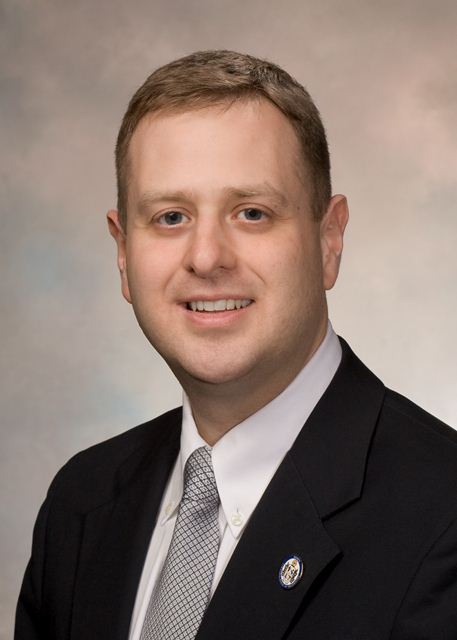
Del. Patrick Hope
Sponsored bills
Stores and telephone systems in local correctional facilities; fees. Provides that the net profits from the operation of stores and telephonic communication systems in local correctional facilities shall be used within each facility respectively for educational, recreational, or medical purposes for the benefit of the inmates to include behavioral health, substance abuse, reentry, and rehabilitative services and may be expended to pay for the training, salaries, and benefits of employees or contractors whose primary job is to provide such programs and services to the inmates.
Office of the Department of Corrections Ombudsman; created. Creates, within the Office of the State Inspector General, the Office of the Department of Corrections Ombudsman (the Office) headed by an Ombudsman who is selected by the State Inspector General. The bill creates the Corrections Oversight Committee (the Committee) made up of four members of the General Assembly, nine nonlegislative citizen members appointed by the Governor, subject to criteria described in the bill, and two nonvoting members, appointed as described in the bill, who monitor the activities of the Ombudsman and the Department of Corrections (the Department). The bill provides the Office with authority to conduct inspections at least once every three years and more often when warranted of Department facilities and requires the Office to establish a statewide toll-free telephone number, website, mailing address, and paper and electronic forms for inmates, family members, friends, and advocates to submit complaints and inquiries. In addition, the bill requires the Committee to hold at least two public hearings per year and requires the Office to submit an annual report to be made available online and to be delivered to the Governor, the Attorney General, the Senate Committee on Rehabilitation and Social Services, the House Committee on Public Safety, the Committee, and the Director of the Department. The bill directs the Office to develop a short-term and long-term strategic plan and to provide a report on its initial activities and strategic plan to the Governor and the General Assembly on or before November 15, 2025. This bill is identical to SB 456.
Virginia Public Procurement Act; local public bodies; electronic submissions of bids or proposals. Mandates that all local public bodies provide an option to submit bids or proposals for procurement contracts through the Commonwealth's statewide electronic procurement system, known as eVA, or other electronic means. Current law only encourages local public bodies to use eVA for such submissions. The bill has a delayed effective date of January 1, 2025.
Hospitals; emergency departments; licensed physicians. Requires any hospital with an emergency department to have at least one licensed physician on duty and physically present at all times. Current law requires such hospitals to have a licensed physician on call, though not necessarily physically present on the premises, at all times. The bill has a delayed effective date of July 1, 2025 and is identical to SB 392.
Advisory Council on Pediatric Autoimmune Neuropsychiatric Disorders Associated with Streptococcal Infections and Pediatric Acute-Onset Neuropsychiatric Syndrome; sunset. Extends from July 1, 2020, to July 1, 2028, the sunset of the Advisory Council on Pediatric Autoimmune Neuropsychiatric Disorders Associated with Streptococcal Infections and Pediatric Acute-Onset Neuropsychiatric Syndrome.
State Council of Higher Education for Virginia; public institutions of higher education; policies for establishing eligibility for accommodations; report. Requires the State Council of Higher Education for Virginia, in consultation with representatives of public institutions of higher education, disability advocacy organizations, students enrolled at public institutions of higher education, higher education disability accommodation professionals, and a subject matter expert, to (i) study the processes by which each public institution of higher education in the Commonwealth determines the eligibility for accommodations of an admitted or enrolled student with a temporary or permanent disability, (ii) identify in such processes any potential barriers to establishing eligibility, and (iii) make recommendations on reducing any such barriers and on the development and establishment of a uniform accommodations eligibility determination in the Commonwealth. This bill is identical to HB 509.
State hospitals; discharge planning; report. Provides that (i) when an individual is to be discharged from Central State Hospital, Southwestern Virginia Mental Health Institute, or Southern Virginia Mental Health Institute in 30 days or less after admission, the appropriate community services board shall implement the discharge plan developed by the state facility and (ii) when an individual is to be discharged from any other state facility in 30 days or less after admission, or from a state hospital more than 30 days after admission, the appropriate community services board or behavioral health authority shall be responsible for the individual's discharge planning. Under current law, community services boards and behavioral health authorities provide discharge planning for all individuals discharged from state hospitals, regardless of the duration of their stay. The bill requires the Department of Behavioral Health and Developmental Services to make certain annual reports by August 1 to the Governor and the General Assembly and to provide the General Assembly with a one-time evaluation of the impacts of the changes to discharge planning implemented by the bill by November 1, 2025. The bill has a delayed effective date of January 1, 2025. This bill is identical to SB 179.
Child labor offenses; civil penalties. Increasesfrom $10,000 to $25,000 the civil penalty for each violation of childlabor laws that results in the employment of a child who is seriouslyinjured or dies in the course of employment. The bill also increasesfrom $1,000 to $2,500 the maximum civil penalty for each other violationof child labor laws and provides that such civil penalty shall notbe less than $500. The bill directs the Department of Labor and Industry to convene a stakeholder work group to develop education and outreach plans to inform young workers and employers about child labor laws.
Advance Health Care Planning Registry; amendment of regulations. Amends the list of documents that may be submitted to the Advance Health Care Directive Registry to include any other document that supports advance health care planning. The bill also changes the name of the Advance Health Care Directive Registry to the Advance Health Care Planning Registry. The bill directs the Department of Health to amend certain Advance Health Care Planning Registry regulations. This bill is identical to SB 154.