Minimum wage. Increases the minimum wage incrementally to $15.00 per hour by January 1, 2027. The bill codifies the adjusted state hourly minimum wage of $12.41 per hour that is effective January 1, 2025, and increases the minimum wage to $13.50 per hour effective January 1, 2026, and to $15.00 per hour effective January 1, 2027. The bill requires the Commissioner of Labor and Industry to establish an adjusted state hourly minimum wage by October 1, 2027.
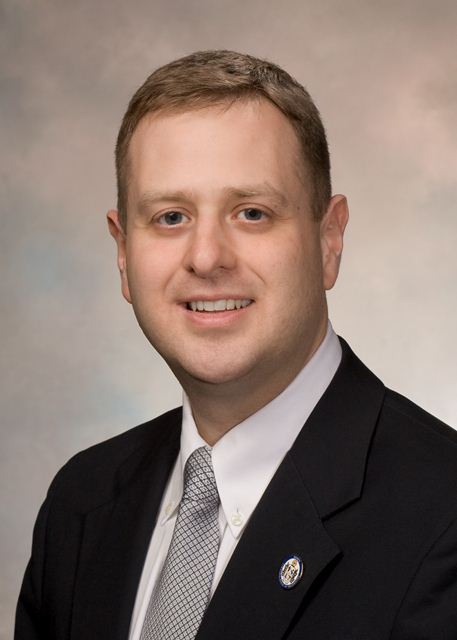
Del. Patrick Hope
Sponsored bills
Conservation and replacement of trees during development process. Expands certain existing local government authority to conserve or replace trees during the development process by expanding such authority statewide. The bill allows localities to establish higher tree canopy replacement percentages based on density per acre. The bill also alters the current process for granting exceptions to a local ordinance by altering a provision that requires the granting of an exception when strict application of the ordinance would result in unnecessary or unreasonable hardship to the developer and requiring that the locality concur with such alteration. The bill permits localities to monitor and assess the condition and coverage of tree canopies at development sites during the time period up to 20 years' maturity of the planted trees. The bill contains technical amendments.
County manager plan of government; county board; powers. Broadens several powers related to the county board size and manner of election for counties that have adopted the county manager plan of government by giving such counties the option of following general law, after voter approval by referendum, rather than the provisions specified in this optional form of county government. Currently, only Arlington County has adopted the county manager plan of government. The provisions of the bill do not become effective unless reenacted by the 2026 Session of the General Assembly.
Purchase, possession, or transportation of firearm; assault and battery of a family or household member or intimate partner; penalties. Adds to the definition of "family or household member," as such definition relates to juvenile and domestic relations district court, a person's intimate partner, defined in the bill as an individual who, within the previous 12 months, was in a romantic, dating, or sexual relationship with the person as determined by the length, nature, frequency, and type of interaction between the individuals involved in the relationship. The bill also adds to the definition of "family or household member," as such definition relates to a person's purchase, possession, or transportation of a firearm following an assault and battery of a family or household member, any individual who cohabits or who, within the previous 12 months, cohabitated with the person. Finally, the bill provides that any person who knowingly and intentionally purchases, possesses, or transports any firearm following a misdemeanor conviction for an offense that occurred on or after July 1, 2025, for the offense of assault and battery against an intimate partner or an offense substantially similar under the laws of any other state or of the United States is guilty of a Class 1 misdemeanor. This bill is identical to SB 883.

Department of Medical Assistance Services; appeals of agency determinations. Allows health care providers to appeal any adverse action or determination by the Department of Medical Assistance Services (DMAS) or a DMAS contractor. Under current law, such appeal is allowed for a determination of overpayment to a provider by DMAS. The bill adds provisions allowing for DMAS and an appealing provider to stay the deadline for their appeal decision to facilitate settlement discussions. The bill further specifies that DMAS contractors are required to represent themselves during appeal proceedings. This bill is identical to SB 1237.
Trigger activator definition; penalty. Defines "trigger activator" as a conversion kit, tool, accessory, or device designed to alter the rate of fire of a semi-automatic firearm to mimic automatic weapon fire or used to increase the rate of fire to a rate faster than such semi-automatic firearm not equipped with a conversion kit, tool, accessory, or device. The bill clarifies that "trigger activator" includes a bump stock, trigger crank, hellfire trigger, binary trigger system, burst trigger system, or a copy thereof, but does not include a semi-automatic replacement trigger, designed for use in competitive shooting, that improves performance and functionality over the stock trigger. This bill is identical to SB 886.
Collective bargaining by public employees; exclusive bargaining representatives. Repeals the existing prohibition on collective bargaining by public employees. The bill creates the Public Employee Relations Board, which shall determine appropriate bargaining units and provide for certification and decertification elections for exclusive bargaining representatives of state employees and local government employees. The bill requires public employers and employee organizations that are exclusive bargaining representatives to meet at reasonable times to negotiate in good faith with respect to wages, hours, and other terms and conditions of employment. The bill repeals a provision that declares that, in any procedure providing for the designation, selection, or authorization of a labor organization to represent employees, the right of an individual employee to vote by secret ballot is a fundamental right that shall be guaranteed from infringement. The bill has a delayed effective date of July 1, 2026. This bill is identical to SB 917.
Firearm locking device required for sale or transfer of firearm; warning against accessibility to children; penalty. Makes it a Class 3 misdemeanor for any licensed manufacturer, licensed importer, or licensed dealer to sell, deliver, or transfer any firearm to any person other than a licensed manufacturer, licensed importer, or licensed dealer unless the transferee is provided with a locking device for that firearm and the firearm is accompanied by a warning, in conspicuous and legible type in capital letters printed on a separate sheet of paper included within the packaging enclosing the firearm, that firearms should be locked and kept away from children and that there may be civil and criminal liability for failing to do so. The bill provides exceptions for law-enforcement and governmental agencies.
State correctional facilities; cell conditions; temperature monitoring; report. Requires the Department of Corrections to require that heat and air conditioning be provided in all state correctional facilities that are capable of controlling the interior temperature of such facilities so that a temperature of not less than 65 degrees Fahrenheit or more than 80 degrees Fahrenheit is maintained in each such facility. The bill also directs the Department of Corrections to evaluate the implementation of remote temperature monitoring and to report its findings to the General Assembly by October 1, 2025.
Carrying a firearm or explosive material within Capitol Square or building owned or leased by the Commonwealth; exemptions; public institutions of higher education; penalty. Permits the governing board of a public institution of higher education to adopt a policy prohibiting the carrying of any firearm, ammunition, or components or combination thereof within any building owned or operated by such public institution of higher education. The bill allows such policy to include security measures that are designed to reasonably prevent the unauthorized access of buildings that are open to the public. Finally, the bill exempts certain activities, defined in the bill, operated at public or private institutions of higher education from any policy created by a governing board. This bill is identical to SB 1182.