

Virginia Health Benefit Exchange. Creates the Virginia Health Benefit Exchange, which will be established and operated by a new division within the State Corporation Commission (SCC). The Exchange shall facilitate the purchase and sale of qualified health plans and qualified dental plans to qualified individuals and qualified employers. The Exchange shall make qualified plans available to qualified individuals and qualified employers by July 1, 2023, unless the SCC postpones this date. The measure authorizes the SCC to review and approve accident and sickness insurance premium rates applicable to health benefit plans in the individual and small group markets and health benefit plans providing health insurance coverage in the individual market through certain non-employer group plans. The Exchange will be funded by an assessment on health insurers, which is limited to three percent of total monthly premiums, except the SCC may, after a public hearing, adjust the rate as necessary to ensure the Exchange is fully funded. A health plan will not be required to cover any state-mandated health benefit if federal law does not require it to be covered as part of the essential benefits package. The essential health benefits are items and services included in the benchmark health insurance plan, which is the largest plan in the largest product in the Commonwealth's small group market as supplemented in order to provide coverage for the items and services within the statutory essential health benefits categories. The SCC may contract with other eligible entities and enter into memoranda of understanding with other agencies of the Commonwealth to carry out any of the functions of the Exchange, including agreements with other states or federal agencies to perform joint administrative functions. Such contracts are not subject to the Virginia Public Procurement Act (§ 2.2-4300 et seq.). The measure repeals a provision enacted in 2013 that prohibits an agent, employee, officer, or agency of the Commonwealth from taking any action to establish a health benefit exchange.The measure requires the Department of Taxation to include on the appropriate individual tax return forms a checkoff box or similar mechanism for indicating whether the individual, or spouse in the case of a married taxpayer filing jointly, or any dependent of the individual (i) is an uninsured individual at the time the return is filed and (ii) voluntarily consents to the Department of Taxation providing the individual's tax information to the Department of Medical Assistance Services for purposes of affirming that the individual, the individual's spouse, or any dependent of the individual meets the income eligibility for medical assistance. Finally, the measure requires the Secretary of Health and Human Resources to convene a work group that includes representatives from the SCC, the Department of Medical Assistance Services, the Department of Social Services, and the Department of Taxation and a consumer advocate to develop systems, policies, and practices to leverage state income tax returns to facilitate the enrollment of eligible individuals in insurance affordability programs through the Virginia Health Benefit Exchange established in this measure. The Secretary shall report the work group's recommendations to the Governor and the General Assembly by September 15, 2020. This measure is identical to SB 732.
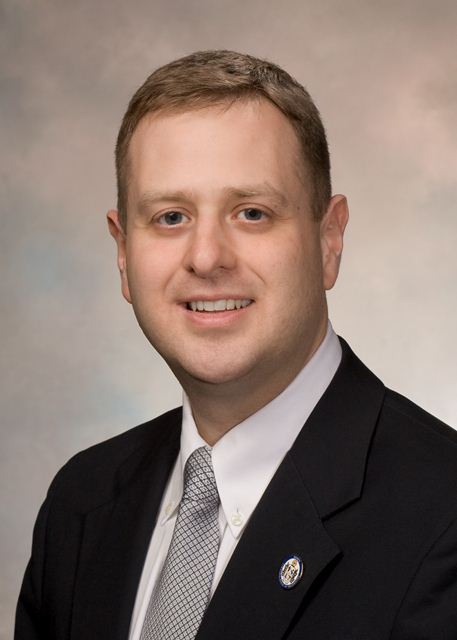
Del. Patrick Hope
Sponsored bills
Nonpayment of wages; discriminatory actions prohibited. Prohibits an employer from discharging or otherwise discriminating against an employee because such employee has filed any complaint or instituted or caused to be instituted any proceeding related to the failure to pay wages, or has testified or is about to testify in any such proceeding. The measure authorizes the Commissioner of Labor and Industry to institute proceedings against an employer who has taken such prohibited discriminatory action. Available remedies include reinstatement of the employee, recovery of lost wages, and liquidated damages. This bill is identical to SB 48.
Family day homes; storage of firearms. Requires that during hours of operation, all firearms in a licensed family day home, registered family day home, or family day home approved by a family day system be stored unloaded in a locked container, compartment, or cabinet, and that all ammunition be stored in a separate locked container, compartment, or cabinet. The bill requires that the key or combination to such locked containers, compartments, or cabinets be inaccessible to all children in the home. This bill is identical to SB 593.
Juveniles; trial as adult. Increases from 14 years of age to 16 years of age the minimum age at which a juvenile must be tried as an adult in circuit court for murder or aggravated malicious wounding; however, if the juvenile is 14 years of age or older but younger than 16 years of age, the court, on motion of the attorney for the Commonwealth, shall hold a transfer hearing. The minimum age is also raised from 14 to 16 for certain charges requiring notice of intent to try such juvenile as an adult by the attorney for the Commonwealth. In order to be tried as an adult in circuit court for the charges that under current law require notice of intent to proceed with trial as an adult by the attorney for the Commonwealth, the bill requires that (i) a report concerning the juvenile be prepared by the court services unit or other qualified agency and (ii) the attorney for the Commonwealth provide written notice that he intends to proceed with a preliminary hearing for trial of such juvenile as an adult, including affirmation that he has read the report. This bill incorporates HB 1440.
Smoking in motor vehicle with a minor present. Expands the group in the presence of whom it is illegal to smoke in a motor vehicle from minors under the age of eight to minors under the age of 15.
Minimum staffing ratio for school counselors. Requires local school boards to employ school counselors in accordance with the following ratios, effective with the 2020-2021 school year: in elementary schools, one hour per day per 75 students, one full-time equivalent at 375 students, one hour per day additional time per 75 students or major fraction thereof; in middle schools, one period per 65 students, one full-time equivalent at 325 students, one additional period per 65 students or major fraction thereof; and in high schools, one period per 60 students, one full-time equivalent at 300 students, one additional period per 60 students or major fraction thereof. The bill also requires local school boards to employ one full-time equivalent school counselor position per 325 students in grades kindergarten through 12, effective with the 2021-2022 school year. This bill incorporates HB 398.
Department of Mines, Minerals and Energy; electric vehicle rebate working group. Establishes a working group to determine the feasibility of an electric vehicle rebate program. The working group will report on its findings and recommendations by November 1, 2020.
Provision of abortion. The bill expands who can perform first trimester abortions to include, in addition to physicians, physician's assistants licensed by the Board of Medicine, and nurse practitioners or certified nurse midwives jointly licensed by the Board of Medicine and the Board of Nursing. The bill eliminates all the procedures and processes, including the performance of an ultrasound, required to effect a pregnant person's informed written consent to the performance of an abortion; however, the bill does not change the requirement that a pregnant person's informed written consent first be obtained. The bill removes language classifying facilities that perform five or more first trimester abortions per month as hospitals for the purpose of complying with regulations establishing minimum standards for hospitals. This bill incorporates HB 1060.
Naloxone; possession and administration; employee or person acting on behalf of a public place. Authorizes an employee or other person acting on behalf of a public place, as defined in the bill, who has completed a training program on the administration of naloxone or other opioid antagonist to possess and administer naloxone or other opioid antagonist, other than naloxone in an injectable formulation with a hypodermic needle or syringe, in accordance with protocols developed by the Board of Pharmacy in consultation with the Board of Medicine and the Department of Health. The bill also provides that a person who is not otherwise authorized to administer naloxone or other opioid antagonist used for overdose reversal may administer naloxone or other opioid antagonist used for overdose reversal to a person who is believed to be experiencing or about to experience a life-threatening opioid overdose. The bill provides immunity from civil liability for a person who, in good faith, administers naloxone or other opioid antagonist used for overdose reversal to a person who is believed to be experiencing or about to experience a life-threatening opioid overdose, unless such act or omission was the result of gross negligence or willful and wanton misconduct. This bill incorporates HB 650, HB 1465, and HB 1466.
Virginia Food Access Investment Program andFund. Creates the Virginia Food Access Investment Program andFund to provide funding for the construction, rehabilitation, equipmentupgrades, or expansion of grocery stores, small food retailers, andinnovative food retail projects, defined in the bill, in underservedcommunities.