

Humane Cosmetics Act of 2021 This bill generally prohibits animal testing in the evaluation of cosmetic products, and it prohibits the sale or transport of cosmetics developed using animal testing, subject to civil penalties. These prohibitions begin one year after enactment. The bill specifies exceptions to these prohibitions, including if such animal testing (1) is conducted outside the United States to comply with a foreign regulatory authority; (2) is pursuant to a specified finding that there are no nonanimal alternatives to test the safety of a potentially dangerous cosmetic product or ingredient; (3) is of a product or ingredient for a drug or device subject to regulation by the Food and Drug Administration (FDA); or (4) is required for a noncosmetic purpose pursuant to a state, federal, or foreign regulatory authority. Further, no animal-testing evidence may be used to establish the safety of a cosmetic product or ingredient that is regulated by the FDA after the effective date of this bill, subject to limited exceptions.
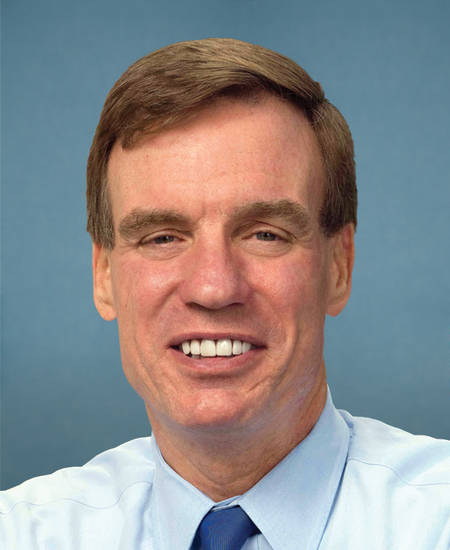
Sen. Mark R. Warner
Sponsored bills
Maddy summaryThis is a ceremonial Senate resolution (SRES 470) commemorating the death of former U.S. Senator Bob Dole of Kansas. It formally expresses the Senate's sorrow, requests the Secretary of the Senate transmit a copy to Dole's family, and directs the Senate to adjourn as a mark of respect. The resolution has no policy or legal effect - it solely serves as a symbolic tribute to Dole's public service career. It does not affect any individuals or enact new laws.
Protecting Ballot Measures from Foreign Influence Act This bill prohibits contributions or donations by foreign nationals in connection with state or local ballot initiatives or referenda.
Deceptive Experiences To Online Users Reduction Act or the DETOUR Act This bill prohibits large online operators from manipulating their product to mislead consumers into providing personal information or giving consent. The bill further prohibits these operators from studying the behavioral patterns of subsets of users without first obtaining informed consent, and it prohibits designing online products that lead to compulsive usage by children. If meeting certain requirements, an association of large online operators may register with the Federal Trade Commission (FTC) as a professional standards body to develop and promote best practices and guidance for complying with the requirements of this bill. The bill provides authority for the FTC to enforce the requirements of this bill.
Building Equitable Access to Contribute to Our National Security Act of 2021 or the BEACON Act of 2021 This bill implements plans and requirements related to minority institutions of higher education and their contributions to national security efforts. Specifically, the bill requires the Department of Defense (DOD) to submit a plan for the establishment of the Minority Institute for Defense Research. The plan must be made available on a publicly accessible DOD website. DOD is authorized to establish a program to award grants to leading minority institutions to, among other purposes, advance research capabilities relating to national security. Under the bill, certain contracts awarded to educational institutions must include a requirement to subcontract with one or more minority institutions for a total amount of at least 5% of the amount awarded in the contract.
This bill redesignates the Geospatial Learning Center in the Next NGA West facility in St. Louis, Missouri, as the Senator Roy Blunt Geospatial Learning Center.
Maddy summarySRES 451 is a commemorative Senate resolution honoring the late Senator Max Cleland (D-GA), who died November 9, 2021. The resolution recognizes his service as a Vietnam War veteran (losing both legs and an arm in combat), his 50+ years of public service including roles as Georgia State Senator, Secretary of State, U.S. Senator, and Administrator of the Veterans Administration, and his advocacy for veterans. It formally expresses the Senate’s "profound sorrow" and "deep regret" over his death, commemorates his legacy of service to Georgia and veterans, and requests the Secretary of the Senate transmit the resolution to his family. This is a ceremonial resolution with no policy changes or legal effect.
IDEA Full Funding Act This bill provides permanent, mandatory funding for the grant program that assists states and outlying areas in providing special education and related services to children with disabilities.
EMBRACE Stormwater Management Act or the Enhancing Military Base Resilience And Conserving Ecosystems through Stormwater Management Act This bill authorizes the Department of Defense and each military department to implement stormwater management projects on or related to military installations. Specifically, such projects are authorized for the purpose of (1) protecting nearby waterways and stormwater-stressed ecosystems, and (2) improving military installation resilience or the resilience of a defense access road or other essential civilian infrastructure supporting the installation.
John R. Lewis Voting Rights Advancement Act of 2021 This bill establishes new criteria for determining which states and political subdivisions must obtain preclearance before changes to voting practices may take effect. Preclearance is the process of receiving preapproval from the Department of Justice (DOJ) or the U.S. District Court for the District of Columbia before making legal changes that would affect voting rights. The bill also includes provisions related to federally protected activities at polling places and voting access on tribal lands. A state and all of its political subdivisions shall be subject to preclearance of voting practice changes for a 10-year period if 15 or more voting rights violations occurred in the state during the previous 25 years; or 10 or more violations occurred during the previous 25 years, at least 1 of which was committed by the state itself. A political subdivision as a separate unit shall also be subject to preclearance for a 10-year period if three or more voting rights violations occurred there during the previous 25 years. States and political subdivisions that meet certain thresholds regarding minority groups must preclear covered practices before implementation, such as changes to methods of election and redistricting. Further, states and political subdivisions must notify the public of changes to voting practices. Next, the bill authorizes DOJ to require states or political subdivisions to provide certain documents or answers to questions for enforcing voting rights. The bill also outlines factors courts must consider when hearing challenges to voting practices, such as the history of official voting discrimination in the state or political subdivision. In addition, the bill (1) includes certain protections for election workers, polling places, and election infrastructure; and (2) expands voting access on tribal lands.