

Maddy summaryThe Comprehensive Outbound Investment National Security Act of 2025 restricts U.S. investments in certain technologies in countries of concern, primarily China, by prohibiting investments in "covered national security transactions" involving specific technologies. It targets technologies including advanced semiconductors, artificial intelligence systems, quantum information technologies, high-performance computing, and hypersonic systems that could enhance military or surveillance capabilities. The bill requires U.S. persons to notify the government about certain transactions involving "notifiable technologies" and establishes civil penalties for violations, including potential divestment requirements. The law would expire seven years after enactment and mandates annual reports to Congress about implementation and enforcement.
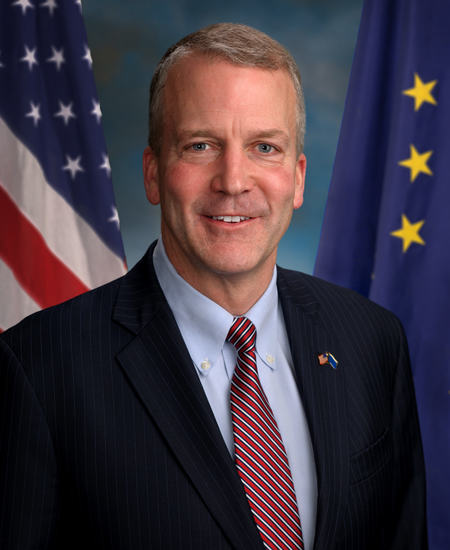
Sen. Dan Sullivan
Sponsored bills
Maddy summaryThis bill requires that public comments on federal land management rules (administered by the Bureau of Land Management) must come only from U.S. citizens, replacing the previous standard. It mandates that agencies implement CAPTCHA systems to prevent artificial intelligence from submitting comments, explicitly stating this is to deter AI-driven public involvement. The changes apply to rulemaking under the Federal Land Policy and Management Act, affecting how the public can participate in decisions about national public lands. The bill does not alter land management policies but modifies the process for gathering public input.
Maddy summaryThis bill authorizes a land exchange between Chugach Alaska Corporation (a Native Regional Corporation) and the U.S. government to resolve a conflict created by the Exxon Valdez oil spill cleanup efforts. It would exchange approximately 231,000 acres of subsurface rights held by Chugach Alaska for 65,374 acres of surface land owned by the federal government in the Chugach Region. The exchange aims to consolidate ownership of both surface and subsurface rights on these lands, addressing a split ownership issue that has prevented Chugach Alaska from developing its subsurface resources as required by the Alaska Native Claims Settlement Act. The bill also includes provisions to protect certain Native Village Corporation development rights and shareholder homesites from the exchange.
Maddy summaryThis bill authorizes the U.S. Department of the Interior to provide funding, contracts, and technical assistance to Indian Tribes and Tribal organizations for buffalo restoration and management on tribal lands. It requires the Department to consult with tribes on buffalo-related initiatives and allows tribes to receive surplus buffalo from federal land without cost. The law supports tribes in using buffalo for cultural preservation, subsistence, and economic development through programs like meat processing and habitat management. It explicitly protects tribal treaty rights and mandates that all actions align with tribal laws and management plans.
Maddy summaryThis bill amends the 2004 Tribal Forest Protection Act to expand protections for tribal lands and clarify restoration goals. It broadens the definition of "Indian forest land or rangeland" to include areas with historical forest cover capable of restoration and explicitly adds "restore" to the Act’s purpose (previously only "protect"). The changes directly affect federally recognized tribes, Alaska Native Corporations under the Alaska Native Claims Settlement Act, and federal agencies managing land. It also authorizes $15 million annually for fiscal years 2026-2031 to implement these provisions.
Maddy summaryThis bill establishes a federal grant program to help states, local governments, and tribal nations hire and retain prosecutors. It provides up to 75% federal funding (with potential waivers for financial hardship) for prosecutor offices to hire, train, or retain staff, with priority given to rural, tribal, or remote areas and rehiring staff laid off due to budget cuts. Funds must supplement, not replace, existing state/local funding, and grantees must track outcomes and submit performance reports. The program is authorized for $10 million annually from 2026 through 2030.
Maddy summaryS 414, the ADS for Mental Health Services Act, requires major social media platforms and search engines (with over 100 million monthly users) to annually report to the Federal Trade Commission (FTC) on public service advertisements promoting mental, behavioral, or physical health resources. The reports must detail the number and value of such ads, including those highlighting free local services or addressing issues like suicide prevention, addiction, or social isolation. The FTC must then summarize this data for Congress annually, without altering existing privacy or data security laws. This bill directly affects large digital platforms by mandating transparency about health-focused public service advertising.
Maddy summaryThis resolution (SRES 539) commemorates the 80th anniversary of Stars and Stripes' continuous operations in the Pacific, beginning in 1945. It honors the publication's role as a "hometown newspaper" providing news and morale support to U.S. military personnel, civilian employees, and their families stationed worldwide. The resolution recognizes Stars and Stripes' historical service since World War II, including its adaptation to digital platforms reaching 1.4 million daily readers. As a symbolic gesture, it does not create new policies or alter existing laws.
Maddy summaryThis bill designates a specific mountain in Alaska (located at 63°04′12″ N, 151°00′18″ W) as "Denali" for all federal references. It requires all U.S. government documents, maps, and records to use "Denali" instead of the previous name for this mountain. The bill affects only official federal paperwork and does not change any laws or policies.
Maddy summaryThis bill (SJRES 80) is a joint resolution disapproving a specific rule issued by the Bureau of Land Management (BLM) concerning oil and gas activities in the National Petroleum Reserve in Alaska. It directly affects the BLM's management of the reserve by nullifying its 2022 "Integrated Activity Plan Record of Decision," which outlined drilling and leasing plans. The resolution invokes the Congressional Review Act (chapter 8 of title 5 U.S. Code) to formally block the rule, stating it "shall have no force or effect." This procedural action was passed by Congress and signed into law on December 5, 2025, reversing the BLM's regulatory framework for the Alaska reserve.