Senior Citizens Tax Elimination Act This bill repeals the inclusion of any Social Security or tier I railroad retirement benefits in gross income for income tax purposes. The bill also (1) appropriates funds to cover reductions in transfers to the Social Security and Railroad Retirement Trust Funds resulting from the enactment of this bill, and (2) expresses the sense of Congress against using tax increases to provide revenue necessary to carry out this bill.
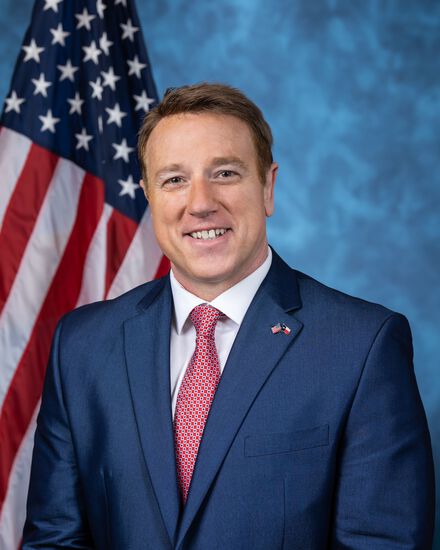
Rep. Pat Fallon
Sponsored bills
Licensing Individual Commercial Exam-takers Now Safely and Efficiently Act of 2022 or the LICENSE Act of 2022 This bill provides statutory authority for waivers of training, testing, and other requirements for commercial driver's licenses that were issued by the Federal Motor Carrier Safety Administration to respond to the COVID-19 pandemic.
Small Practice, Underserved, and Rural Support Program Extension Act of 2022 or the SURS Extension Act This bill reauthorizes funds through FY2027 for the Centers for Medicare & Medicaid Services to contract with specified entities (e.g., quality improvement organizations) to provide technical assistance regarding the Merit-based Incentive Payment System (MIPS) and alternative payment models under Medicare, specifically for health professionals in practices with 15 or fewer professionals. (MIPS is an incentive program under Medicare that allows health professionals to receive payment adjustments based on certain performance measures.)
This bill requires the Office of the Director of National Intelligence to report annually to Congress on investments by China's government (and affiliated entities) in port infrastructure in the Western Hemisphere. The reports must include assessments of whether such infrastructure may be leveraged for military purposes and any implications for the United States.
Survivor Benefits Fairness Act This bill adjusts the effective date of a reduction or discontinuance of compensation, dependency and indemnity compensation, or pension payments to the last day of the month during which a marriage, remarriage, or death of a payee occurs.
Surpassing Temporary Obstructions at Ports and Guaranteeing Resources to Increase the Nation's Commercial Health Act or the STOP the GRINCH Act This bill temporarily waives various requirements and makes other changes to address congestion at U.S. ports. The Federal Motor Carrier Safety Administration (FMCSA) must waive the hours of service limits (i.e., the number of hours a driver may operate a truck or motor carrier in a set period of time) and minimum age requirements that apply to commercial driver's licenses for individuals transporting cargo directly to or from a U.S. port. Additionally, the Coast Guard may temporarily allow foreign-built, -owned, and -crewed vessels to transport cargo between U.S. ports and engage in certain ship-to-ship transfers of cargo. (Current coastwise law, commonly known as the Jones Act, generally requires that vessels transporting cargo domestically be U.S.-built, -owned, and -crewed.) The FMCSA and the Coast Guard must also prioritize the completion of security screenings and credentialing of maritime workers. The Department of Defense must (1) inventory its intermodal equipment (e.g., trailers and chassis used to transport shipping containers) to identify equipment available for loan to trucking companies to relieve congestion at U.S. ports, and (2) establish a process to allow trucking companies to request the loan of such equipment. The bill also requires the identification and designation of federal land located near U.S. ports for use as overflow areas for empty cargo containers.

Providing Our Law Enforcement with Adequate Resources for a Response Act or the POLAR Response Act This bill includes a polar vortex as a major disaster for which a declaration of a state of emergency can be made and provides a definition for a disaster-related emergency for purposes of the Department of Defense (DOD) excess personal property program (therefore authorizing DOD to transfer certain personal property for a polar vortex emergency).
This bill posthumously provides for the award of a Congressional Gold Medal in commemoration of the 13 service members who died on August 26, 2021, while stationed at Hamid Karzai International Airport in Afghanistan.
Continuing Robust and Uninhibited Drilling and Exporting Act or the CRUDE Act This bill limits the President's authority to restrict the export of crude oil from the United States. Currently, the President may restrict the export of oil for up to a year if the President declares a national emergency; the restrictions apply to countries, persons, or organizations for reasons of national security; or the Department of Commerce finds and reports to the President that the export of crude oil has caused sustained material oil supply shortages or sustained oil prices significantly above world market levels and those shortages or price increases have caused or are likely to cause sustained material adverse employment effects. However, this bill only allows the President to make such restrictions if the restrictions apply to countries, persons, or organizations for reasons of national security; or the Department of Defense, the Department of Energy, and Commerce jointly make those findings and report them to the President and Congress.
Securing American Families from Exploitation at the Border Act or the SAFE Border Act This bill directs the Federal Emergency Management Agency (FEMA) to establish a temporary grant program to reimburse landowners for loss or damage to property caused by an individual illegally crossing the southern border or to improve the security of such property. Specifically, FEMA may provide grants to landowners who have experienced (or are at risk of experiencing) property theft or damage in areas within 10 miles of the U.S.-Mexico border.