Gun Owner Registration Information Protection Act This bill prohibits federal funding of, or support for, state databases that list (1) firearms lawfully owned or possessed by individuals, or (2) individuals who lawfully own or possess firearms.
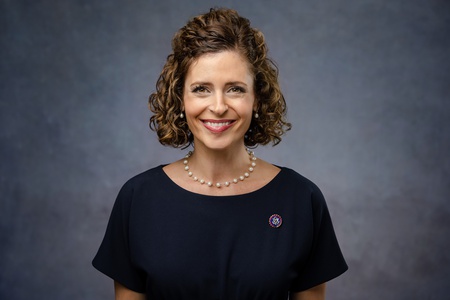
Rep. Julia Letlow
Sponsored bills
Lawful Interstate Transportation of Firearms Act This bill revises criminal provisions related to the interstate transportation of firearms and ammunition. An individual may transport a firearm between two places (e.g., states) where it is legal to possess, carry, or transport the firearm. During transport, the firearm must be unloaded and secured or securely stored. Additionally, an individual may transport ammunition, or a detachable magazine or feeding device, between two places where it is legal to possess, carry, or transport the ammunition, magazine, or feeding device. During transport, the ammunition, magazine, or feeding device must not be loaded into a firearm and must be securely stored. The term transport includes staying in temporary lodging; stopping for food, fuel, vehicle maintenance, an emergency, or medical treatment; or any other activity incidental to the transport. The bill prohibits the arrest or detention of an individual for a state or local firearm or ammunition violation unless there is probable cause to believe the individual failed to comply with the provisions of this bill, and there is probable cause to believe the individual committed another crime.

Combatting COVID Unemployment Fraud Act of 2021 This bill requires additional documentation for individuals seeking pandemic unemployment assistance, requires state unemployment agencies to use designated fraud prevention tools, and otherwise addresses pandemic-related unemployment benefits.
This bill extends the authority of the Department of the Interior to provide any assistance to the local coordinating entity for the Atchafalaya National Heritage Area in Louisiana.
Save Local Business Act This bill provides that a person may be considered a joint employer in relation to an employee under federal labor law only if such person directly, actually, and immediately (and not in a limited and routine manner) exercises significant control over the essential terms and conditions of employment. Such control may by demonstrated by hiring and discharging employees, determining individual employee rates of pay and benefits, day-to-day supervision of employees, assigning individual work schedules, positions, and tasks, and administering employee discipline.
Help Wanted Act This bill eliminates certain work search exceptions and flexibilities in the Pandemic Unemployment Assistance (PUA) program. Specifically, the bill prohibits states participating in PUA from modifying unemployment work search requirements on an emergency basis to respond to COVID-19. The bill also eliminates a requirement that states be flexible regarding work search requirements for individuals who are unable to search for work because of COVID-19. Similarly, the bill makes individuals who decline to work on the basis of safety concerns related to COVID-19 and claimants who quit working as a direct result of COVID-19 ineligible for PUA.
Get Americans Back To Work Act This bill makes an individual ineligible for federal pandemic unemployment compensation (FPUC) after June 30, 2021. It also reduces the amount of FPUC to $150.00 for weeks of unemployment ending after May 31, 2021, and ending on or before June 30, 2021. Under current law, an individual is eligible for FPUC for weeks of employment ending on or before September 6, 2021 in the amount of $300.
Repealing Illegal Freedom and Liberty Excises Act or the RIFLE Act This bill repeals the excise tax on the transfer of firearms. The bill shall not be construed as placing any regulated firearms under the jurisdiction of the U.S. Consumer Product Safety Commission.
LEOSA Reform Act This bill broadens the authority for certain law enforcement officers to carry concealed firearms across state lines. Specifically, the bill allows qualified active and retired law enforcement officers to carry concealed firearms and ammunition (including magazines) in school zones; in national parks; on state, local, or private property that is open to the public; and in certain federal facilities that are open to the public. Further, the bill permits states to reduce the frequency with which retired law enforcement officers must meet certain qualification standards.
Pain-Capable Unborn Child Protection Act This bill establishes a new criminal offense for performing or attempting to perform an abortion if the probable post-fertilization age of the fetus is 20 weeks or more. A violator is subject to criminal penalties—a fine, a prison term of up to five years, or both. The bill provides exceptions for an abortion (1) that is necessary to save the life of the pregnant woman, or (2) when the pregnancy is the result of rape or incest. A physician who performs or attempts to perform an abortion under an exception must comply with specified requirements. A woman who undergoes a prohibited abortion may not be prosecuted for violating or conspiring to violate the provisions of this bill.