

National Law Enforcement Officers Remembrance, Support and Community Outreach Act. [ sic ] This bill temporarily directs the Department of the Interior to award a grant to the National Law Enforcement Officers Memorial Fund for the expenses associated with operating and enhancing the community outreach, public education, and officer safety and wellness programs of the National Law Enforcement Museum.
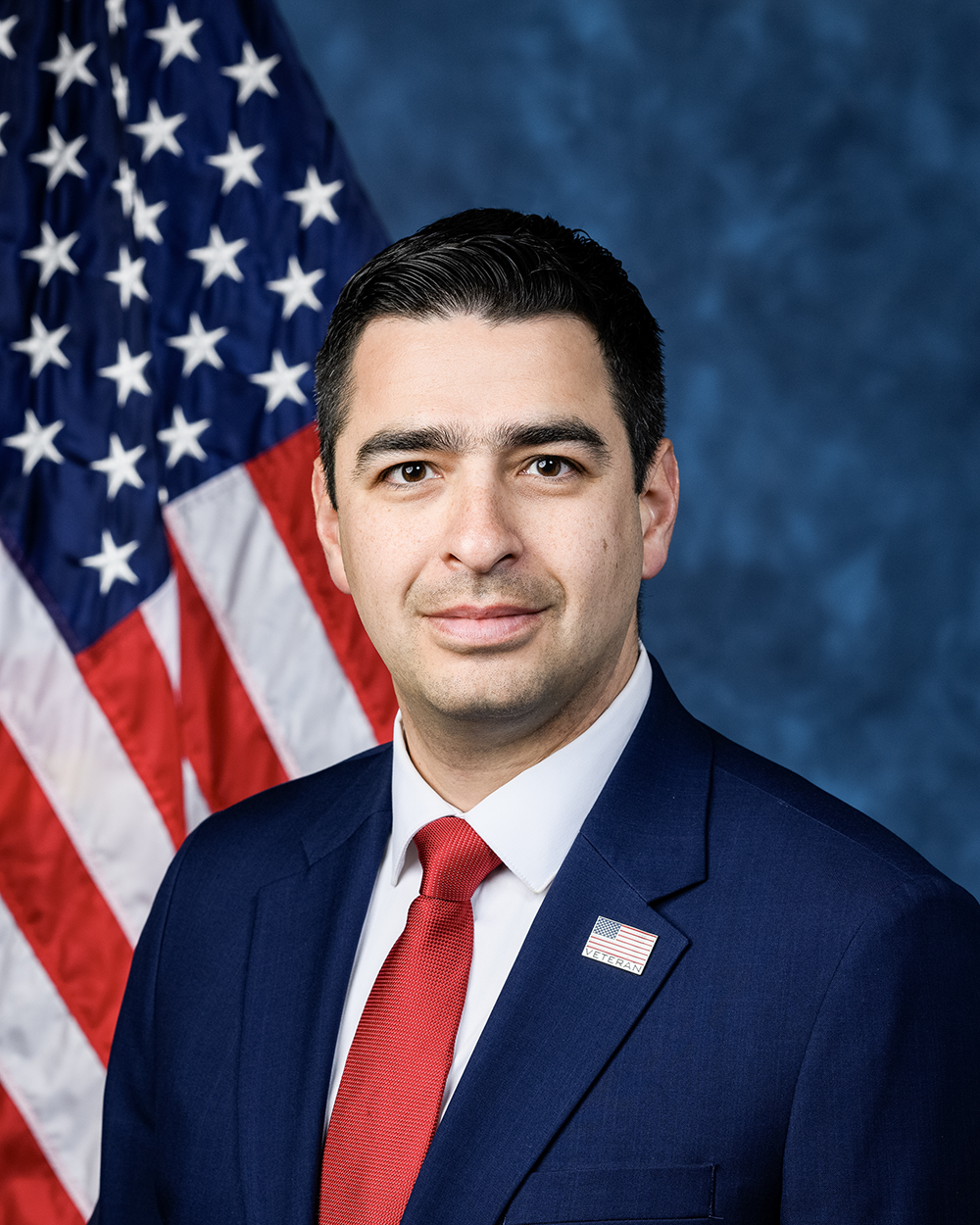
Rep. Gabe Evans
Sponsored bills
Maddy summaryThe Lifeline for First Responders Act establishes a new federal grant program administered by the National Highway Traffic Safety Administration to support the mental health and well-being of first responders. The program provides funding to eligible entities, including fire services, emergency medical services agencies, and dispatch centers, at all levels of government. Grant funds may be used for evidence-based stress reduction, suicide prevention, confidential counseling, family support services, and outreach programs aimed at reducing stigma. The bill authorizes $7.5 million in appropriations annually for fiscal years 2028 through 2032 to carry out these initiatives.
Maddy summaryHR 7008, the Stop Insider Trading Act, restricts Members of Congress, their spouses, and dependent children from purchasing certain investments like stocks in publicly traded companies. It requires 7-14 days' advance public notice before selling any such investment, including the sale date, description, and number of shares. Exceptions apply for work-related transactions (e.g., employer compensation) and reinvesting dividends. Violations trigger a fee of $2,000 or 10% of the investment’s value (whichever is greater), plus any net gain, paid from personal funds - not congressional allowances or campaign donations. The bill aims to prevent conflicts of interest by increasing transparency around congressional financial dealings.
Maddy summaryThis resolution honors the memory of four wildland firefighters - Emily Barker, Nick Hutcherson, Sydney Watson, and Nicholas Dale - who died while battling wildfires in 2026. It expresses sympathy to their families and acknowledges the bravery of injured colleagues and all personnel who risk their lives to protect communities and natural resources. The measure formally recognizes the critical role of firefighters, aviation crews, and support staff in suppressing dangerous fires across the United States.
Maddy summaryThe Lawful Hemp Protection Act establishes a comprehensive federal regulatory framework for hemp-derived cannabinoid products to ensure safety, quality, and consumer protection. It defines specific hemp products, prohibits the sale of items containing artificially modified cannabinoids like HHC or THCP, and mandates strict labeling requirements including THC milligram counts and health warnings. The bill creates a new tax on these products, requires manufacturers and wholesalers to obtain federal permits, and enforces a three-tiered distribution system for hemp beverages to prevent market consolidation. Additionally, it allows Medicare Advantage plans to cover these products for chronically ill patients and directs funds toward impaired driving enforcement and consumer safety oversight.
Maddy summaryThis bill directs the U.S. Geological Survey to launch a program using advanced quantum technology to map critical minerals on Federal lands. The initiative requires the agency to conduct mobile surveys in specific western regions, comparing new quantum data with existing records to improve how well they detect mineral deposits. Survey results will be shared publicly and with mining companies to encourage private investment, while state geological surveys will be consulted throughout the process. Additionally, the bill mandates that the Secretary of the Interior submit a detailed report to Congress within two years, outlining the survey findings, cost comparisons, and recommendations for future scaling.
Maddy summaryThe Affordable Innovation for the Grid Act directs the Department of Energy to study how artificial intelligence and high-performance computing can improve the reliability and efficiency of the national power grid. This assessment will specifically examine how these technologies can speed up the process of connecting new power sources to the grid and identify any technical or cybersecurity barriers to their use. Within one year of passing, the Department of Energy must submit a report to Congress outlining its findings and offering recommendations to overcome identified limitations and encourage wider adoption of these tools. The bill primarily affects federal agencies responsible for energy oversight and the electric power industry, aiming to gather data rather than immediately changing laws.
Maddy summaryThe Advanced Transmission Technology to Reduce Rates Act directs the Department of Energy to create a public clearinghouse that lists projects, funding options, and analyses regarding advanced transmission technologies. This resource is designed to assist electric utilities, transmission organizations, and state regulators in planning deployments and understanding the potential impacts on grid efficiency and costs. Additionally, the bill allows certain funding actions for these technologies to be exempt from standard environmental review requirements and requires the Department to establish best practices for reducing wildfire risks from power lines. Crucially, the legislation explicitly states that these measures are informational and do not grant the government authority to force utilities to adopt specific technologies or follow the new wildfire safety guidelines.
Maddy summaryThe Stop Pills That Kill Act targets counterfeit pills containing fentanyl or methamphetamine that are sold under the branding of legitimate prescription medications. It expands federal criminal penalties to specifically include these counterfeit substances and requires the Drug Enforcement Administration to create a comprehensive plan within 180 days to improve law enforcement investigations and public education efforts. The bill also mandates annual reports to Congress detailing seizure data, prosecution statistics, and prevention measures related to counterfeit pills. These provisions aim to enhance federal response to the distribution of fake prescription pills while maintaining existing legal frameworks.
Maddy summaryHR 2004, titled "Tyler’s Law," requires the Secretary of Health and Human Services to study how often hospital emergency departments test for fentanyl during overdose cases (beyond standard drug tests), including associated costs, patient benefits/risks, and impacts on privacy and patient-physician relationships. The study must be completed within one year of the bill's enactment. Based on the study results, the Secretary must issue guidance within six months on whether emergency departments should routinely test for fentanyl, how to inform clinicians about test contents, and how such testing may affect future overdose risks and health outcomes. This bill directly affects hospital emergency departments and patients experiencing overdoses by shaping future testing protocols.