

Maddy summaryThis bill extends the expiration date for a provision allowing certain vehicles to use High Occupancy Vehicle (HOV) lanes without meeting standard occupancy requirements. Specifically, it amends federal law to change the deadline from September 30, 2025, to September 30, 2031. The change directly affects drivers and vehicle operators who currently qualify for this exemption under existing rules. It is a procedural reauthorization, not a policy change, maintaining the current HOV lane exemption rules for an additional six years.
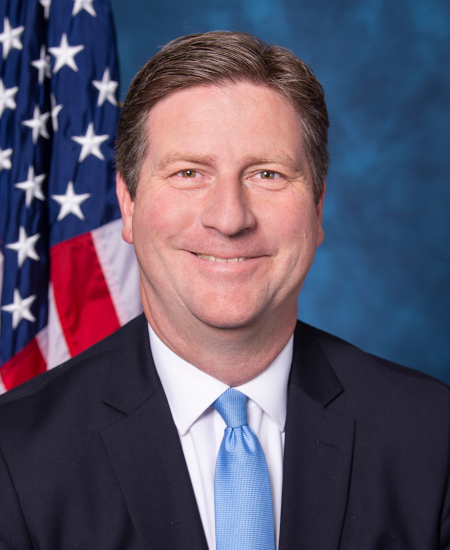
Rep. Greg Stanton
Sponsored bills
Maddy summaryHR 4966 prohibits grocery stores from selling items at "grossly excessive prices," defined as 120% or more above the average market price over the previous six months (with exceptions for unavoidable cost increases like supply chain issues). It bans using facial recognition or personal data to set different prices for individual customers (e.g., adjusting prices based on shopping history) and requires clear signage if facial recognition is used. Stores over 10,000 square feet must replace electronic shelf labels with physical price tags. The Federal Trade Commission enforces these rules, allowing consumers to seek $3,000 per violation or actual damages, with penalties for willful violations.
Maddy summaryHR 4919 designates the U.S. Postal Service facility at 765 West Old Route 66 in Ash Fork, Arizona, as the "Fayrene Hume Post Office." The bill updates all federal references to this location to reflect the new name. This is a purely administrative naming change with no policy or funding impact, directly affecting the postal facility and related federal documents.
Maddy summaryHR 4917, the Expanding the VOTE Act, amends the Voting Rights Act to increase language access for voters. It expands the definition of "voting materials" to include digital formats and requires states to provide language assistance (both written and oral) for minority language groups, with special provisions for American Indian and Alaska Native languages when written translations aren't feasible. The bill creates grants to help jurisdictions provide voting materials in languages that don't currently trigger Section 203 coverage, and mandates a study on lowering population thresholds for language assistance requirements. This directly affects states, local election jurisdictions, and voters who speak minority languages, including those in communities not currently covered by existing language access rules.
Maddy summaryHR 4895, the Afghan Adjustment Act, creates a pathway to conditional permanent resident status for Afghans who supported U.S. military or government efforts in Afghanistan. Eligible individuals include Afghan citizens or nationals who were employed by or on behalf of U.S. forces, worked with U.S. intelligence, or were part of specific Afghan security forces (including members of the Afghanistan National Defense and Security Forces), and who served for at least one year during the relevant period. The bill establishes a 4-year conditional period before full permanent residency is granted, requires security checks similar to refugee processing, prohibits fees for processing applications, and creates a referral system for processing applications from Afghans still in Afghanistan. It also provides eligibility for benefits available to refugees and establishes an Interagency Task Force to oversee implementation.
Maddy summaryHR 4909 requires federally assisted housing providers and mortgage lenders to include a uniform voter registration information statement with key documents. It mandates that public housing agencies, rental voucher programs, and multifamily housing owners provide this statement to tenants when signing leases or submitting income forms. Mortgage lenders must include it in writing within 5 business days of a loan application. The statement, developed by the Consumer Financial Protection Bureau and available in English and 10 common languages, explains voter registration options but does not require individuals to register. This affects renters in federally assisted housing and mortgage applicants.
Maddy summaryHR 4796, the Restoring Essential Healthcare Act, repeals a provision that blocked Medicaid payments to certain healthcare providers during a specific period. It directly affects Medicaid beneficiaries who received care from these providers between the enactment of the prior law (Public Law 119-21) and this bill's enactment. The key provision retroactively restores Medicaid payments for services already provided during that blocked period, treating the payment restriction as if it never existed. This change ensures eligible individuals and providers receive reimbursement for covered care delivered during the prohibited timeframe.
Resident Physician Shortage Reduction Act of 2025 This bill increases the number of residency positions eligible for graduate medical education payments under Medicare for qualifying hospitals, including hospitals in rural areas and health professional shortage areas. The bill provides for an additional increase of 2,000 positions per fiscal year from FY2026-FY2032; during this period, each hospital may receive up to 75 additional positions in total under the bill and current law. Additionally, one-third of the positions that are made available under the bill must be allocated to hospitals that are already operating above applicable resident limits. The bill also requires the Government Accountability Office to report on strategies to increase the diversity of the health professional workforce, including with respect to representation from rural, low-income, and minority communities.
Maddy summaryHR 4702, the National Fire Academy Reporting Act, requires the National Fire Academy Administrator to submit an annual report to Congress by November 30 each year. The report must detail specific data about courses, programs, and funding from the previous fiscal year, including the number of fire departments and personnel (categorized as career or volunteer) that attended, the total courses offered and cancelled, and how funds were distributed to state/local training programs and student participants. This bill does not change funding levels or program requirements but mandates standardized reporting to Congress. The requirement begins after the bill's enactment, with the first report due November 30 of the first full year following enactment.
Maddy summaryH.J. Res. 108 proposes a constitutional amendment to remove legal immunity for federal officials, including the President, from criminal prosecution for actions taken while performing official duties. It would prohibit the President from granting pardons to themselves and eliminate the defense that "official authority" excuses violations of federal or state law (with limited exceptions for certain congressional actions). If ratified, this amendment would require Congress to pass implementing laws to enforce these changes. The proposal is currently in the House Judiciary Committee and requires approval by three-fourths of state legislatures to become part of the Constitution.