

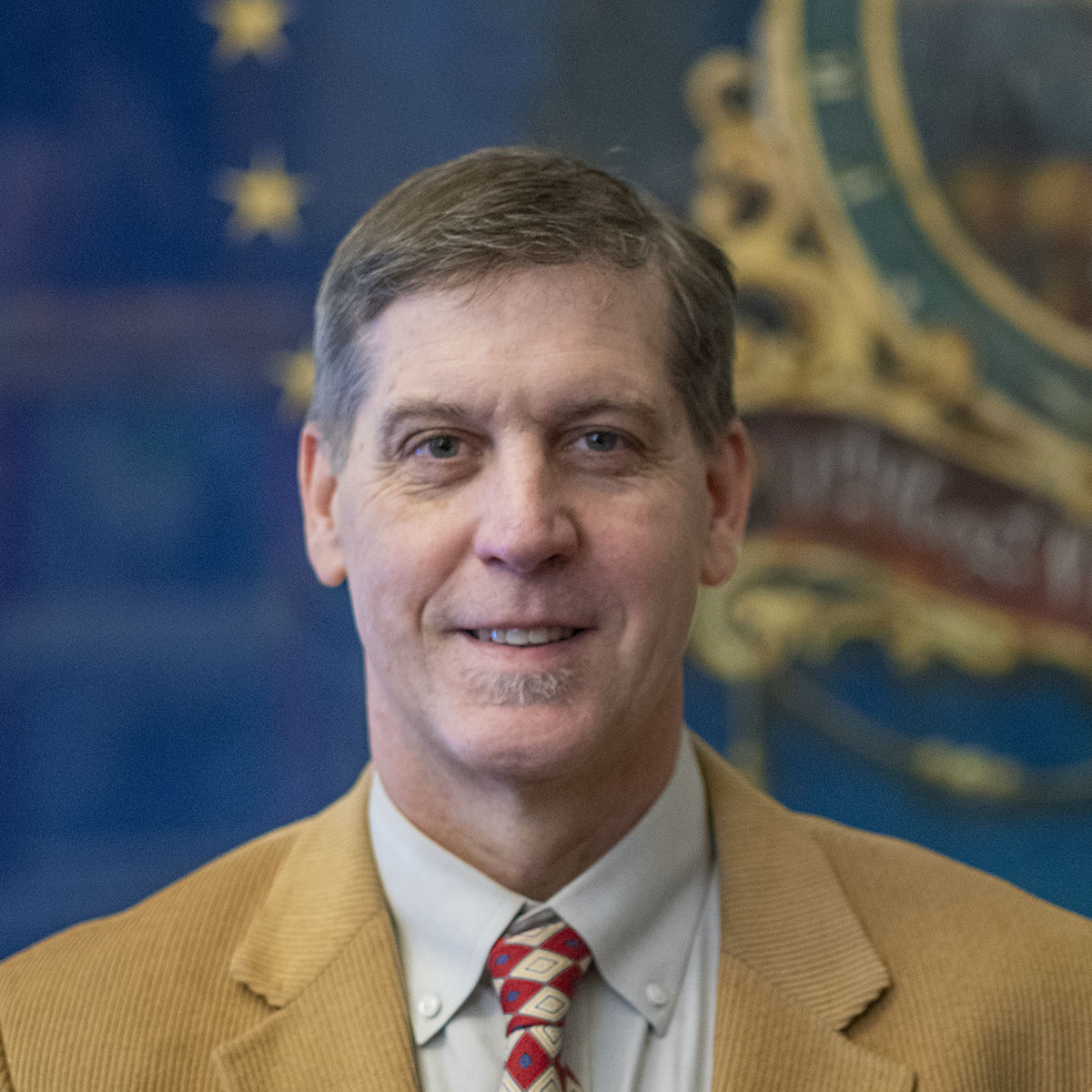
Maddy summaryHCR 196 is a ceremonial resolution honoring U.S. Army Major General Gregory Knight, Vermont's Adjutant and Inspector General, for his 43-year military and public service career. It formally commends his service - including deployments to Iraq, academic achievements, leadership in the Vermont National Guard, and his seven-year tenure as the state's top military officer - and directs the Secretary of State to send a copy of the resolution to him and the Vermont National Guard. This resolution does not create new laws or affect policy; it is a symbolic gesture of recognition. The bill was offered by all members of both the House and Senate.
Sen. Andrew Perchlik
Sponsored bills
Maddy summaryHCR 200 is a ceremonial resolution celebrating the life of Nathan Suter, a Montpelier resident and community leader who died in 2025. It honors his contributions as a cofounder of Root Division, director of the Current art center, track coach at Montpelier schools, and board member of organizations like Migrant Justice and the Montpelier Commission for Recovery and Resilience. The resolution directs the Secretary of State to send copies to Suter’s family, Montpelier High School, and the organizations he supported. This is a symbolic tribute with no policy changes or funding impacts.
Maddy summaryThis House Concurrent Resolution designates February 11, 2026, as "Disability Advocacy Day" at the Vermont State House. It recognizes the work of disability rights groups like the Vermont Coalition for Disability Rights (VCDR) and highlights ongoing challenges such as educational disparities and barriers in employment, housing, and transportation faced by Vermonters with disabilities. The resolution does not create new laws or funding but formally acknowledges these issues and the contributions of people with disabilities. It directs the Secretary of State to send a copy to VCDR.
Maddy summaryVermont's Senate resolution SR 21 condemns the fatal shootings of two U.S. citizens (Renée Good and Alex Pretti) by federal agents during ICE's Operation Metro Surge in Minnesota. It demands the President immediately suspend the operation, reset immigration enforcement to target only serious criminals, and prioritize constitutional rights. The resolution urges Vermont's congressional delegation to oppose further ICE funding unless reforms include ending militarized tactics, restoring due process, and creating fair pathways to legal status. It also affirms constitutional protections against unreasonable searches and lethal force without legal accountability. The resolution is a non-binding call for federal action, not a law.
Maddy summaryThis bill clarifies that landowners who post restrictions on hunting or fishing must do so "annually" by maintaining one sign per year, not multiple times within a year. It directly affects landowners, private preserve operators, and those managing private ponds or propagation farms who wish to prohibit or limit recreational hunting and fishing on their property. The key provision requires landowners to record their annual posting with the town clerk (using a specified form, paying a $5 fee), with the posting remaining valid for 365 days. Signs must be placed at boundaries, dated yearly, and include the owner's contact information. The bill amends Vermont law to standardize this process without changing the core requirement for posting restrictions.
Maddy summaryS.316 prohibits credit card networks from charging fees on the portion of a transaction that covers tax or gratuity (tip). This directly affects merchants (like restaurants and retailers), payment card networks (such as Visa or Mastercard), and banks that issue credit cards. The bill requires that any credit card fee must be calculated only on the non-tax, non-gratuity amount of a purchase, preventing networks from charging fees on taxed or tipped portions. The law takes effect on July 1, 2026, and includes civil penalties for violations.
Maddy summaryThis Vermont bill (S.306) defines 911 call takers, public safety dispatchers, and emergency communications staff as "first responders in communications" for the first time. It requires employers to provide relevant training and extends workers' compensation benefits for PTSD to these dispatchers, presuming PTSD diagnosed during service is job-related unless proven otherwise. The law specifically covers Vermont dispatchers certified by the Vermont Enhanced 911 Board who handle emergency communications. It takes effect July 1, 2026, and directly affects all Vermont emergency communications dispatchers.
Maddy summaryThis is a ceremonial resolution, not a substantive bill. HCR 161 formally congratulates Montpelier High School's Division III field hockey team for winning the 2025 championship, citing their undefeated 17-0 season and a 2-1 overtime victory in the state final. The resolution directs the Secretary of State to send a copy to Montpelier High School. It has no policy impact or funding provisions - it solely serves as a symbolic recognition of the team's achievement. The resolution was offered by multiple representatives and senators from Montpelier.
Maddy summaryThis bill narrows Vermont's sales tax exemption for fuel used in homes by removing the exemption for second homes, short-term rentals, and other nonhomestead residential properties. It amends tax code to define "residence" as only properties not listed as "nonhomestead residential" on an annual July 1 list published by the Commissioner. Sellers can rely on this published list to avoid tax liability if they mistakenly exempt fuel sales to nonhomestead properties. The change takes effect July 1, 2029, directly affecting property owners of secondary or rental homes who previously qualified for the tax exemption.
Maddy summaryThis joint resolution (JRS 33) requires Vermont's Senate and House of Representatives to convene together on Tuesday, January 20, 2026, at 1:00 PM for a Joint Assembly. Its sole purpose is to formally hear the Governor's annual budget message. The resolution directly affects the legislature by setting a specific time and place for this required procedural meeting, with no policy changes or new laws enacted.