

Maddy summaryThis bill creates a new grant program administered by the Agency of Human Services to help municipalities and other organizations acquire or renovate existing buildings for permanent supportive housing. The program provides up to $4.5 million in 2025 funding for projects that convert buildings into multiple studio apartments with kitchens and bathrooms, while requiring energy-efficient renovations. Each funded site must employ or contract two staff members to provide daily on-site support services such as case management, support groups, and connections to community resources. The bill targets individuals experiencing chronic homelessness, those recovering from mental health or substance use disorders, aging out of foster care, and other vulnerable populations. Eligible applicants must submit proposals identifying specific buildings, outlining costs and local contributions, and demonstrating accessibility to healthcare and transportation.
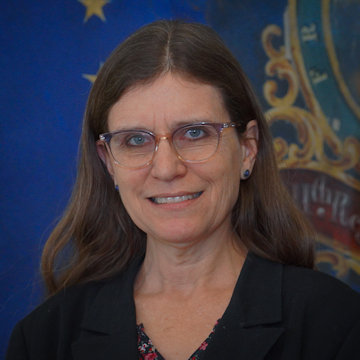
Rep. Michelle Bos-Lun
Sponsored bills
Maddy summaryThis bill creates a new Community Resilience and Disaster Mitigation Grant Program and Fund to help Vermont municipalities prepare for and reduce the impact of natural disasters. The program would provide grants to cities, towns, and other local governments for projects like slope stabilization, watershed restoration, and drought mitigation, with priority given to communities facing higher vulnerability. Funding comes from a $15 million appropriation in fiscal year 2024 and an annual assessment on insurance companies writing policies in Vermont, capped at $4.3 million. The Department of Public Safety would administer both the grant program and the fund, which must keep records and submit annual reports on how money is spent.
Maddy summaryThis bill requires municipalities in Vermont to allow tiny houses as permitted uses in zoning regulations. It specifies that one tiny house can be placed on a lot of one acre or more, while two tiny houses are permitted on lots of two acres or more. The legislation also includes a provision that tiny houses do not need wastewater capacity if they are occupied by family members of someone living in an existing single-family home on the same lot. This change directly affects local zoning authorities and homeowners considering tiny house construction or placement.
Maddy summaryThis bill creates a refundable income tax credit of $500 for qualified emergency responders in Vermont, including licensed emergency medical personnel, first responders, and volunteer firefighters who are in good standing with the state. The credit applies to taxable years beginning on or after January 1, 2024, and is designed to recognize the public service provided by these individuals who deliver lifesaving measures. The legislation also requires the Vermont Fire Service Training Council to establish standards defining active service for volunteer firefighters to determine eligibility for the credit. This measure directly affects licensed medical personnel, first responders, and volunteer firefighters who meet the specified qualifications and serve within the state.
Maddy summaryThis bill prohibits the manufacture, sale, and distribution in Vermont of cosmetic and menstrual products containing specific harmful chemicals, including perfluoroalkyl and polyfluoroalkyl substances (PFAS), ortho-phthalates, formaldehyde, lead, and asbestos. It also bans textiles and athletic turf fields that contain PFAS, with a provision for future restrictions on any product using PFAS if their use is deemed unavoidable. The law includes a one-year waiver system for manufacturers who cannot immediately eliminate certain chemicals due to technical limitations, and requires the Department of Health to develop a community engagement plan to address outreach to vulnerable populations. Violations of the ban are treated as violations of Vermont's Consumer Protection Act, giving the Attorney General and private parties the authority to pursue civil actions.
Maddy summaryThis bill establishes the Community Resilience and Biodiversity Protection Act to create a statewide framework for conserving Vermont's natural landscapes and protecting biodiversity. It defines three types of protected land areas - ecological reserve areas, biodiversity conservation areas, and natural resource management areas - and sets conservation goals to protect 30 percent of the state's land by a specified target date. The legislation requires the state to prioritize conservation efforts that maintain connected ecosystems, support sustainable land management practices, and ensure access to land for Indigenous peoples and historically marginalized communities. By creating these protections, the bill aims to help Vermont address climate change impacts, reduce flood risks, and preserve natural habitats while balancing conservation with housing and economic development needs.
Maddy summaryThis bill formally recognizes May 2023 as Jewish American Heritage Month in Vermont. It directs the Secretary of State to send a copy of the resolution to Jewish communities in the state. The measure acknowledges the historical contributions of Jewish Americans to Vermont and the nation, noting their early settlement and ongoing cultural significance. It does not change laws or policies but serves as a symbolic recognition of Jewish heritage and history.
Maddy summaryThis bill formally recognizes May as Mental Health Awareness Month in Vermont to raise public awareness about mental health challenges. It does not change laws or allocate funding but serves as a symbolic acknowledgment of the state's mental health needs and statistics. The resolution directs the Secretary of State to send copies of the document to relevant mental health organizations and officials. While it highlights concerning data about suicide rates and access to care, the bill itself is a commemorative measure rather than a policy change.
Maddy summaryThis bill defines and protects certain health care activities related to reproductive health and gender-affirming care from civil and criminal liability. It establishes that licensed health care providers in Vermont can legally offer these services to patients regardless of where the patient is located, as long as the services are permitted under Vermont law. The law also protects insurance coverage for these services and prohibits conversion therapy from being classified as gender-affirming care. The protections apply to the provision, prescription, distribution, and use of FDA-approved medications for pregnancy termination as of January 1, 2023. The bill became effective immediately upon passage and was signed into law by the Governor in May 2023.
Maddy summaryThis bill is a House concurrent resolution that honors Karen Horn of Moretown for her leadership in strengthening local government in Vermont. It recognizes her decades of work with the Vermont League of Cities and Towns, where she advised officials on municipal issues and helped secure transportation funding and tax authority for local governments. The resolution formally acknowledges her contributions to municipal policy and directs the Secretary of State to send a copy of the document to both Horn and the Vermont League of Cities and Towns.