

Maddy summaryThis bill requires school districts, approved independent schools, and prequalified private prekindergarten providers in Vermont to offer translation services during the school enrollment process for families who do not speak English. The law mandates that all enrollment forms and applications be translated into the primary language of non-English-speaking families and includes alternative proof of residency forms. Schools must provide translation assistance through options such as English learner liaisons, in-person interpreters, or digital translation tools like smartphone applications. The changes take effect on July 1, 2024, ensuring that non-English-speaking families have access to necessary documentation and support when enrolling their children in school.
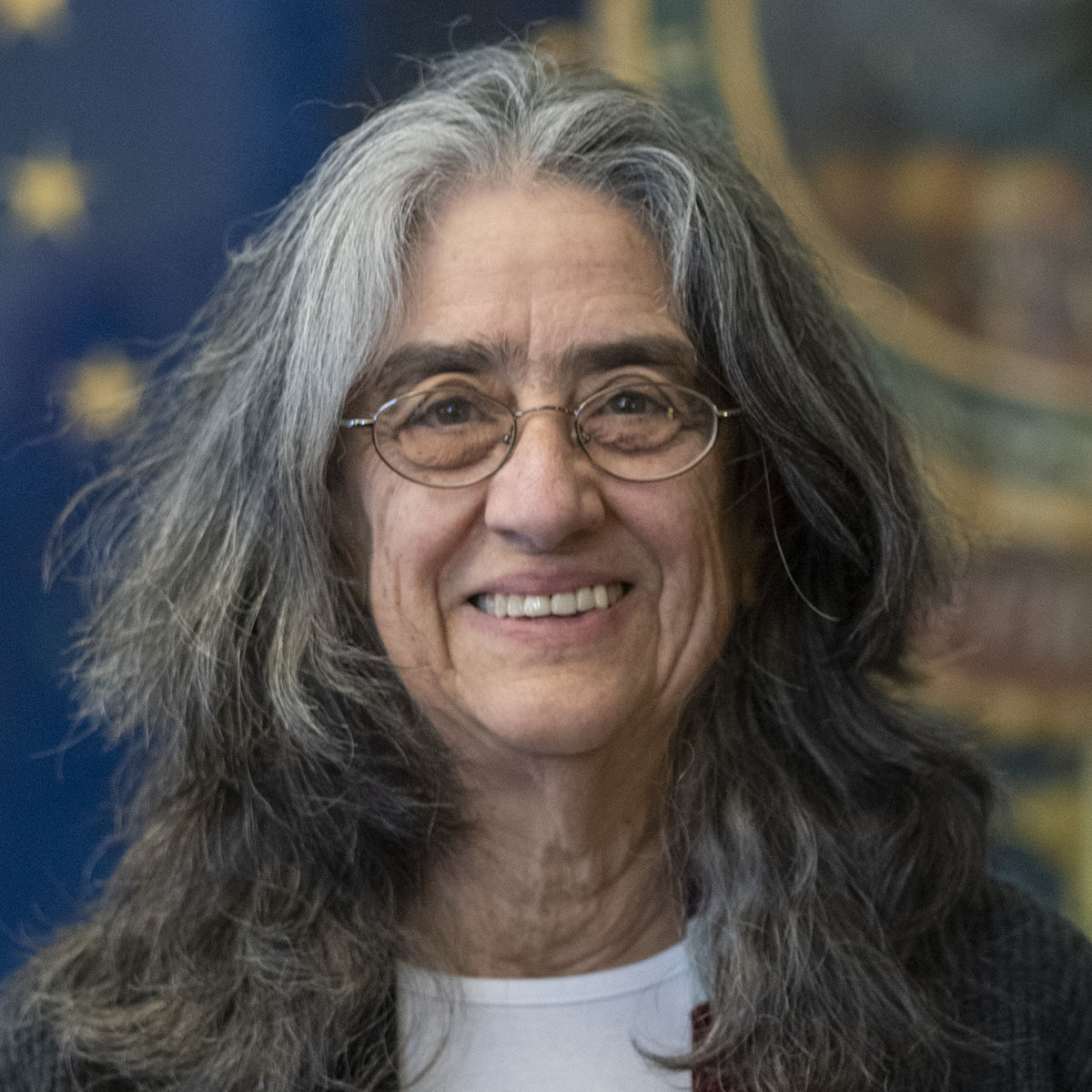
Rep. Leslie Goldman
Sponsored bills
Maddy summaryThis bill, known as the Transportation Infrastructure and Resiliency Act of 2024, directs state funding and policy changes to improve roads, support electric vehicle adoption, and enhance transportation options across Vermont. It increases funding for road repair programs, provides grants for eBike and electric vehicle charging infrastructure, and establishes new rules allowing property owners to install charging stations. The legislation also expands funding for bicycle and pedestrian projects, creates a plan for carsharing expansion, and requires the state to develop new revenue sources for transportation and environmental initiatives. Additionally, it allows certain areas to set speed limits below 25 mph and mandates reporting on electric vehicle outreach efforts and charging station availability.
Maddy summaryThis bill expands the legal definition of pedestrians to include individuals using wheelchairs, personal mobility devices, and electric personal assistive mobility devices, while also clarifying rules for bicyclists and vulnerable road users. It requires motor vehicles to maintain at least four feet of clearance when passing pedestrians, bicyclists, or stationary utility vehicles, with violations subject to a $200 civil penalty. The legislation removes the ban on pedestrians walking on roadways where sidewalks are unavailable and updates bicycle traffic rules to allow riding two abreast under specific conditions and clarify when bicyclists must stop at traffic signals. Additionally, it permits towns to install crossing flags at crosswalks and streamlines federal historic preservation reviews for bicycle and pedestrian infrastructure projects.
Maddy summaryThis bill proposes to restrict how much hospitals can charge for facility fees on specific outpatient services. It directly affects hospital outpatient departments and the patients who receive care there. The legislation aims to limit the amount hospitals can bill separately for using their facilities during outpatient visits. This change would apply to certain medical services provided outside of inpatient hospital stays. The bill is currently under review by the Committee on Health Care.
Maddy summaryThis bill requires Vermont's Green Mountain Care Board to evaluate hospital budgets by considering spending across all health care providers to improve system-wide coordination and price regulation. It would create a new analyst position on the Board's finance team and fund at least two independent annual audits to monitor compliance with budget orders and support accounting oversight. The legislation aims to help the Board identify ways to control health care spending growth and report on affordability, access, and quality in the state's health care system.
Maddy summaryThis bill creates a new Community Resilience and Disaster Mitigation Grant Program and Fund to help Vermont municipalities prepare for and reduce the impact of natural disasters. The program would provide grants to cities, towns, and other local governments for projects like slope stabilization, watershed restoration, and drought mitigation, with priority given to communities facing higher vulnerability. Funding comes from a $15 million appropriation in fiscal year 2024 and an annual assessment on insurance companies writing policies in Vermont, capped at $4.3 million. The Department of Public Safety would administer both the grant program and the fund, which must keep records and submit annual reports on how money is spent.
Maddy summaryThis bill would prohibit most Vermont residents from possessing semiautomatic assault weapons, with exceptions for law enforcement officers and active military personnel. It defines these weapons as semiautomatic rifles, pistols, or shotguns with specific features like detachable magazines and certain stock or grip configurations, while excluding manually operated firearms, permanently inoperable guns, and those with limited magazine capacity. Violations could result in up to one year in prison or a $500 fine, or both, and the law would take effect immediately upon passage. The measure directly affects firearm owners and would require them to surrender or dispose of qualifying weapons unless they fall under the specified exemptions.
Maddy summaryThis bill requires municipalities in Vermont to allow tiny houses as permitted uses in zoning regulations. It specifies that one tiny house can be placed on a lot of one acre or more, while two tiny houses are permitted on lots of two acres or more. The legislation also includes a provision that tiny houses do not need wastewater capacity if they are occupied by family members of someone living in an existing single-family home on the same lot. This change directly affects local zoning authorities and homeowners considering tiny house construction or placement.
Maddy summaryThis bill requires health insurance plans in Vermont to cover diagnostic tests used for screening purposes using the same terms as they cover screening tests for the same condition. It applies to all health insurance plans and ensures that cost-sharing requirements like copayments and deductibles are identical for diagnostic and screening tests. The legislation aims to eliminate disparities in coverage between diagnostic and screening tests for the same disease or illness.
Maddy summaryThis bill allows Vermont municipalities to receive reimbursement for state education property taxes they abated for property owners affected by severe storms and flooding between July and October 2023. It also permits municipalities to be reimbursed for reasonable interest expenses incurred when borrowing funds to make these tax payments, capped at eight percent. Additionally, the bill excludes federal disaster relief payments from household income when calculating the homestead property tax credit for the 2023 and 2024 tax years, helping homeowners maintain eligibility for tax credits despite receiving disaster assistance.