

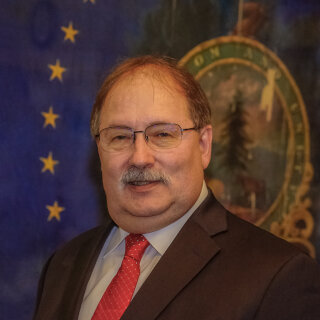
Maddy summaryThis bill is a ceremonial resolution that honors John Wilson, a former Newport City Council Chair, for his public service. It recognizes his military career in the U.S. Army, including service in Vietnam, and his long-term leadership on the Newport City Council where he chaired the body for 15 years. The resolution directs the Secretary of State to send a copy to John Wilson and the Newport City Clerk as a formal acknowledgment of his contributions.
Rep. Michael Marcotte
Sponsored bills
Maddy summaryThis bill is a ceremonial resolution that officially recognizes the week of February 26 to March 1 as Public Schools Week in Vermont. It does not create new laws or change policies but instead acknowledges the importance of public schools as community institutions and major employers. The resolution directs the Secretary of State to send copies to various education-related organizations, including the Vermont Secretary of Education and state education associations. This measure serves to honor the role of public schools in Vermont society without affecting any operational or funding aspects of the education system.
Maddy summaryThis legislative resolution designates February 16, 2024, as Vermont Outdoor Recreation Day at the State House to honor the state's natural landscape and outdoor activities. The measure recognizes Vermont's extensive trail systems, wildlife areas, and ski resorts as important assets for the economy, community well-being, and quality of life. While the resolution does not create new laws or funding, it formally acknowledges the value of outdoor recreation and directs state officials to be notified of the designation. The bill was passed by both the Senate and House without requiring a vote, following standard procedure for ceremonial resolutions.
Maddy summaryThis House resolution honors Vermont television journalist Stewart Ledbetter for his 40 years of news reporting. The bill formally recognizes his career achievements, including his work as a news director, political campaign moderator, and recipient of multiple broadcast awards. It directs the House Clerk to send a copy of the resolution to Ledbetter and WPTZ, the television station where he worked.
Maddy summaryThis bill authorizes the Green Mountain Boys State educational program to use the Vermont State House facilities on June 27, 2024, for a mock legislative session. The program, sponsored by the American Legion Department of Vermont, provides 12th-grade boys an opportunity to study state government operations. The resolution permits access to the chambers and committee rooms from 8:00 a.m. to 4:15 p.m., subject to rules set by the Sergeant at Arms. A copy of the resolution will be sent to the American Legion Department of Vermont by the Secretary of State.
Maddy summaryThis bill amends a previous workers' compensation law to clarify the timeline for adopting new administrative rules. It requires the Vermont Commissioner of Labor to finalize and implement specific rule changes by July 1, 2024, to support provisions in the 2023 legislation. The bill applies to workers' compensation programs and the state agency responsible for overseeing them. It contains no new policy changes but rather corrects procedural language to ensure the existing rules are adopted on schedule.
Maddy summaryThis bill modifies Vermont's career and technical education system by changing how school districts are charged tuition based on student enrollment, requiring career exposure for younger students, and shifting oversight from the State Board of Education to the Secretary of Education. It mandates that students in grades six through eight visit CTE centers annually, ensures middle and high school students have access to career exploration courses, and requires local unions to adopt comprehensive career development policies aligned with state models. The legislation also establishes a timeline for developing these policies, includes CTE facilities in state construction aid updates, and creates accountability measures for districts that fail to comply with new requirements.
Maddy summaryThis bill requires Vermont's Housing Division to track and report on progress toward statewide and regional housing targets established in the Statewide Housing Needs Assessment. The legislation mandates the development of specific metrics, including timelines with deadlines and regional measures covering investment rates, price, quality, and zoning compliance. Through 2030, the Division must publish annual reports detailing progress against these targets, assess whether advancement is satisfactory, and provide recommendations to accelerate housing development if needed. The bill affects the Department of Housing and Community Development, regional planning commissions, and housing developers by creating a structured accountability system for meeting housing goals.
Maddy summaryThis bill creates a new forgivable loan option within Vermont's existing Economic Growth Incentive program, specifically for businesses with 50 or fewer full-time employees. The legislation also removes the previous deadline that prevented the Vermont Economic Progress Council from accepting new applications for the program. Under the new provisions, eligible small businesses could receive loans that are forgiven if they maintain their workforce levels and meet specific job creation or investment requirements during the loan term. The bill defines qualifying jobs as positions paying at least 60% above the state minimum wage with benefits like health care and paid leave. These changes aim to provide financial support to smaller businesses while maintaining the program's ability to generate new state revenue.
Maddy summaryThis bill allows two or more businesses with separate alcoholic beverage licenses to merge into a single parent corporation while keeping their individual licenses active. The key provision permits these merged entities to operate under one unified payroll and administrative system without requiring them to consolidate their licenses. It directly affects businesses in Vermont that have combined operations but wish to maintain their existing licensing structure. The legislation aims to provide flexibility for corporate mergers in the alcohol beverage industry without disrupting current regulatory compliance.