

Maddy summaryThis bill requires students graduating from Vermont public high schools to demonstrate civics knowledge as a condition of receiving a diploma. The law offers two pathways: passing the standard U.S. citizenship civics test with a minimum score of 60 percent, or completing one semester of community service with a local government organization under a mentor's supervision. The requirement applies to all public high school and career technical center students, though students with individualized education programs may participate at the discretion of their IEP team. The measure would take effect for students graduating in the 2025-2026 academic year or later.
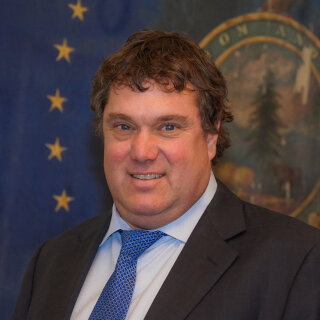
Rep. Dan Noyes
Sponsored bills
Maddy summaryThis bill would eliminate criminal penalties for possessing, selling, or offering for sale automatic opening knives in Vermont. It directly affects individuals who own these knives, knife retailers, and law enforcement by removing the legal restrictions currently in place. The key provision is the complete repeal of existing laws that classify automatic opening knives as weapons subject to criminal punishment. This change would allow people to legally own and sell these knives without fear of prosecution. The legislation does not address how these knives are used or any potential safety concerns.
Maddy summaryThis bill requires Vermont's Departments of Health and Disabilities, Aging, and Independent Living to expand their public education efforts on Alzheimer's disease to also include information about brain health and reducing dementia risks. The Departments must work with the Commission on Alzheimer's Disease and Related Disorders to create accessible educational materials in electronic, print, and in-person formats for the public, patients, families, caregivers, and healthcare providers. These resources will include information about the State Plan on Aging as well as programs focused on prevention, care, and support for individuals and communities. The changes take effect on July 1, 2023.
Maddy summaryThis bill proposes minor updates to the laws governing the Office of the Child, Youth, and Family Advocate in Vermont. It directly affects the administrative structure and operations of this state agency, which supports children, youth, and families. The legislation includes miscellaneous changes to existing statutes without specifying detailed provisions in this short-form text. As a procedural measure, it aims to refine how the office functions under current legal frameworks. The bill has been referred to the Committee on Human Services for further review.
Maddy summaryThis bill proposes to change Vermont's motor vehicle inspection schedule from annual to biennial, meaning most cars would need safety and emissions checks every two years instead of every year. It directly affects all registered motor vehicles in the state except school buses and motor buses, which would continue to be inspected twice annually. The legislation also establishes a study committee to examine how inspections impact low-income residents, rural Vermonters, and seniors, with the committee required to submit a report by January 15, 2024. The study committee includes representatives from government agencies, community action groups, automotive dealers, and inspection mechanics to gather data on inspection costs, safety effectiveness, and potential assistance programs. The inspection schedule change would take effect on July 1, 2023, while the study committee would operate until February 15, 2024.
Maddy summaryThis bill establishes a two-year pilot program to give youth leaving the foster care system $1,000 per month for 24 months. The program is voluntary, and participants must complete annual surveys to report on their finances, health, employment, housing, and education. The cash transfers are designed to be tax-free and will not count as income when determining eligibility for other government benefits or financial aid. A report on the program's results will be submitted to state committees by November 2025, and $650,000 is appropriated to fund the initiative in fiscal year 2024.
Maddy summaryThis bill would allow doctoral-level psychologists in Vermont to prescribe certain prescription medications for mental health conditions. To qualify, psychologists would need specialized training in biomedical sciences and pharmacology, pass a national certification exam, and maintain a collaborative agreement with a licensed physician. The law establishes a new license category for prescribing psychologists and sets specific rules about which medications can be prescribed, including restrictions on controlled substances and patients under 17 or over 65. The Board of Psychological Examiners would oversee implementation and enforce compliance through continuing education requirements and disciplinary measures.
Maddy summaryThis bill prohibits Vermont schools and educational programs that receive state funding from using unlawful physical restraints, seclusion, mechanical restraints, or chemical restraints on students. It defines specific types of restraints and seclusion that are banned, while allowing certain voluntary physical contacts like escorts and prompts that do not restrict movement. Covered entities must report and document any incidents involving restraint or seclusion, notify parents within 24 hours, and hold meetings within five school days to discuss prevention strategies and potential behavioral support plans. The Agency of Education is tasked with creating a performance review system to monitor compliance and provide technical assistance to schools for implementing evidence-based programs that reduce the need for restraints.
Maddy summaryThis bill expands protections for Medicaid beneficiaries' estates by limiting when the state can recover medical costs from their assets after death. It directly affects families of deceased Medicaid recipients in Vermont, particularly those with low income or caregiving contributions to the decedent. The law prohibits estate recovery against homesteads that pass to heirs with income below 300% of the federal poverty level or to siblings who financially supported the decedent to avoid nursing home placement. It also protects sole income-producing assets of heirs and homesteads belonging to refugees. The changes apply immediately upon passage and require state funding to cover certain homestead recoveries that would otherwise be owed to the federal government.
Maddy summaryThis bill creates the Vermont Rental Housing Improvement Program to provide grants and forgivable loans to private landlords for rehabilitating rental housing units, with a focus on non-code-compliant or newly created units. The program is administered by the Department of Housing and Community Development through statewide or regional nonprofit housing organizations, which distribute funds to eligible landlords who must contribute at least 20 percent in matching funds or in-kind services. Recipients cannot use assisted units for short-term rentals and must prioritize leasing to households exiting homelessness or refugee resettlement programs for five years, with alternative income-based tenant requirements if qualifying households are unavailable. The bill also establishes transparency requirements, mandating that recipient identities and award amounts be published quarterly online, and limits individual grants or loans to a maximum of $50,000 per unit.