

Maddy summaryThis bill (H.868) would require Vermont public schools to phase out ultra-processed foods - like packaged snacks, pre-made meals, and sugary drinks - from school meals and replace them with foods made from scratch using whole, fresh ingredients. It directly affects all Vermont public school food programs, including cafeterias serving students. The key mechanism is establishing new guidelines to gradually eliminate ultra-processed items while increasing the use of unprocessed or minimally processed foods. The bill aims to improve student nutrition by prioritizing fresh, whole foods over highly processed options in school meals.
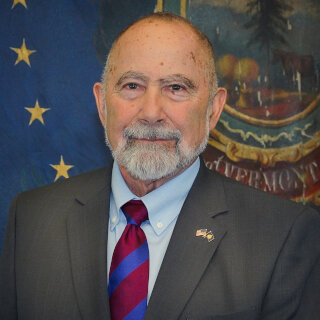
Rep. Jed Lipsky
Sponsored bills
Maddy summaryThis bill (H.842) revises Vermont’s Commission on Public School Employee Health Benefits by reducing its membership from 10 to 9 members, making the Secretary of Education the chair, and limiting alternate members. It requires the Commission to cap the actuarial value of health benefit plans and consider specific factors when making decisions, while adding new dispute resolution options for negotiations. The bill directly affects public school employees and employers in Vermont, as the Commission manages health benefits for school staff. It also mandates that the Secretary of Education contract with a single third-party provider to oversee health savings accounts for school employees.
Maddy summaryHCR 177 is a ceremonial resolution honoring Twin Valley High School's Athletic Director and boys' soccer coach Buddy Hayford for achieving 500 career coaching victories. It recognizes his 43-year coaching career, including 10 divisional titles, two state basketball titles, and his status as Vermont's first high school soccer coach to reach 500 wins. This resolution, offered by all House members and sponsoring senators, formally congratulates Hayford and directs the Secretary of State to send a copy to him and his school - **it is not a law but a symbolic gesture of appreciation**.
Maddy summaryThis is a symbolic House resolution (HR 12), not a policy bill. It expresses Vermont's support for Governor Philip B. Scott's statement criticizing federal immigration enforcement actions in Minnesota. The resolution specifically endorses the governor's call for halting "Operation Metro Surge" (the federal deployment of ICE/CBP agents), condemning the fatal shooting of a protester, and demanding adherence to constitutional rights. As a resolution, it has no legal effect or policy changes - it solely conveys legislative support for the governor's position.
Maddy summaryVermont's Joint Resolution JRH 7 expresses strong support for the existing U.S.-Denmark treaty governing Greenland and opposes any U.S. efforts to secure sovereignty over the island. It specifically references recent statements by President Trump and his administration suggesting potential military action or purchase of Greenland, which Vermont lawmakers characterize as disregarding Greenland and Denmark's sovereignty. The resolution directs Vermont's Secretary of State to send a copy to President Trump, Secretary of State Marco Rubio, and Danish Prime Minister Mette Frederiksen. This non-binding resolution directly addresses U.S. foreign policy toward Greenland and NATO allies, reflecting Vermont's position on current diplomatic tensions. It does not alter laws but formally states the state's opposition to moves that could disrupt the current treaty framework.
Maddy summaryThis House Concurrent Resolution (HCR 165) commemorates Micheline Lemay of Stowe for her leadership in outdoor recreation and mindfulness. It specifically recognizes her work as a co-owner of Rugged Adventures Summer Camp, her personal journey overcoming serious health challenges including cancer, and her "Mansfield Million" ski challenge to ascend Mount Mansfield. The resolution directs the Secretary of State to send a copy to Micheline Lemay, with no policy changes or direct effects on legislation or constituents.
Maddy summaryH 760 creates a new "Vermont Green FC" license plate for eligible vehicles (pleasure cars, trucks under 26,001 pounds, and state agency vehicles), requiring a $45 initial fee and $45 annual renewal. The majority of these fees (77% initially, 84% annually) will fund a new Vermont Green FC Special Fund. This fund will provide grants to support environmental justice and Vermont’s outdoor recreation economy, managed by a board including state officials and representatives from the Vermont Green Football Club and the Vermont Outdoor Business Alliance.
Maddy summaryHCR 172 is a commemorative resolution honoring Jon Gailmor, a Vermont folk singer and former Elmore Town Moderator who died in 2025. The resolution expresses the Vermont General Assembly’s condolences to his family and Elmore residents, recognizing his contributions as a musician who celebrated Vermont through songs like "A Town Meeting Tune" and his 15+ years serving as Elmore's town moderator. It directs the Secretary of State to send copies of the resolution to Gailmor’s family and the Elmore Town Clerk. This is a ceremonial measure with no policy impact.
Maddy summaryH.751 requires telecommunications companies to obtain permits from District Commissions for new facilities, including 5G small cell antennas. It repeals the previous certificate system and mandates specific safety rules: facilities must be at least 2,000 feet from residences, schools, hospitals, and parks; limit radiation to -75 dBm or 0.1 watts ERP; and require annual compliance certifications by licensed engineers. The bill directly affects telecom providers building infrastructure and aims to standardize siting rules for public safety and transparency. Key provisions include visible RF radiation labels on poles and annual monitoring reports for all radiating antennas.
Maddy summaryThis bill requires Vermont inpatient health care facilities to allow patients to continue taking all medically necessary medications prescribed for rare diseases - even if the facility doesn’t normally stock those drugs. It directly affects hospitals and patients receiving treatment for rare conditions who enter facilities while on specific medication regimens. The key provision mandates that facilities must accommodate these medications to prevent treatment disruptions during hospital stays. This ensures continuity of care without requiring facilities to maintain stock of every rare disease medication. The bill aims to address documented shortages of rare disease drugs in hospitals.