

Maddy summaryThis bill allows the Vermont Secretary of Natural Resources to authorize temporary pilot projects (up to one year) that treat or destroy "emerging contaminants" without requiring standard permits. It directly affects researchers, companies, or organizations testing new methods to address pollutants like hazardous chemicals or substances with health advisories. Key provisions include requiring detailed environmental impact assessments in applications, mandating monitoring during the project, and requiring post-project reports on effectiveness and any unexpected discharges. The Secretary can deny authorization if risks to health or the environment are unreasonable, ensuring safeguards while accelerating innovation for future cleanup solutions.
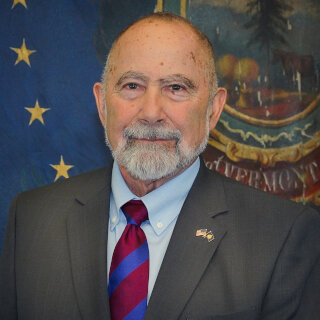
Rep. Jed Lipsky
Sponsored bills
Maddy summaryH.147 establishes the Recreational Trails Compensation Study Committee to examine whether landowners who allow public recreational trails on their property should receive compensation or benefits. The committee, composed of state officials, trail organizations, landowners, and experts, will review current trail access costs, economic impacts on Vermont, and compensation models used in other states. It must submit a report to the legislature by December 2026 with recommendations on potential compensation systems, trail standards, and new trail development criteria. This bill does not create immediate compensation requirements but mandates a study to inform future policy. The study will be funded with $250,000 in state funds for consultant support.
Maddy summaryH 139 creates a working group to study whether Vermont's secondary schools should require licensed athletic trainers at all athletic events and practices. The group, made up of education leaders, athletic directors, and athletic trainers, will examine the need, available resources, and cost-effective ways to share trainers across school districts. They must submit a report to lawmakers by December 1, 2025, but the bill itself does not require trainers to be present - only study the possibility. This affects all Vermont public secondary schools, particularly rural districts facing medical access challenges.
Maddy summaryThis bill, H.104, requires Vermont state public assistance programs to exclude veterans' disability benefits from income calculations when determining eligibility. It directly affects veterans applying for state benefits administered by the Departments of Children and Families, Vermont Health Access, and Disabilities, Aging, and Independent Living. The key provision mandates that these departments must not count veterans' disability benefits toward income thresholds for programs like food assistance, healthcare, or housing support. The change takes effect July 1, 2025, ensuring veterans’ disability payments no longer reduce their eligibility for state aid.
Maddy summaryThis bill (H 85) expands Vermont's tax exemptions for vehicles used in forestry operations. It adds motor trucks, semi-trailers, tractors, truck cranes, and other specific forestry equipment (like skidders, log loaders, and whole-tree chippers) to the list of vehicles exempt from sales tax and purchase/use tax. The exemption applies to businesses engaged in forestry activities, including timber cutting, removal, processing, and transportation of forest products. The bill modifies existing tax code sections to include these vehicles and requires state agencies to publish application guidance.
Maddy summaryThis bill changes Vermont's legal framework for greenhouse gas emissions by replacing "reduction requirements" with "reduction goals" in state law. It directs state agencies to consider emissions impacts in decisions about equipment, buildings, and programs, and requires the Vermont Climate Council to adopt and update a Climate Action Plan by 2021 (with updates every four years) to outline specific strategies for meeting these goals. The plan must include measurable initiatives, progress tracking, and resilience strategies for communities affected by climate change. These changes clarify the state's commitment to emissions reductions while providing a structured process for implementing and reporting on climate action.
Maddy summaryThis bill exempts U.S. military retirement income and survivor benefit payments from Vermont income tax for eligible residents. It adds these income types to Vermont’s list of excluded income in the tax code (specifically amending 32 V.S.A. § 5811), meaning military retirees and surviving spouses won’t pay state tax on these payments. The change applies retroactively to tax years beginning January 1, 2026. It directly affects Vermont taxpayers who receive military retirement or survivor benefits, providing them tax relief on this specific income source.
Maddy summaryThis bill (H.39) would repeal Vermont's legal protections for overdose prevention centers (OPCs), removing immunity from drug possession charges and civil liability for users, staff, and operators. Currently, OPCs - safe spaces offering harm reduction services like naloxone and sterile supplies - are shielded from prosecution under state law. The repeal would mean participants and providers could face drug possession charges for activities within these centers, and centers could lose legal protection against civil claims. The bill targets the specific immunity provisions (Section 4256(c)), not the centers themselves, and would take effect July 1, 2025.
Maddy summaryThis bill authorizes the Vermont Veterans' Home Board to establish a nursing home in Vermont that provides services and supports to Vermont veterans who do not currently reside at the Home. The legislation requires the new facility to comply with all applicable state and federal licensing and regulatory requirements. By adding a new subdivision to the relevant statute, the bill formally expands the Board's powers and duties to include this new service option. The measure was signed into law by the Governor in June 2024.
Maddy summaryThis joint resolution urges the United States to create a National Human Rights Institution, a type of independent government body that other 120 countries have established to protect and promote human rights. The bill is based on United Nations recommendations and international standards that encourage nations to set up such institutions to oversee human rights issues. It would direct the Secretary of State to send the resolution to President Biden, the U.S. Ambassador to the United Nations, and Vermont's congressional representatives. The measure does not create the institution itself but formally calls for its establishment and asks federal officials to consider the request.