

Maddy summaryH.164 would change how Vermont distributes local option tax revenue to municipalities, increasing the share from 70% to 80% for the communities generating that revenue. It also requires that any surplus in the PILOT Special Fund (a fund for payments in lieu of taxes from state-owned properties) be distributed proportionally to the municipalities that contributed to the surplus. The bill directs the Joint Fiscal Office to prepare a report on transitioning to a system where the state retains only the minimal amount needed to administer the fund, aiming to eliminate future surpluses. This bill directly affects all Vermont municipalities receiving local option tax revenue and those contributing to the PILOT Special Fund.
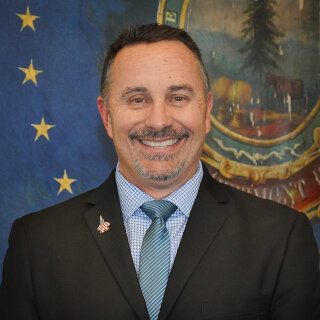
Rep. Mike Morgan
Sponsored bills
Maddy summaryThis bill (H.150) reinstates an exemption allowing firearm transfers at gun shows to bypass Vermont's standard 72-hour waiting period. It directly affects gun show organizers, vendors, and attendees participating in firearm transactions at events sponsored by firearm-focused organizations (like competitive shooting clubs or collector groups). The key mechanism adds a specific exemption to Vermont law, stating that firearm transfers at qualifying gun shows are not subject to the 72-hour waiting period requirement. This policy change reverses a prior removal of this exemption, returning to a previous regulatory approach for gun show transactions.
Maddy summaryH 159 proposes to repeal Vermont's Renewable Energy Standard (RES), which required electricity providers to source increasing percentages of renewable energy. If passed, this bill would eliminate the legal requirement for Vermont's electricity providers to meet specific renewable energy procurement targets. The repeal would remove provisions mandating that providers purchase renewable energy to meet the RES, effectively ending the state's mandatory renewable energy goals. This directly affects all Vermont electricity providers subject to the RES, though it does not address existing renewable energy projects or contracts.
Maddy summaryH 139 creates a working group to study whether Vermont's secondary schools should require licensed athletic trainers at all athletic events and practices. The group, made up of education leaders, athletic directors, and athletic trainers, will examine the need, available resources, and cost-effective ways to share trainers across school districts. They must submit a report to lawmakers by December 1, 2025, but the bill itself does not require trainers to be present - only study the possibility. This affects all Vermont public secondary schools, particularly rural districts facing medical access challenges.
Maddy summaryH 128 requires the State's Attorney to request a specific release condition when someone not legally renting a dwelling is charged with unlawful drug activity there. The bill mandates that courts may prohibit such individuals from coming within a fixed distance of the dwelling as part of their release terms. This directly affects people facing drug charges in properties they do not lease or own. The provision applies to arraignment on next business day after citation or arrest for drug activity in non-tenant dwellings. The law takes effect July 1, 2025.
Maddy summaryH.117 would prevent candidates who lose a major party primary election from appearing on the general election ballot as independents or for another party for the same office. This rule directly affects candidates who compete in a primary but do not win their party's nomination. The bill amends Vermont election law to explicitly bar such candidates from being listed on the general ballot under any other party or as independents. The change would take effect immediately upon the bill's passage.
Maddy summaryThis bill prohibits unauthorized fees and deceptive practices for services helping Vermont veterans navigate benefits claims. It bans individuals or companies from charging veterans for advice, referrals, or assistance with VA claims unless they are accredited by the U.S. Department of Veterans Affairs or work for Vermont's Veterans Affairs office. The law requires written agreements for paid services, prohibits guaranteeing specific benefit amounts, and forbids falsely claiming affiliation with VA or Vermont's veterans offices. It directly protects veterans, dependents, and survivors from exploitation while applying to all service providers except accredited representatives.
Maddy summaryThis bill requires Vermont school districts to include military career options in students' personalized learning plans and career planning resources starting in grade 7. It amends education law to mandate that schools provide specific information about military admissions processes and requirements as part of postsecondary planning. The policy affects all Vermont public schools serving students in grades 7-12, integrating military opportunities alongside other career pathways. The change takes effect July 1, 2025.
Maddy summaryThis bill would allow all Vermont students in pre-kindergarten through 12th grade to attend any public or approved independent school of their choice, regardless of where they live. It establishes a "School Choice Grant" funded by redirecting existing education funds that would have gone to the student's home school district to the chosen school. Schools must accept students unless they lack capacity (using lotteries for oversubscription), and cannot deny enrollment based on protected characteristics. The bill also requires a report by the Joint Fiscal Office by 2026 on integrating this program into Vermont's overall education funding system.
Maddy summaryThis bill requires Vermont's Office of Veterans Affairs to create and maintain a database of state veterans, collecting personal information from state agencies. It mandates that all state agencies provide veteran data "to the maximum extent practicable" while keeping all personally identifying details exempt from public records requests under Vermont law. The database will be confidential, with information protected from public inspection or copying, even overriding standard public records exemptions. The law takes effect on July 1, 2025, and directly affects Vermont veterans whose personal details are collected, as well as state agencies responsible for sharing that data.