

Maddy summaryThis bill creates a new permanent position of Dementia Coordinator within Vermont's Agency of Human Services to help coordinate state efforts and community partnerships in supporting people with dementia and their families. The Coordinator would update the state's Alzheimer's action plan, manage grant funding for expanded services, streamline government programs to reduce duplication, oversee dementia-specific training, and collect and share data to improve care quality. The role requires a master's or bachelor's degree in human services, public health, or public administration with professional experience, and the Commission on Alzheimer's Disease and Related Disorders would recommend qualified candidates. An initial $150,000 appropriation funds the position in fiscal year 2024, with the Coordinator required to submit an annual report on dementia care status and legislative recommendations by December 1. The act takes effect on July 1, 2023.
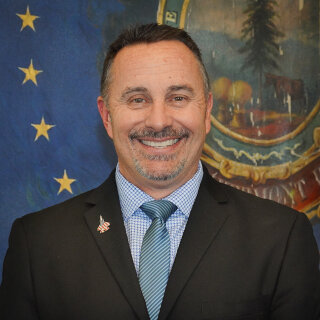
Rep. Michael Morgan
Sponsored bills
Maddy summaryThis bill directs the Vermont State Highway Safety Office to prepare a written report by January 15, 2024, recommending how the state should adjust its approach to educating about, enforcing, and prosecuting distracted driving violations for noncommercial drivers. The report must consult with various state agencies and organizations, examine current enforcement methods like fines and license suspensions, and specifically consider strategies for drivers under 18 years old. The legislation does not change any existing laws but requires officials to analyze what is working and what needs improvement in addressing distracted driving.
Maddy summaryThis bill authorizes the Vermont Department of Environmental Conservation to issue permits for dredging public waters to improve navigation for vessels, provided the work does not harm the public interest. It also creates a temporary Working Group on Navigation of Lake Champlain to evaluate and plan a specific dredging project between Mallet's Bay and the Inland Sea to enhance public safety, emergency response, and environmental protection. The Working Group will include representatives from natural resources, public safety agencies, marina operators, and dredging companies, and must submit a report with cost and timeline estimates by January 15, 2024, before ceasing operations on February 15, 2024. Any permitted dredging must comply with federal Clean Water Act requirements, and the department may seek federal or other funding for approved projects.
Maddy summaryThis bill establishes three main benefits for Vermont veterans. First, it requires the state to create and maintain a confidential database of veterans in Vermont, collecting information from various agencies while protecting personal details from public access. Second, it reduces motor vehicle registration fees for veterans with honorable discharges, offering either a 50% discount or a full waiver for vehicles purchased with VA financial assistance. Third, it increases the amount of U.S. military retirement pay exempt from Vermont state income tax, raising the exclusion limit for single filers from $10,000 to $15,000 and adjusting thresholds based on total income levels.
Maddy summaryThis bill increases fines and adds more points to driving records for drivers who use portable electronic devices, such as phones, while operating a moving vehicle. It directly affects all drivers in Vermont who are caught texting or using handheld devices while driving. The law raises the minimum fine for a first violation from $25 to $100 and increases the maximum fine from $200 to $250, while also raising fines for repeat offenses and adding more points to driving records. Drivers who violate these rules in school zones or work zones face even higher penalties, including additional fines and more points on their license. The bill also clarifies that drivers who cause an accident due to texting will face a minimum $500 fine and 10 points on their driving record.
Maddy summaryThis bill is a ceremonial resolution that honors organizations and individuals working to improve rural broadband access in Vermont. It recognizes the Communications Union Districts (CUDs) and related groups like the Vermont Communications Union Districts Association and the Vermont Community Broadband Board for their efforts in building broadband networks. The resolution acknowledges past legislative actions that created funding and oversight structures to support these broadband initiatives. It does not change any laws or policies but serves to formally recognize the achievements of these groups in expanding internet access to over 200 municipalities.
Maddy summaryThis bill creates the Rural Infrastructure Assistance Program to help Vermont's small towns access and manage federal and state funding for projects like clean water, housing, broadband, and climate resilience. The program provides direct support services including community needs assessments, funding application assistance, and project management help, with priority given to municipalities with the highest administrative capacity needs. An initial $3 million appropriation in 2024 funds the program, while the bill also directs remaining federal relief funds to prioritize communities with the greatest need based on a new administrative capacity index. Additionally, the legislation amends the Municipal and Regional Planning Fund to allocate 20 percent of its revenue directly to municipalities for planning purposes.
Maddy summaryThis bill designates January 23-27, 2023, as the first annual Holocaust Education Week in Vermont. It directly affects Vermont schools and educational institutions by establishing a formal period for Holocaust education activities. The resolution directs the Secretary of State to send copies of the document to the Vermont Holocaust Memorial and the Agency of Education to facilitate the event. This commemorative measure recognizes the historical significance of the Holocaust and aims to increase awareness through organized educational programming during the designated week.
Maddy summaryThis bill proposes changes to Vermont's housing programs to increase funding and expand eligibility for rental housing improvements, primarily affecting private landlords and nonprofit housing organizations. It would amend existing programs to allow grants and forgivable loans for rehabilitating non-compliant units, building new accessory dwelling units, and creating new rental units, with a cap of $50,000 per unit and a requirement for landlords to contribute at least 20% in matching funds or services. The legislation also creates a new Middle-Income Rental Housing Revolving Loan Program to provide subsidized loans for rental developments serving middle-income households, while exempting smaller municipalities from certain zoning requirements and allowing towns to register with state agencies to issue wastewater permits without full state permits. Additionally, it would reduce the number of residents who can appeal zoning decisions from 10 to a lower threshold and exempt certain downtown housing projects from state environmental review requirements.
Maddy summaryThis bill expands the Vermont National Guard Tuition Benefit Program to include courses at out-of-state colleges that offer degree programs not available in Vermont. It directly affects Vermont National Guard members who wish to pursue education at institutions outside the state. The key provision allows eligible service members to use their tuition benefits at these non-Vermont schools approved for federal funding, with benefits calculated at the University of Vermont's in-state tuition rate. The change takes effect on July 1, 2023, and does not alter existing benefits for in-state institutions.