

Maddy summaryThis bill requires most health insurance plans and Vermont Medicaid to cover biomarker testing when supported by specific evidence, such as FDA approvals, drug labels, or nationally recognized clinical guidelines. It directly affects patients needing these tests (e.g., for cancer diagnosis or treatment) and insurers/Medicaid, mandating coverage for tests analyzing genes, proteins, or other biological markers in blood or tissue. Key provisions include limiting disruptions in care (e.g., avoiding repeated biopsies) and defining biomarker testing broadly to include advanced genetic sequencing. The requirement takes effect January 1, 2026, for new plans, with Medicaid coverage pending CMS approval.
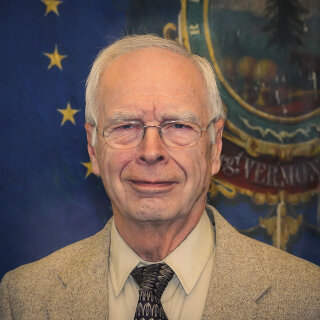
Rep. Larry Labor
Sponsored bills
Maddy summaryH 116 would limit campaign contributions for Vermont State Representative and State Senator candidates. It sets a $1,000 maximum per source (including political committees) for Representatives and $1,500 for Senators, with a total cap of $29,000 from all sources per election cycle. The bill also clarifies that candidates may contribute unlimited amounts to their own campaigns. These limits apply specifically to candidates for State Representative and State Senator positions, not to other offices like Governor or county officials. The bill does not restrict contributions from political parties.
Maddy summaryThis bill declares Lake Memphremagog a "lake in crisis" under Vermont law, directly affecting the lake and communities relying on it for drinking water (serving 175,000 people), recreation, and economic activity. It eliminates the requirement that a municipality must have reduced real property valuations due to the lake's condition for a "lake in crisis" designation. The bill mandates a crisis response plan including controls on discharges of effluent to the lake's tributaries. The measure takes effect immediately for the declaration but changes to the designation criteria will apply starting July 1, 2025.
Maddy summaryThis bill prohibits unauthorized fees and deceptive practices for services helping Vermont veterans navigate benefits claims. It bans individuals or companies from charging veterans for advice, referrals, or assistance with VA claims unless they are accredited by the U.S. Department of Veterans Affairs or work for Vermont's Veterans Affairs office. The law requires written agreements for paid services, prohibits guaranteeing specific benefit amounts, and forbids falsely claiming affiliation with VA or Vermont's veterans offices. It directly protects veterans, dependents, and survivors from exploitation while applying to all service providers except accredited representatives.
Maddy summaryH 92 requires Vermont's Human Services Board to make fair hearing proceedings more transparent and accessible for people challenging decisions about benefits or services. The bill mandates two key changes: (1) allowing applicants a reasonable uninterrupted speaking time during hearings, and (2) requiring hearing officers and agency attorneys to use plain language instead of legal jargon. This directly affects individuals who dispute human services decisions, such as those involving welfare, disability, or housing assistance. The bill aims to simplify the process without altering the underlying eligibility rules.
Maddy summaryThis bill would allow all Vermont students in pre-kindergarten through 12th grade to attend any public or approved independent school of their choice, regardless of where they live. It establishes a "School Choice Grant" funded by redirecting existing education funds that would have gone to the student's home school district to the chosen school. Schools must accept students unless they lack capacity (using lotteries for oversubscription), and cannot deny enrollment based on protected characteristics. The bill also requires a report by the Joint Fiscal Office by 2026 on integrating this program into Vermont's overall education funding system.
Maddy summaryH 64 creates a process for victims of sexual assault to obtain emergency protective orders outside regular court hours, weekends, and holidays. It requires the Court Administrator to establish procedures where an authorized person can receive requests (including electronically), administer a sworn statement over the phone, and relay the case to a judicial officer for a decision. This directly affects individuals seeking immediate protection from sexual assault when courts are closed. The judicial officer decides solely based on the submitted information, and if approved, the order is delivered to law enforcement for service. The bill takes effect September 1, 2025.
Maddy summaryH 74 would phase in full exemption of Social Security benefits from Vermont income tax over eight years. Currently, Vermont partially exempts Social Security benefits for lower-income seniors, but this bill raises the income thresholds where full exemption applies - increasing the single filer threshold from $65,000 to $77,000 and married filer threshold from $80,000 to $92,000. The change applies to all Vermont residents receiving Social Security benefits, with full exemption becoming effective by the eighth year. The bill amends Vermont’s tax code (32 V.S.A. § 5830e) to adjust the income-based exclusion rules. It is currently referred to the Committee on Ways and Means.
Maddy summaryH 62 repeals Vermont's Global Warming Solutions Act, specifically removing the Vermont Climate Council and replacing mandatory greenhouse gas reduction requirements with voluntary "goals." It amends state law to change emissions targets from legally binding requirements to non-binding goals, removes the requirement for state agencies to consider emissions in decisions, and repeals the Low Emission Vehicle Rules. These changes would shift climate policy from a structured, mandated approach to a more flexible framework without oversight. The bill takes effect July 1, 2025.
Maddy summaryH 65 revokes Vermont's adoption of California's Clean Air Act waiver for vehicle emissions, prohibiting the state from using California's standards for new motor vehicles. The bill amends Vermont law to explicitly ban the adoption of California's emission rules (42 U.S.C. § 7507) and repeals existing Vermont Low Emission Vehicle (LEV) and Zero Emission Vehicle (ZEV) rules. This directly affects how Vermont regulates vehicle emissions, shifting away from California's standards to potentially adopt alternative state rules. The changes take effect on July 1, 2025, requiring the Secretary of Natural Resources to develop new emission control requirements without California's framework.