

Maddy summaryJRH 2 is a Vermont legislative resolution urging President Trump to avoid imposing tariffs on goods and services imported from Canada. It directly affects Vermonters by highlighting the state's deep economic ties with Canada, including $2.6 billion in annual imports, 17,000 jobs supported by Canadian investments, and critical energy imports (100% of Vermont Gas Systems' supply). The resolution formally requests the President refrain from tariffs, citing risks to Vermont's economy and longstanding cross-border trade relationships, and directs the Secretary of State to send it to the President, Governor Scott, and Canadian officials.
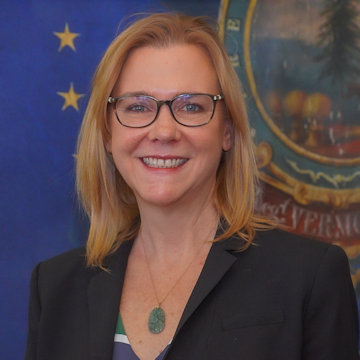
Rep. Alyssa Black
Sponsored bills
Maddy summaryThis House Concurrent Resolution (HCR 12) is a non-binding ceremonial resolution expressing legislative congratulations to the University of Vermont (UVM) men's soccer team for winning their first NCAA Division I men's soccer championship (College Cup) in 2024. It formally recognizes the team's achievement, including their "Cardiac Cats" nickname and championship victory over Marshall University. The resolution directs the Secretary of State to send a copy to UVM Athletics but does not create any new policy, funding, or legal obligations. It is purely symbolic recognition of the team's athletic accomplishment.
Maddy summaryThis bill (H.95) replaces Vermont’s outdated health insurance statutes (8 V.S.A. Chapter 107) with a reorganized, updated version. It defines key terms like "covered individual" and "health insurance plan," aligns Vermont’s rules with federal laws (including the Affordable Care Act and No Surprises Act), and sets standards for advertising practices. The bill directly affects health insurers, health care providers, and the Vermont Department of Banking, Insurance, and Health Care Administration, which enforces these rules. It modernizes the legal framework without changing coverage requirements or creating new benefits.
Maddy summaryThis bill requires health care sharing organizations that aren't licensed insurance providers in Vermont to annually report detailed financial and operational data to the state's Financial Regulation Commissioner. It affects entities offering "health care sharing plans" that facilitate payment for health care costs but operate outside standard insurance regulations. Organizations must submit specific information including participant numbers (individuals, households, employers), total fees collected, reimbursement requests processed, denied claims, and details about third-party partners. The Commissioner will compile these reports into a public annual summary posted online. This aims to increase transparency for Vermont residents using these non-insurance health care arrangements.
Maddy summaryThis bill expands eligibility for Vermont's Dr. Dynasaur program to cover pregnant individuals with incomes up to 312% of the federal poverty level (FPL), effective January 2026. It also requires the Agency of Human Services to study and report by January 2026 on the feasibility and costs of expanding Dr. Dynasaur to all Vermont residents under 26 with incomes at or below 312% FPL, and Medicaid to adults aged 26-64 with incomes at or below 312% FPL. The bill appropriates $600,000 for implementing the pregnant individual eligibility change, with $180,000 from the General Fund and $420,000 in federal funds. The report must address federal waiver needs, cost estimates, and implementation timelines for potential broader expansions. This is a policy change focused on expanding healthcare access for specific income groups, not a procedural measure.
Maddy summaryH 97 prohibits firearms and deadly weapons in Vermont schools, school property, and childcare centers, with limited exceptions. It directly affects students, staff, and visitors at these locations by making unauthorized possession a crime punishable by fines or jail time (up to 1 year for first offense, 3 years for repeat offenses). Key exceptions include law enforcement officers on duty, authorized school personnel for specific purposes (like instruction), and firearms at childcare centers located in a person’s home. The bill defines "school property" broadly to include leased or controlled areas and clarifies it doesn’t prevent other charges like assault.
Maddy summaryH.112 provides medical debt relief for Vermont residents by appropriating $1 million to contract with a nonprofit to purchase and erase qualifying medical debt. It directly affects Vermonters with household incomes at or below 400% of the federal poverty level or those owing medical debt equal to 5% or more of their household income. The bill prohibits credit bureaus from reporting medical debt on credit reports and bans healthcare providers from submitting such debt to credit agencies. It requires debt relief contractors to remove adverse credit information after debt abolition, ensuring no cost or tax impact for affected residents.
Maddy summaryThis bill (H.83) proposes three specific changes to firearms storage in Vermont. It would create a state fund to subsidize Vermonters purchasing firearm storage devices (like safes or locks), exempt those devices from sales tax, and require firearms dealers to include a trigger lock with every firearm sold. The bill directly affects Vermont firearm owners (through subsidies and tax changes) and firearms dealers (through the trigger lock requirement). These are concrete policy changes focused on promoting safe storage practices, without altering criminal penalties or ownership rights. The bill is currently referred to the Judiciary Committee for further review.
Maddy summaryH 92 requires Vermont's Human Services Board to make fair hearing proceedings more transparent and accessible for people challenging decisions about benefits or services. The bill mandates two key changes: (1) allowing applicants a reasonable uninterrupted speaking time during hearings, and (2) requiring hearing officers and agency attorneys to use plain language instead of legal jargon. This directly affects individuals who dispute human services decisions, such as those involving welfare, disability, or housing assistance. The bill aims to simplify the process without altering the underlying eligibility rules.
Maddy summaryThis bill requires health care entities (like hospitals, clinics, and insurers with $1 million+ in annual revenue) to notify Vermont's Green Mountain Care Board and Attorney General before certain major transactions, such as mergers, acquisitions, or ownership changes. The Board, working with the Attorney General, must review these transactions and decide whether to approve them, approve with conditions, or disapprove them. It also prohibits corporations from interfering with doctors' clinical decisions or professional judgment. Additionally, the bill mandates public reporting on ownership and control of covered health care entities.