

Maddy summaryThis bill requires Vermont school districts and approved independent schools to create and enforce policies for selecting library materials, guided by the First Amendment and established intellectual freedom standards. The legislation specifically prohibits removing library materials based on partisan politics, author or character demographics, personal discomfort, or content addressing sexual health and student educational needs. School library staff will be responsible for curating collections that match students' developmental levels while protecting students' First Amendment rights. The policy must be made available to the public and takes effect on July 1, 2024.
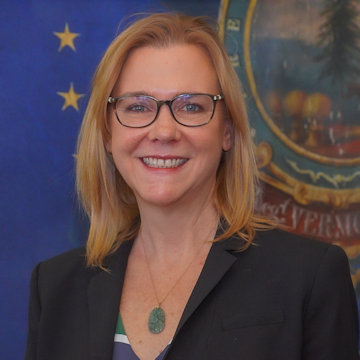
Rep. Alyssa Black
Sponsored bills
Maddy summaryThis bill creates a two-year pilot program to fund a community-based organization that coordinates mental wellness and climate resilience efforts across Vermont. The program would receive $100,000 in fiscal year 2025 from the state's General Fund to support activities that address how extreme weather events and other social stresses impact mental health. The coordinating body must include representatives from diverse groups including schools, faith organizations, environmental groups, disaster response agencies, and people with lived experience of mental health challenges. The program uses a public health approach to prevent mental health problems before they emerge and to help entire communities build resilience against various adversities.
Maddy summaryThis bill creates a temporary Data Trusts Study Committee to examine how data trusts could balance consumer privacy rights with the benefits of increased data sharing. The committee will be composed of state legislators, government officials, and experts from legal, business, and technology sectors, and will study whether data trusts could serve as an alternative to Vermont's existing personal information protection companies. The committee must submit its findings and any legislative recommendations by December 15, 2024, and will cease to exist on December 31, 2024.
Maddy summaryThis bill proposes a new 11 percent excise tax on the retail sale of firearms, firearm precursor parts, and ammunition in Vermont, which would be paid by sellers at the time of each transaction. The tax applies to both licensed firearm dealers and ammunition vendors, with licensed dealers required to collect the tax during background checks and remit it quarterly to the state. All revenue generated from this tax would be deposited into the Domestic and Sexual Violence Special Fund, which supports grants for domestic and sexual violence prevention services. The legislation excludes transfers exempt from background checks, such as those to law enforcement agencies or immediate family members, and would take effect on July 1, 2025.
Maddy summaryThis bill allocates $200,000 from the state's General Fund to reimburse the Burlington Fire Department for emergency medical services provided to individuals experiencing drug overdoses. The money is distributed through the Department of Health as a grant to the City of Burlington, with the requirement that these funds supplement rather than replace existing city funding for the fire department. The legislation takes effect on July 1, 2024, and is intended to help cover the costs associated with responding to overdose incidents in Burlington.
Maddy summaryThis bill requires health insurance plans in Vermont, including Medicaid, to provide comprehensive coverage for obesity treatment. It directly affects individuals with obesity and the insurance companies that serve them. The law mandates coverage for FDA-approved anti-obesity medications, lifestyle interventions like nutrition counseling and exercise planning, bariatric surgery, and ensures equal cost-sharing for obesity care compared to other medical conditions. Coverage decisions must be based on medical necessity rather than solely on body mass index calculations, and prior authorization processes should not create unnecessary barriers to care. The changes will take effect for plans issued on or after January 1, 2025.
Maddy summaryThis bill, known as the Transportation Infrastructure and Resiliency Act of 2024, directs state funding and policy changes to improve roads, support electric vehicle adoption, and enhance transportation options across Vermont. It increases funding for road repair programs, provides grants for eBike and electric vehicle charging infrastructure, and establishes new rules allowing property owners to install charging stations. The legislation also expands funding for bicycle and pedestrian projects, creates a plan for carsharing expansion, and requires the state to develop new revenue sources for transportation and environmental initiatives. Additionally, it allows certain areas to set speed limits below 25 mph and mandates reporting on electric vehicle outreach efforts and charging station availability.
Maddy summaryThis bill directs Vermont's Department of Health to create free opioid overdose response training videos and distribute naloxone, a medication that reverses opioid overdoses, to businesses and organizations likely to encounter people experiencing overdoses. The legislation also requires the department to expand community prevention programs, improve access to treatment services, educate healthcare providers and recovery program participants on overdose prevention, and establish public kiosks where naloxone can be dispensed. These measures aim to increase public awareness and access to life-saving resources for individuals at risk of opioid-related overdoses across the state. The law is set to take effect on July 1, 2024.
Maddy summaryThis bill establishes a two-year Child and Youth Representation Policy Fellowship Program within Vermont's Office of Child, Youth, and Family Advocate to improve how children and youth participate in legal, healthcare, and human services systems. The program will analyze existing representation structures and funding while prioritizing racially and socially equitable approaches to youth engagement. A new full-time position called Child and Youth Representation Policy Lead will be created to oversee the initiative and coordinate with community stakeholders. The Office must submit progress reports to legislative committees by December 2024 and May 2025, with proposed legislation recommendations due by November 2025. Funding of $300,000 from the Tobacco Litigation Settlement will support the program and position in fiscal year 2025, with any remaining funds carried forward to 2026.
Maddy summaryThis bill creates a refundable income tax credit of $500 for qualified emergency responders in Vermont, including licensed emergency medical personnel, first responders, and volunteer firefighters who are in good standing with the state. The credit applies to taxable years beginning on or after January 1, 2024, and is designed to recognize the public service provided by these individuals who deliver lifesaving measures. The legislation also requires the Vermont Fire Service Training Council to establish standards defining active service for volunteer firefighters to determine eligibility for the credit. This measure directly affects licensed medical personnel, first responders, and volunteer firefighters who meet the specified qualifications and serve within the state.