

Maddy summaryThis bill modifies Vermont's rules for registering exhibition and antique vehicles by changing how usage is measured and adjusting fees. It allows owners to qualify for special plates if their vehicle is driven up to 1,000 miles per year, regardless of how often they drive, and raises the registration fee from $26 to $50 for a five-year period. Owners can choose to display plates marked "exhibition" or "antique" if their vehicle is at least 25 years old, and older pre-1968 plates may continue to be used if kept in the vehicle and shown to law enforcement when requested. The changes take effect on July 1, 2024.
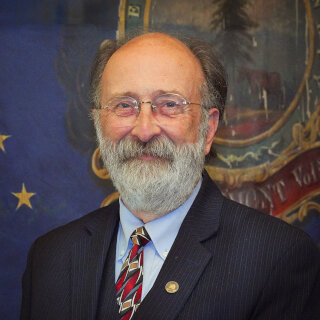
Rep. Bob Hooper
Sponsored bills
Maddy summaryThis bill creates a study committee to examine whether Vermont should adopt a statewide residential building code, specifically the International Residential Code, to address the current lack of uniform construction standards for single-family homes. The committee will include representatives from government agencies, construction industry groups, housing organizations, and insurance associations who will assess how a standardized code would impact safety, compliance, disaster resilience, sustainability, and housing affordability. The group must submit a written report with its findings and recommendations to the General Assembly by December 15, 2024, after holding meetings starting by July 15, 2024, and will cease to exist on January 1, 2025.
Maddy summaryThis bill reorganizes building safety oversight in Vermont by renaming the Division of Fire Safety to the Division of Fire and Building Safety and transferring authority over residential and commercial building energy standards from the Department of Public Service to this new division. The legislation also requires the Office of Professional Regulation to update its building contractor registry with more detailed information and mandates that energy code compliance certificates be issued before buildings can receive occupancy permits. Additionally, the bill directs the Department of Public Service to create an online application and certification tool for small residential projects and calls for the adoption of a statewide residential building construction code to improve enforcement and compliance with energy standards.
Maddy summaryThis bill amends Vermont state law to clarify how harassment is defined and evaluated in schools, directly affecting students, families, and school administrators. It removes the requirement that harassment must be "severe or pervasive" to be unlawful, allowing a single incident to constitute harassment if it objectively undermines a student's education or creates an intimidating environment. The law also specifies that harassment can be determined by looking at all circumstances together rather than isolating individual incidents, and it clarifies that harassment can occur even if the student continues their education or if the conduct happens outside school grounds. However, the bill maintains that behavior considered a petty slight or trivial inconvenience by a reasonable person would not qualify as harassment. These changes take effect on July 1, 2024.
Maddy summaryThis bill creates the Climate Superfund Cost Recovery Program, which would require fossil fuel companies that operated in Vermont between 2000 and 2019 to pay for their share of climate change costs. The program targets entities involved in extracting coal, oil, or natural gas, charging them based on how much greenhouse gas their products contributed to global emissions. Money collected from these payments would go into a dedicated fund to finance climate resilience projects like flood protections, upgraded infrastructure, and health programs addressing climate-related health risks. The law defines specific types of infrastructure projects eligible for funding and establishes rules for determining which companies must pay and how much they owe.
Maddy summaryThis bill designates April 10 as Ken Squier Day to honor the late Vermont broadcaster and auto racing commentator. The legislation recognizes Squier's contributions to radio through his ownership of WDEV and founding of the Radio Vermont Group, as well as his pioneering work with the Motor Racing Network and NASCAR Hall of Fame induction. It also acknowledges his community leadership roles, including chairing the Vermont Symphony Orchestra Board and his extensive involvement in local sports broadcasting. The bill adds a new section to Vermont's statutes formally establishing the commemorative day without requiring any additional government funding or administrative changes.
Maddy summaryThis bill allocates $200,000 from the state's General Fund to reimburse the Burlington Fire Department for emergency medical services provided to individuals experiencing drug overdoses. The money is distributed through the Department of Health as a grant to the City of Burlington, with the requirement that these funds supplement rather than replace existing city funding for the fire department. The legislation takes effect on July 1, 2024, and is intended to help cover the costs associated with responding to overdose incidents in Burlington.
Maddy summaryThis bill proposes to increase fines and add more points to driving records for using portable electronic devices like phones while driving in Vermont. It directly affects all drivers who use handheld devices or text while operating a moving vehicle on highways. The bill establishes higher penalties for violations in school zones and work zones where construction or maintenance crews are present, with fines ranging from $250 to $1,000 and additional points on driving records. It also creates a new Distracted Driving Diversion Program to offer an alternative to traditional penalties for eligible first-time offenders. The legislation applies to both junior operators and licensed drivers, with specific provisions preventing duplicate penalties for the same incident.
Maddy summaryThis bill requires all Type I and II school buses in Vermont to be equipped with live digital video cameras that automatically detect and record vehicles illegally passing a stopped school bus. The cameras will capture images of license plates only, not occupants, and store footage for up to 90 days unless a violation is reported, in which case images are kept until the case is resolved. If a violation is confirmed, the school bus operator can submit the recorded evidence to issue a civil traffic violation to the vehicle's registered owner, removing the need for a law enforcement officer to witness the infraction. Additionally, the bill eliminates point assessments on driving records for illegal school bus passing violations, though it does not change the underlying penalty for the offense. The changes take effect on August 1, 2025, and apply to school buses during the 2025-2026 school year.
Maddy summaryThis bill protects employees from being fired, discriminated against, or retaliated against for taking time off to serve as volunteer firefighters or volunteer emergency medical personnel. It also allows employers to claim a $500 tax credit for each volunteer firefighter or emergency medical personnel they employ for at least 12 weeks during the tax year. To qualify for protections, employees must provide written proof from their volunteer department to their employer, and employers are not required to pay employees for time spent on volunteer duties. The tax credit is available to private employers who maintain workers' compensation insurance and meet state registration requirements. These changes take effect on July 1, 2024.