

Maddy summaryThis bill establishes a study committee to examine how perfluoroalkyl and polyfluoroalkyl substances in landfill leachate affect natural resources across Vermont. The committee will be tasked with evaluating the presence and impacts of these chemical substances found in liquid waste from landfills. The legislation directly involves state environmental officials and land management agencies responsible for monitoring landfill operations. No specific regulatory changes or funding allocations are included in this measure, which focuses solely on creating a framework for further investigation.
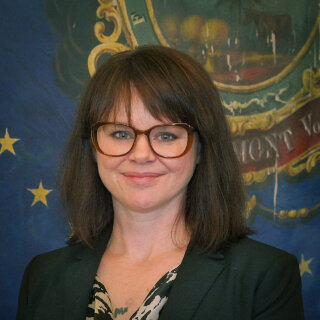
Rep. Kate Logan
Sponsored bills
Maddy summaryThis bill prohibits Vermont schools and educational programs that receive state funding from using unlawful physical restraints, seclusion, mechanical restraints, or chemical restraints on students. It defines specific types of restraints and seclusion that are banned, while allowing certain voluntary physical contacts like escorts and prompts that do not restrict movement. Covered entities must report and document any incidents involving restraint or seclusion, notify parents within 24 hours, and hold meetings within five school days to discuss prevention strategies and potential behavioral support plans. The Agency of Education is tasked with creating a performance review system to monitor compliance and provide technical assistance to schools for implementing evidence-based programs that reduce the need for restraints.
Maddy summaryThis bill proposes to raise Vermont's minimum wage to $19.45 per hour starting July 1, 2023, and removes several exemptions that currently allow certain workers, such as taxi drivers and outside salespeople, to be paid less than the standard minimum wage. It also establishes a grant program for small businesses with 20 or fewer employees to offset payroll costs resulting from the wage increase, requiring applicants to demonstrate that their business revenue would decline due to the higher wages. Additionally, the legislation directs the Joint Fiscal Office to conduct a study comparing Vermont's wage policies to those of countries with high minimum wages and high standards of living, with the goal of identifying successful practices that could be adopted in the state.
Maddy summaryThis bill proposes to decriminalize the possession of a personal supply of regulated drugs in Vermont, changing penalties from criminal charges to a civil offense with a $50 fee. The legislation would establish a Drug Use Standards Advisory Board to set benchmarks for what constitutes a personal use supply and allow individuals with prior possession convictions to have their criminal records sealed if their amounts fall below these benchmarks. It also authorizes pilot drug-checking programs that let individuals test substances for chemical composition and contaminants to reduce overdose risks. The bill aims to shift Vermont's approach from criminal prosecution to public health strategies, redirecting resources toward prevention, treatment, and harm reduction services.
Maddy summaryThis bill directs Vermont's Agency of Agriculture, Food and Markets to create a pilot program offering financial assistance to farmers who adopt year-round agricultural practices across different regions of the state. It requires the Secretary of Agriculture to develop specific standards and criteria for what qualifies as year-round agriculture and allocates funding to support the program's implementation. The legislation affects farmers and agricultural agencies by establishing a formal mechanism to encourage continuous farming activities throughout all seasons.
Maddy summaryThis bill amends the Vermont Working Lands Enterprise Board's duties to include providing financial and technical assistance specifically to new farmers, veteran farmers, and disadvantaged farmers. The legislation defines these groups as farmers with low household income, those who have not farmed in Vermont for over three years in the last decade, and military veterans who meet specific service criteria. The Board will be authorized to create application processes, set eligibility criteria, and award grants, loans, and other investments to help these farmers enter and operate farms in the state. Key provisions include establishing performance contracts for technical assistance, market development, and business planning, as well as identifying workforce training needs for the agriculture sector. The changes take effect on July 1, 2023, and require administrative support from the Agency of Agriculture, Food and Markets.
Maddy summaryThis bill requires Vermont's Governor to review every federal order deploying the National Guard into armed hostilities to verify it has proper Congressional authorization for war or military force. If the Governor finds the order lacks such authorization, the bill empowers the Governor to block the deployment and mandates legal action by the Attorney General to prevent it. The legislation also establishes a policy that Vermont National Guard members should only serve in military conflicts with specific Congressional approval and requires the Governor to report review findings to state legislative committees within 30 days.
Maddy summaryThis bill seeks to eliminate Vermont's state laws against disorderly conduct and aggravated disorderly conduct, which currently allow for criminal charges against individuals who create public inconvenience, make unreasonable noise, use abusive language, or obstruct traffic. The legislation would directly affect law enforcement, prosecutors, and citizens who might otherwise face arrest or fines under these statutes. By repealing sections 1026 and 1026a of the Vermont Statutes, the bill removes the legal basis for charging people with these offenses, regardless of whether they engage in fighting, threatening behavior, or other disruptive actions in public spaces. The changes would take effect on July 1, 2023, and would prevent future convictions and penalties that currently carry up to 180 days of imprisonment or fines of up to $2,000 for aggravated cases.
Maddy summaryThis bill requires the State of Vermont to cover all costs for public schools that need remediation, mitigation, reconstruction, or new construction due to polychlorinated biphenyls (PCBs) contamination. It applies to public schools tested by the Agency of Natural Resources after 2015 that show PCB levels exceeding the state's action threshold. The legislation defines "public school" according to existing state law and ensures eligible schools receive funding or reimbursement for necessary cleanup and rebuilding expenses.
Maddy summaryThis bill would remove criminal penalties for possessing, dispensing, or selling psilocybin in Vermont and create a Psychedelic Therapy Advisory Working Group to study the potential for regulated therapeutic use. The legislation cites research suggesting psilocybin may help treat mental health conditions like depression, PTSD, and substance use disorders, and it amends state law to exclude psilocybin from the definition of hallucinogenic drugs. The newly formed working group would include legislators, medical professionals, researchers, and community members to review evidence, examine programs in other states, and recommend whether Vermont should establish a regulated system for healthcare providers to administer psychedelics therapeutically. The group must submit its findings and recommendations by November 15, 2024, to relevant legislative committees.