

Maddy summaryThis bill would require annual mental health screenings for anxiety, depression, and suicide risk among school-aged youth in Vermont. The screenings would be implemented as part of existing school health services, directly affecting students and school districts. The legislation mandates that these assessments occur regularly to identify mental health concerns early, without specifying additional funding or enforcement details.
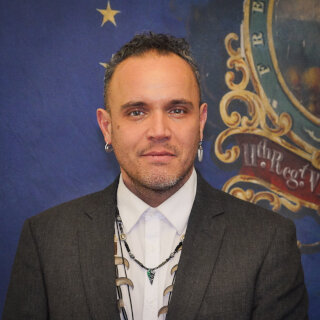
Rep. Brian Cina
Sponsored bills
Maddy summaryThis bill designates January 31, 2024, as Mental Health Advocacy Day at the Vermont State House to recognize the importance of mental health care. It affects mental health advocacy organizations and individuals who gathered at the State House on that date to promote equal access to mental health services. The resolution directs the Secretary of State to send copies of the document to the advocacy groups present during the event. This is a ceremonial measure that acknowledges the need for mental health care to be treated with the same priority as physical health care.
Maddy summaryThis bill creates a two-part pilot program to improve health outcomes for people involved with the justice system in Vermont. The first part provides $50,000 to train all correctional facility staff, contractors, and grant recipients in health equity practices, starting at the Chittenden Regional Correctional Facility. The second part allocates $1 million to fund community-based mental health and substance use disorder services for detained or incarcerated individuals, including telehealth visits, on-site case management, and support for reentry into the community. The pilot will run for three years with a required report submitted by October 1, 2025, to evaluate progress and recommend potential expansion.
Maddy summaryThis bill aims to improve services and rights for adults with intellectual disabilities in Vermont by establishing stronger oversight and support mechanisms. It requires a professional review committee to approve any restrictions on personal rights or privacy, mandates the submission of a final Olmstead Plan by January 2025, and provides financial assistance to parents or guardians when alternative care options are unavailable. The legislation also enhances transparency in Human Services Board proceedings by allowing participants to submit supporting documentation and introducing a complaint procedure for individuals under guardianship. Additionally, it clarifies guardianship laws to ensure guardians can negotiate contracts that protect the individual's rights under the Americans with Disabilities Act and other applicable state laws.
Maddy summaryThis bill creates an earned allowance program for incarcerated individuals in Vermont's correctional facilities, allowing them to earn money through compliant behavior and participation in programs to cover educational costs, medication, housing, and work-related expenses. The program uses a contingency management approach that rewards positive behavior rather than punishing rule violations, with allowances calculated based on successful drug screenings and months without disciplinary infractions. It also expands workforce development opportunities by enabling partnerships with nonprofit and for-profit businesses to provide vocational training in Vermont's most needed industries such as healthcare, construction, and agriculture. The Department of Corrections must establish rules for the program by September 2025, with implementation beginning January 1, 2026.
Maddy summaryThis bill creates the Vermont Olympics Task Force to study the feasibility of hosting the Olympic Games in Vermont. The task force would be composed of state officials, elected representatives, tourism industry experts, and an Olympic athlete, with members receiving per diem compensation for up to 20 meetings. Its duties include reviewing Olympic hosting requirements, developing a proposal that aligns with Vermont's regional development plans and climate resilience goals, and presenting findings to the International Olympic Committee. The task force must submit progress reports by December 2024 and March 2025, with a final report due by December 2025. The legislation takes effect on July 1, 2024, and focuses on creating a sustainable, equitable proposal rather than committing to hosting the Games.
Maddy summaryThis bill directs Vermont state agencies to create a pilot program for a 16-bed secure recovery residence designed for justice-involved individuals with co-occurring mental health and substance use disorders. It requires the Agency of Human Services to partner with stakeholders who have lived experience in the criminal justice system to design this facility and integrate community-based services. By January 15, 2025, the agencies must submit a comprehensive report assessing current and future needs for secure residential recovery facilities across Vermont, including cost-benefit analyses comparing these facilities to traditional correctional centers. Additionally, the Coordinated Justice Reform Advisory Council is tasked with examining how to replace existing correctional facilities with a continuum of short-term and long-term residential options that use evidence-based rehabilitation approaches. The legislation takes effect on July 1, 2024, and aims to improve recovery outcomes while reducing recidivism through specialized care in secure settings.
Maddy summaryThis bill allocates $2.8 million in state funding to expand supportive and transitional housing for justice-involved individuals in Vermont, with a focus on those who are homeless or at risk of homelessness. The funds are distributed to three agencies to provide housing grants, prioritize women and transgender individuals, and support community-based services using the Housing First model. Additionally, the bill requires state agencies to submit a report by January 2025 recommending strategies to integrate housing into new developments and expand peer-based services. The legislation aims to address recidivism by reinvesting incarceration funds into community care and assessing future housing needs.
Maddy summaryThis bill authorizes Vermont municipalities to remove sediment, rocks, and debris from waterways without needing a state permit, provided the work meets specific federal exemption criteria. The law defines "maintenance" as repairing structures like dams and dikes, and allows municipalities to proceed without state approval when the work is exempt from federal Corps of Engineers permitting, qualifies for self-verification, or occurs in non-navigable waters. The legislation also clarifies definitions for terms like "instream material" and "watercourse" to establish clear boundaries for when permits are required versus when they are not. Additionally, the bill specifically authorizes the City of Barre to remove material from the Stevens Branch of the Winooski River for maintenance purposes without a permit.
Maddy summaryThis bill amends Vermont state law to clarify how harassment is defined and evaluated in schools, directly affecting students, families, and school administrators. It removes the requirement that harassment must be "severe or pervasive" to be unlawful, allowing a single incident to constitute harassment if it objectively undermines a student's education or creates an intimidating environment. The law also specifies that harassment can be determined by looking at all circumstances together rather than isolating individual incidents, and it clarifies that harassment can occur even if the student continues their education or if the conduct happens outside school grounds. However, the bill maintains that behavior considered a petty slight or trivial inconvenience by a reasonable person would not qualify as harassment. These changes take effect on July 1, 2024.