

Maddy summaryThis bill requires postsecondary schools in Vermont to designate a Student Liaison Officer to assist students experiencing homelessness and those exiting the foster care system with navigating financial aid and available services. The legislation mandates that these institutions create policies to give priority access to class enrollment and on-campus housing for these student populations, while also allowing waivers for registration and laboratory fees. Schools must ensure homeless students can access housing during school breaks and that enrollment policies account for barriers like work obligations and transportation challenges. The law takes effect on July 1, 2024, and applies to all postsecondary institutions operating within Vermont.
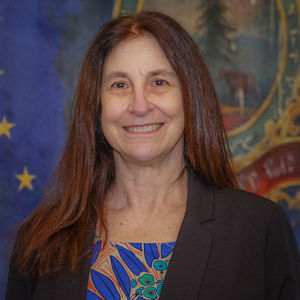
Rep. Barbara Rachelson
Sponsored bills
Maddy summaryThis bill removes fees for vital records, nondriver identification cards, and driver's licenses for Vermont residents experiencing homelessness and for those under 22 who were previously in foster care. To qualify, individuals experiencing homelessness must submit an affidavit confirming their status, while foster care recipients need to prove their placement history through a child-placing agency. The changes apply to certified copies of birth certificates, nondriver ID cards, and operator's privilege cards, setting their cost to zero for eligible applicants. The law takes effect on July 1, 2024, and is intended to reduce financial barriers to obtaining essential identification documents for these specific populations.
Maddy summaryThis bill requires that juvenile delinquency cases involving youths aged 14 to 22 begin in the Family Division of the Superior Court rather than the Criminal Division, with certain exceptions for specific serious offenses. The law allows the Family Division to transfer cases to the Criminal Division after a hearing if the youth is older or if the offense is particularly severe, and it mandates that prosecutors file felony charges for minors in the Family Division first. The changes apply to both new cases and those involving violations of release conditions, ensuring that all juvenile proceedings initially originate in the Family Division unless specific criteria for transfer are met.
Maddy summaryThis bill requires school districts, approved independent schools, and prequalified private prekindergarten providers in Vermont to offer translation services during the school enrollment process for families who do not speak English. The law mandates that all enrollment forms and applications be translated into the primary language of non-English-speaking families and includes alternative proof of residency forms. Schools must provide translation assistance through options such as English learner liaisons, in-person interpreters, or digital translation tools like smartphone applications. The changes take effect on July 1, 2024, ensuring that non-English-speaking families have access to necessary documentation and support when enrolling their children in school.
Maddy summaryThis bill requires Vermont's Housing Division to track and report on progress toward statewide and regional housing targets established in the Statewide Housing Needs Assessment. The legislation mandates the development of specific metrics, including timelines with deadlines and regional measures covering investment rates, price, quality, and zoning compliance. Through 2030, the Division must publish annual reports detailing progress against these targets, assess whether advancement is satisfactory, and provide recommendations to accelerate housing development if needed. The bill affects the Department of Housing and Community Development, regional planning commissions, and housing developers by creating a structured accountability system for meeting housing goals.
Maddy summaryThis bill requires Vermont's Department for Children and Families to create formal agreements with military family advocacy programs to improve how child abuse and neglect cases involving military personnel are handled. The law mandates that the department collect and share military status information when a child abuse report is accepted, and establishes specific protocols for identifying military family members, reporting investigations to military authorities, and maintaining confidentiality. These changes aim to ensure better coordination between state child welfare services and military support systems when investigating abuse allegations in military families.
Maddy summaryThis bill, known as the Transportation Infrastructure and Resiliency Act of 2024, directs state funding and policy changes to improve roads, support electric vehicle adoption, and enhance transportation options across Vermont. It increases funding for road repair programs, provides grants for eBike and electric vehicle charging infrastructure, and establishes new rules allowing property owners to install charging stations. The legislation also expands funding for bicycle and pedestrian projects, creates a plan for carsharing expansion, and requires the state to develop new revenue sources for transportation and environmental initiatives. Additionally, it allows certain areas to set speed limits below 25 mph and mandates reporting on electric vehicle outreach efforts and charging station availability.
Maddy summaryThis bill directs Vermont's Department of Health to create free opioid overdose response training videos and distribute naloxone, a medication that reverses opioid overdoses, to businesses and organizations likely to encounter people experiencing overdoses. The legislation also requires the department to expand community prevention programs, improve access to treatment services, educate healthcare providers and recovery program participants on overdose prevention, and establish public kiosks where naloxone can be dispensed. These measures aim to increase public awareness and access to life-saving resources for individuals at risk of opioid-related overdoses across the state. The law is set to take effect on July 1, 2024.
Maddy summaryThis bill would expand Vermont's 3SquaresVT program by allowing eligible SNAP recipients to use their benefits at participating restaurants through the federal Restaurant Meals Program. It also requires the state to develop a plan for calculating minimum 3SquaresVT benefits at 30 percent of the federal moderate-cost food plan, which would increase the amount of assistance provided. The legislation creates a new staff position and allocates $85,000 to help restaurants apply for and participate in the program while establishing eligibility criteria that prioritize local food availability and diverse cultural options. The bill takes effect on July 1, 2024, with a transition plan due to state committees by January 1, 2025.
Maddy summaryThis bill establishes a two-year Child and Youth Representation Policy Fellowship Program within Vermont's Office of Child, Youth, and Family Advocate to improve how children and youth participate in legal, healthcare, and human services systems. The program will analyze existing representation structures and funding while prioritizing racially and socially equitable approaches to youth engagement. A new full-time position called Child and Youth Representation Policy Lead will be created to oversee the initiative and coordinate with community stakeholders. The Office must submit progress reports to legislative committees by December 2024 and May 2025, with proposed legislation recommendations due by November 2025. Funding of $300,000 from the Tobacco Litigation Settlement will support the program and position in fiscal year 2025, with any remaining funds carried forward to 2026.