

Maddy summaryH 255 increases criminal penalties for assaulting public transit workers in Vermont. It adds up to one year in prison for a first assault offense and up to 10 years for repeat offenses against workers while they perform their duties. The bill also prohibits intentionally exposing transit workers to bodily fluids (like blood or vomit), punishable by up to one year in jail or a $1,000 fine. "Public transit worker" is defined to include drivers (employees or volunteers) and support staff at transit centers. The law applies to all such assaults committed while workers are on duty, excluding individuals under 18 in residential facilities.
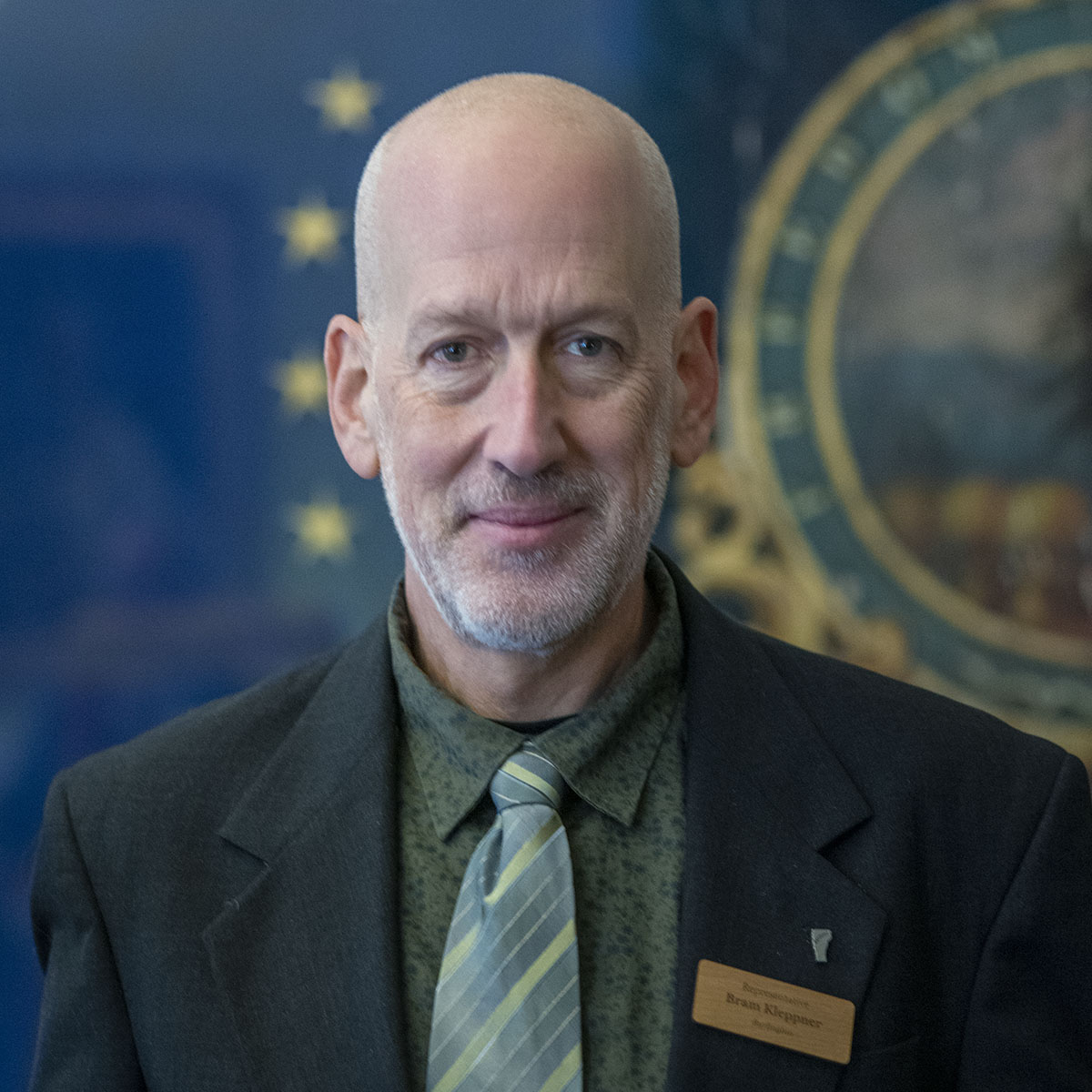
Rep. Bram Kleppner
Sponsored bills
Maddy summaryHCR 19 is a ceremonial resolution congratulating Vermonter Noah Dines on setting a new world record for vertical skiing, achieving 3,590,097 feet in one year (equivalent to 120 Mount Everest ascents). It has no policy provisions or direct impact on constituents, as it solely expresses legislative recognition of Dines' athletic achievement. The resolution was formally adopted by the Vermont General Assembly on February 7, 2025, and directs the Secretary of State to send a copy to Dines. This is purely symbolic, with no legislative action or funding attached.
Maddy summaryThis House Concurrent Resolution (HCR 29) is a ceremonial gesture congratulating Montgomery runner Elinor Purrier St. Pierre on her eighth-place finish in the women's 1500m at the 2024 Paris Olympics. It recognizes her athletic achievements, including American records and prior Olympic participation, as detailed in the resolution's "whereas" clauses. The resolution directs Vermont's Secretary of State to send a copy of the resolution to Ms. Purrier St. Pierre. As a symbolic tribute with no policy changes or direct effects, it does not alter laws or affect any constituents beyond expressing legislative recognition.
Maddy summaryThis ceremonial resolution honors the Vermont Old Cemetery Association (VOCA) for its 65+ years of preserving Vermont's historic cemeteries. VOCA provides restoration grants, veteran burial support, and educational resources (like its newsletter and book *Burial Grounds of Vermont*) to local cemetery groups and municipalities. The resolution formally recognizes VOCA's work without creating new laws, funding, or policy changes. It serves as a symbolic gesture of appreciation for the organization's contributions to cemetery preservation and public education.
Maddy summaryH 198 increases the University of Vermont Board of Trustees from 25 to 27 members by adding one voting faculty member (elected by the faculty) and one voting staff member (appointed with broad representation). It also requires that the two student trustee positions be filled by one full-time undergraduate student and one full-time graduate student, specifying their eligibility and term structure. The changes take effect on July 1, 2025, with new appointments needed by July 31, 2025. This bill directly affects the governance of the University of Vermont by expanding representation from faculty, staff, and students on the board.
Maddy summaryH.181 extends the Building Energy Code Working Group's term and directs Vermont's Public Service Department to create a framework for measuring energy savings from building code compliance. It requires the Department to develop an annual methodology for calculating and reporting greenhouse gas reductions linked to energy-efficient construction. The bill also updates the Residential Builder Registry and addresses inconsistent enforcement of energy codes across residential (up to three stories) and commercial buildings. These changes aim to improve compliance with Vermont's energy standards, which currently apply to 54% of residential and 87% of commercial projects, supporting the state's goal of "net zero ready" buildings by 2030.
Maddy summaryH 177 proposes replacing Vermont’s education property tax with a new education income tax starting in fiscal year 2027. It would tax all Vermont residents’ income (both homeowners and renters) using progressive rates based on income brackets, with rates adjusted per school district according to local education spending. The bill eliminates the homestead property tax benefit for homeowners while continuing the renter credit and updating property tax credits to provide broader relief for taxpayers by 2026. This directly affects all Vermont residents through their state income tax filings, shifting the funding mechanism for public education from property-based to income-based.
Maddy summaryH.185 proposes creating a universal primary care program in Vermont, requiring the Green Mountain Care Board to develop a system that provides all Vermonters with free access to primary care services - including mental health, substance use treatment, and preventive care - without needing insurance enrollment. Key provisions eliminate cost-sharing for primary care, reduce administrative burdens on providers and insurers, and fund the program through allocated health insurance premiums and public funds. The bill also directs the Board to separate primary care practices from hospital control and fund medical training to increase provider supply. This program, planned to launch by 2028, directly affects all Vermont residents, primary care providers, and health insurers.
Maddy summaryThis House Concurrent Resolution (HCR 12) is a non-binding ceremonial resolution expressing legislative congratulations to the University of Vermont (UVM) men's soccer team for winning their first NCAA Division I men's soccer championship (College Cup) in 2024. It formally recognizes the team's achievement, including their "Cardiac Cats" nickname and championship victory over Marshall University. The resolution directs the Secretary of State to send a copy to UVM Athletics but does not create any new policy, funding, or legal obligations. It is purely symbolic recognition of the team's athletic accomplishment.
Maddy summaryH.164 would change how Vermont distributes local option tax revenue to municipalities, increasing the share from 70% to 80% for the communities generating that revenue. It also requires that any surplus in the PILOT Special Fund (a fund for payments in lieu of taxes from state-owned properties) be distributed proportionally to the municipalities that contributed to the surplus. The bill directs the Joint Fiscal Office to prepare a report on transitioning to a system where the state retains only the minimal amount needed to administer the fund, aiming to eliminate future surpluses. This bill directly affects all Vermont municipalities receiving local option tax revenue and those contributing to the PILOT Special Fund.