

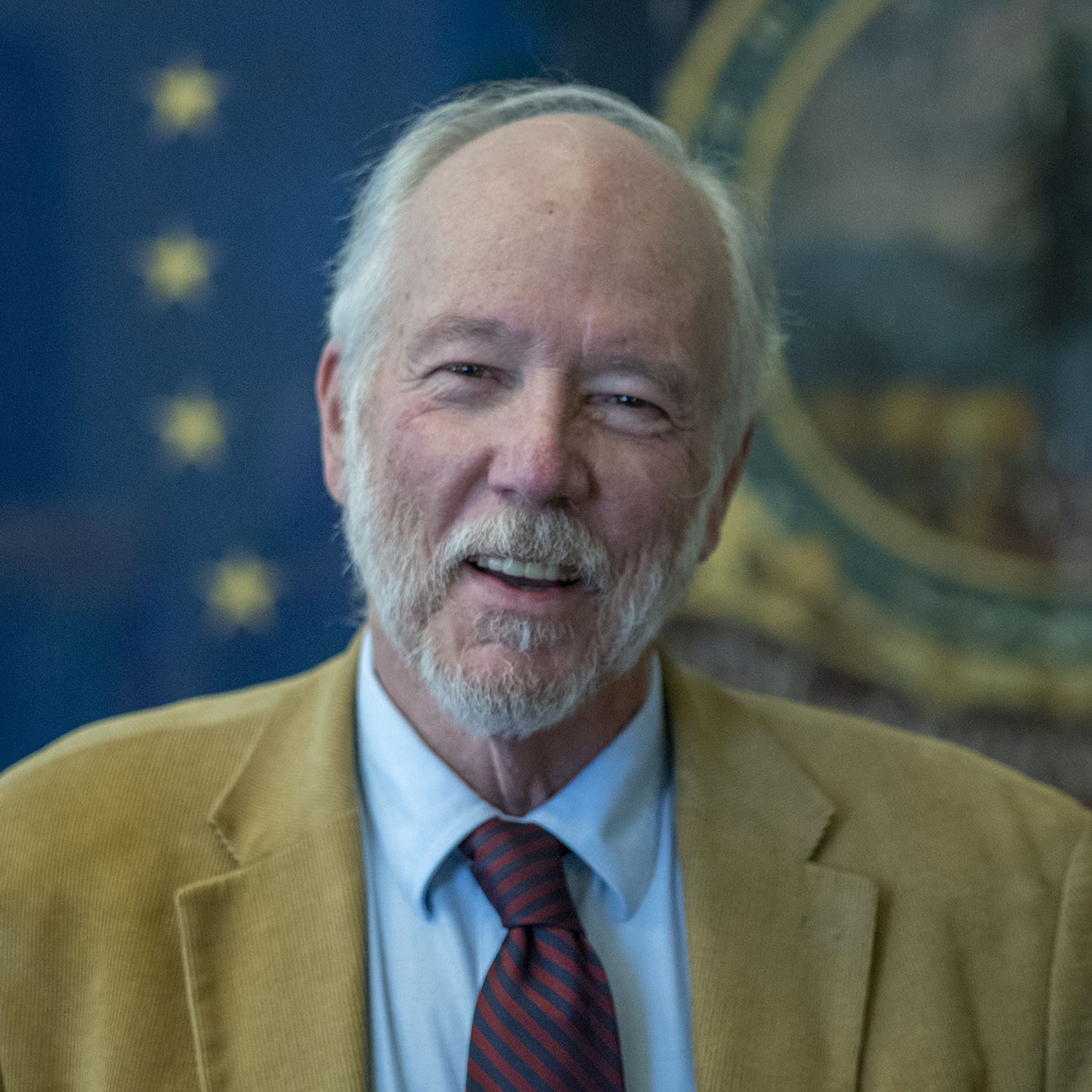
Photo of Herb Olson
D Vermont House · District Addison-4

Rep. Herb Olson

Compare
Total votes
74
all sessions
Attendance
95%
4 missed
Near the chamber average
With party
88%
of cast votes
Near the chamber average
Bipartisan score
6%
crosses aisle rarely
Near the chamber average
Sponsored
141
bills & resolutions
Higher than 93% of chamber peers
Committees
1
assignment
141 bills and resolutions

Sponsored bills

Total
141
Primary
141
Co-sponsor
0
This page
141
matching current filters
Primary H 793
Introduced · Vermont House · Lead sponsor
An act relating to removing the power of Vermont corporations to spend money on election activities

Maddy summaryH.793 removes Vermont corporations, LLCs, partnerships, and similar business entities' legal authority to spend money on election activities (like supporting candidates) or ballot-issue activities (like funding ballot measures). It amends Vermont's business corporation laws to explicitly revoke any prior broad powers that could be interpreted as allowing such spending, defining these activities clearly to prevent misuse. The bill ensures these entities can only engage in activities necessary for their lawful business, charitable, or organizational purposes - without political spending authority. It preserves natural persons' rights and political parties' activities while applying uniformly across all business entity types.

Introduced Jan 28, 2026 0 co-sponsors
Primary H 805
Introduced · Vermont House · Lead sponsor
An act relating to water resources of the State

Maddy summaryH.805 streamlines permitting for minor water-related activities in Vermont. It allows the Secretary of Natural Resources to issue general permits for stormwater discharges, wetlands work, and small wastewater/potable water systems when a licensed engineer certifies compliance with rules. The bill also creates exemptions for owner-occupied residences: applicants can avoid full permits by using engineered solutions to reduce harm or accept liability for system failures. Additionally, it requires tax valuation for forested wetlands parcels to use a lower "use value" rate instead of market value. These changes primarily affect homeowners, small developers, and property owners with water systems on wetlands.

Introduced Jan 28, 2026 0 co-sponsors
Primary H 799
Introduced · Vermont House · Lead sponsor
An act relating to the Free Degree Promise Program

Maddy summaryH.799 creates the Free Degree Promise Program to provide tuition-free associate's degrees at Vermont's Community College of Vermont (CCV) for eligible high school graduates. It directly affects Vermont students who complete CCV's Early College program (earning 20+ credits) and submit financial aid applications. The program covers tuition/fees after other aid, provides stipends for books and transportation, and includes career advising. Funding comes annually from the Vermont Education Endowment Trust Fund (5% of assets), with the Vermont Student Assistance Corporation designated as a recipient. This codifies an existing initiative to reduce student debt and expand access to postsecondary education.

Introduced Jan 28, 2026 0 co-sponsors
Primary H 803
Introduced · Vermont House · Lead sponsor
An act relating to apprenticeship programs

Maddy summaryThis bill updates Vermont's apprenticeship programs to improve diversity and accessibility. It defines "underserved communities" broadly to include racial minorities, LGBTQ+ individuals, veterans, people with disabilities, rural residents, and others facing systemic barriers. Key requirements include a 5-year strategic plan (starting 2026), annual reports tracking participation by race, gender, age, and occupation, and working groups focused on removing barriers for underrepresented groups. The changes directly affect all Vermont apprenticeship programs, sponsors, and participants, aiming to increase equitable access to skilled trades careers.

Introduced Jan 28, 2026 0 co-sponsors
Primary H 784
Introduced · Vermont House · Lead sponsor
An act relating to the regulation of chatbots

Maddy summaryThis bill requires chatbot providers operating in Vermont to protect users' data privacy and security, clearly disclose when users are interacting with an AI (not a human), and allow users to access their own chat logs. It defines key terms like "chatbot" (AI systems simulating conversation) and "affirmative consent" (clear permission, not hidden terms of use), and prohibits deceptive "dark patterns." The law applies to all chatbot providers within Vermont, directly affecting users who interact with these services. Key provisions mandate transparent data handling, user access to their input/output data, and strict rules against misleading consent practices.

Introduced Jan 27, 2026 0 co-sponsors
Primary H 776
Introduced · Vermont House · Lead sponsor
An act relating to the use of artificial intelligence in health care coverage decisions

Maddy summaryThis Vermont bill (H.776) requires health insurance companies using artificial intelligence to make coverage decisions to base those decisions on individual patient medical records - not group data - and prohibits AI from denying coverage. Final coverage decisions must be made by licensed human health care providers after reviewing patient-specific clinical information. The bill also mandates quarterly AI performance reviews, transparency about AI use in policies, and ensures tools are applied fairly across all patients with similar needs. It takes effect July 1, 2026.

Introduced Jan 27, 2026 0 co-sponsors
Primary H 783
Introduced · Vermont House · Lead sponsor
An act relating to chatbot disclosure requirements

Maddy summaryVermont's H.783 requires businesses to clearly disclose when consumers interact with a chatbot during commercial transactions, preventing reasonable confusion about speaking with a human. It directly affects companies using AI chatbots for customer service, sales, or other commercial interactions. The law mandates a "clear and conspicuous" notice before or during the conversation, defining chatbots broadly to include AI agents, avatars, and automated systems simulating human dialogue. Violations would be treated as unfair trade practices under existing consumer protection law, effective July 1, 2026.

Introduced Jan 27, 2026 0 co-sponsors
Primary H 771
Introduced · Vermont House · Lead sponsor
An act relating to exempting ambulatory surgical centers from certificate of need requirements

Maddy summaryThis bill exempts ambulatory surgical centers (outpatient facilities performing surgeries) from Vermont's certificate of need approval process. It directly affects these centers by removing a state requirement they previously needed to open or expand services. The bill amends state law to specifically exclude such centers - when licensed under Chapter 49 of Vermont law - from the certificate of need rules. This change eliminates a regulatory hurdle for these facilities without altering other healthcare facility requirements.

Introduced Jan 23, 2026 0 co-sponsors
Primary HCR 172
Passed · Vermont House · Lead sponsor
House concurrent resolution in memory of the admired Vermont folk singer and former Elmore Town Moderator Jon Gailmor

Maddy summaryHCR 172 is a commemorative resolution honoring Jon Gailmor, a Vermont folk singer and former Elmore Town Moderator who died in 2025. The resolution expresses the Vermont General Assembly’s condolences to his family and Elmore residents, recognizing his contributions as a musician who celebrated Vermont through songs like "A Town Meeting Tune" and his 15+ years serving as Elmore's town moderator. It directs the Secretary of State to send copies of the resolution to Gailmor’s family and the Elmore Town Clerk. This is a ceremonial measure with no policy impact.

Passed Jan 23, 2026 0 co-sponsors
Primary H 746
Introduced · Vermont House · Lead sponsor
An act relating to potable water supply and wastewater system permitting

Maddy summaryH.746 simplifies permitting rules for potable water and wastewater systems to support housing development in Vermont. It requires a minimum 75-foot distance between water and wastewater systems (unless site conditions require more), allows public buildings like schools to switch uses without redesign, and sets new design standards for systems under paved areas. The bill reduces required water flow rates to enable compact housing, exempts village infrastructure projects from certain permits, and removes land use taxes for water system construction on enrolled agricultural land. These changes aim to lower development costs while maintaining health and environmental protections.

Introduced Jan 22, 2026 0 co-sponsors
Showing 51 to 60 of 141 bills
Previous 1 5 6 7 15 Next