

Maddy summaryThis bill repeals key protections in the Protection of Lawful Commerce in Arms Act that shielded gun manufacturers from civil lawsuits. It allows victims of gun violence to use federal gun trace data (from the Firearms Trace System database) as evidence in civil court cases against gun sellers or manufacturers. The law makes this trace information discoverable, admissible, and usable in any civil action in state or federal courts, including the District of Columbia. This change directly affects victims seeking legal recourse and gun industry entities previously protected by the repealed law.
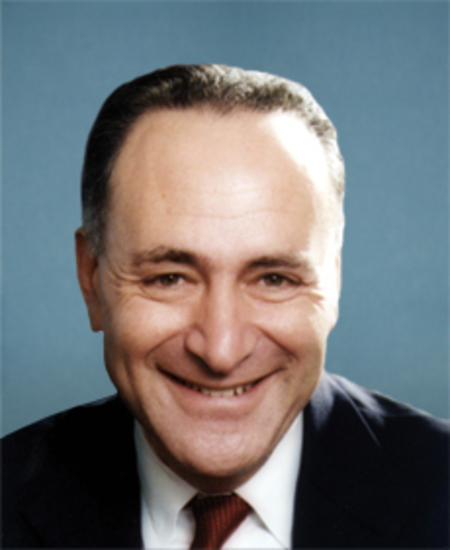
Sen. Charles E. Schumer
Sponsored bills
Maddy summaryThe SEPSIS Act establishes a dedicated sepsis program within the Centers for Disease Control and Prevention (CDC) to improve prevention, detection, and treatment of sepsis in hospitals. It requires hospitals to adopt evidence-based sepsis protocols (like the Hospital Sepsis Program Core Elements), report on their implementation, and supports pediatric sepsis data collection. The bill authorizes $20 million annually from 2026-2030 to fund CDC efforts, including annual reports to Congress on hospital adoption rates, pediatric sepsis reduction, and a voluntary "honor roll" program recognizing top-performing hospitals. This directly affects hospitals through reporting requirements and CDC through new program responsibilities.
Maddy summaryThis resolution (SRES 255) is a ceremonial Senate measure honoring former U.S. Senator Christopher "Kit" Bond of Missouri, who died on May 13, 2025. It recognizes his 40+ years of public service, including his roles as Missouri Governor (1973-1977, 1981-1985) and U.S. Senator (1987-2011). The resolution directs the Senate to adjourn briefly as a mark of respect and transmit a copy to his family. It has no policy impact or direct effect on constituents, as it is purely commemorative.
Maddy summaryThis resolution recognizes May as Jewish American Heritage Month to celebrate Jewish Americans' contributions to U.S. society, culture, and history. It calls on elected officials, civil society leaders, and educational institutions to condemn antisemitism, educate the public about Jewish heritage, and ensure the safety of Jewish communities. The resolution cites rising antisemitic incidents - documented by the ADL as a 344% increase over five years - and emphasizes countering hate through awareness and inclusion. It does not create new laws but urges proactive measures to protect Jewish Americans, particularly following the post-October 7, 2023, surge in antisemitism.
Maddy summaryThis bill expands workplace safety protections under the Occupational Safety and Health Act to cover public employees, including those working for federal, state, or local government agencies. It amends the law to explicitly include "the United States, a State, or a political subdivision of a State" in the definition of covered workers, removing previous exclusions. The key provision requires all public workplaces to follow OSHA safety standards, with a 36-month transition period for states or localities without their own OSHA-approved plans. This directly affects government workers like teachers, police, and sanitation staff who were previously excluded from federal OSHA coverage.
Maddy summaryThis bill restructures the United States Marshals Service by moving it from the Department of Justice to the judicial branch. It establishes the Director of the Marshals Service as appointed by the Chief Justice (with Board consultation), replaces the Attorney General's authority with the Chief Justice for marshal appointments, and clarifies the Service's duties. Key provisions include authorizing the Service to provide personal protection for federal jurists and witnesses under specific conditions (Section 565(e)), assisting with fugitive investigations and sex offender matters at the Attorney General's request, and requiring Board oversight. The bill primarily affects the internal governance and operational scope of the Marshals Service, not creating new law enforcement powers.
Maddy summaryS 1593, the Small Business Liberation Act, exempts small business concerns from import duties imposed under Executive Order 14257 (related to national emergencies). This applies to goods imported by or for small businesses defined by the Small Business Act (15 U.S.C. 632). The bill directly affects small businesses importing goods during declared national emergencies by removing a specific tariff burden. It provides a concrete policy change by excluding qualifying small businesses from duties that would otherwise apply to their imports under the emergency order. The exemption is limited to duties from this specific executive order, not broader tariff policies.
Maddy summarySRES 237 is a ceremonial Senate resolution honoring Army Staff Sgt. Jose Dueñez Jr., Staff Sgt. Edvin Franco, Staff Sgt. Troy Knutson-Collins, and Pfc. Dante Taitano, who died during a vehicle recovery mission in Lithuania while supporting a NATO training exercise. The resolution expresses the Senate’s gratitude for their service, acknowledges the multinational recovery effort involving U.S., Lithuanian, Polish, and Estonian personnel, and reaffirms commitment to NATO deterrence in the Baltic region. It has no policy impact - it solely commemorates the soldiers’ sacrifice and their role in a U.S.-led NATO mission.
Maddy summaryThis bill prohibits using Department of Defense funds for fiscal years 2025-2026 to buy, modify, restore, or maintain aircraft previously owned by foreign governments or their entities for presidential airlift. It directly affects the Pentagon's budget planning for presidential transportation security by banning foreign-owned aircraft from being used for this purpose. The key provision blocks funding for any aircraft that was previously controlled by a foreign government, ensuring presidential airlift options remain domestically sourced. This is a concrete policy change to restrict foreign involvement in high-level presidential travel security.
Maddy summaryThis resolution (SRES 195) directs the U.S. Secretary of State to submit a detailed report to Congress within 30 days on El Salvador’s human rights practices. The report must include verified information about alleged violations such as torture, forced disappearances, judicial independence concerns, and the treatment of foreign nationals detained in El Salvador. It also requires assessments of whether U.S. security assistance could be misused and actions taken to protect U.S. citizens detained there. The resolution specifically requests this information under Section 502B(c) of the Foreign Assistance Act, which governs human rights conditions for foreign aid. The report will inform Congress’s oversight of U.S. policy toward El Salvador.