

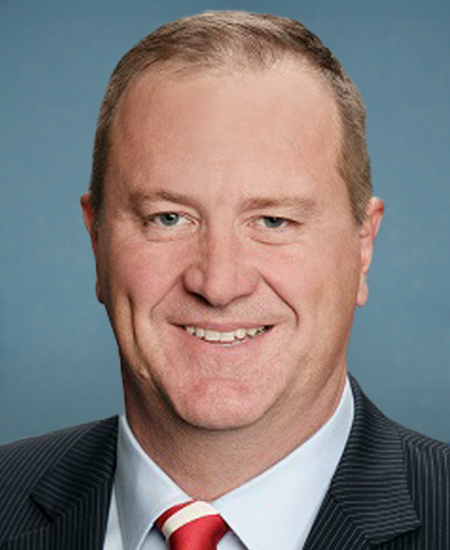
Maddy summaryThis resolution (SRES 630) expresses the U.S. Senate's condolences to the families of two Missouri police officers - Deputy Gabriel Ramirez and Deputy Michael Hislope - who died in the line of duty on February 23, 2026, during a shooting in Christian County. It recognizes the daily sacrifices of all law enforcement officers, condemns violence against them, and affirms support for officers nationwide who protect communities. The resolution serves as a symbolic gesture of honor and remembrance, with no new laws or funding attached. It directly affects the families of the fallen officers and aims to publicly acknowledge the broader law enforcement community's service.
Sponsored bills
Maddy summaryThis bill, titled the Taiwan and American Space Assistance Act of 2026, authorizes expanded cooperation between U.S. federal agencies and Taiwan in civilian space activities. It directs the National Aeronautics and Space Administration and the National Oceanic and Atmospheric Administration to work with Taiwan on satellite programs, space exploration, weather monitoring, personnel exchanges, and commercial space technology. The legislation requires these agencies to coordinate with the State Department and protect sensitive U.S. information and economic interests while pursuing mutually beneficial initiatives. Officials must submit annual reports to Congress for five years detailing the cooperation efforts and any challenges encountered.
NASA Transition Authorization Act of 2025 This bill reauthorizes through FY2025 the programs and activities of the National Aeronautics and Space Administration (NASA). The bill also revises certain existing NASA programs and establishes new programs related to space exploration, research, and technology. For example, the bill directs NASA to continue its efforts to support crewed lunar landings and Mars explorations, including through partnerships with the private sector (i.e., the Moon to Mars and Artemis programs). The bill also requires NASA to maintain the capability for a continuous human presence in low-Earth orbit until and beyond the retirement of the International Space Station (ISS). NASA may solicit proposals for the development of a commercial space station in low-Earth orbit. When such a station is ready, NASA must initiate an orderly transition of operations from the ISS to the commercial station. NASA must also develop a de-orbit vehicle for the eventual retirement of the ISS. ( Low-Earth orbit encompasses orbits at an altitude of 1,200 miles or less.) In addition, NASA is authorized to develop an architecture for lunar communications and navigation, and must develop a strategy to implement a standardized lunar time to support operations and infrastructure on and around the moon. NASA must also continue to conduct research relating to advanced air mobility, unmanned aircraft systems (i.e., drones), and hypersonic technologies. Finally, the bill requires the Government Accountability Office to report on fire and emergency services at NASA launch and reentry facilities.
Maddy summaryS 3917, "The Dalilah Law," prohibits states from issuing or renewing commercial driver's licenses (CDLs) to individuals who are not U.S. citizens, lawful permanent residents, or certain nonimmigrant visa holders (like H-2B workers). It requires all current CDL holders to recertify within 180 days of enactment, verifying citizenship/residency status, English proficiency, and passing English-language tests. States that fail to enforce these requirements face withholding of federal transportation funding. The law directly affects commercial drivers and state licensing agencies, with specific rules for visa holders and English language requirements for CDL operations.
Maddy summaryThis bill, titled the Railway Safety Act of 2026, establishes new safety requirements for trains carrying hazardous materials and strengthens emergency response capabilities. It directly affects Class I railroads, emergency response agencies, and communities near rail lines by mandating stricter tank car standards, limiting train speeds in urban areas, and requiring railroads to provide real-time information about hazardous materials shipments to first responders. Key provisions include phasing out older tank cars for flammable liquids by 2027, requiring two-person crews on freight trains, increasing penalties for safety violations, and creating a new emergency response assistance fund to help communities respond to hazardous materials incidents.
Rotorcraft Operations Transparency and Oversight Reform Act or the ROTOR Act This bill addresses aviation safety by increasing requirements for aircraft tracking and communication using Automatic Dependent Surveillance-Broadcast (ADS-B) technology and expanding oversight. As background, ADS-B for broadcasting (Out) and receiving (In) transmits information (e.g., location and weather information) between aircraft and air traffic control. Under the bill, aircraft must generally operate with ADS-B In equipment to provide the aircraft with location information of other aircraft and traffic advisories. Current law does not require this equipment. Current Federal Aviation Administration (FAA) regulations allow aircraft performing a sensitive government mission to be excepted from requirements for using ADS-B Out equipment. This bill limits which flights may be considered sensitive government missions (e.g., not training flights) and requires additional reporting and notifications for the exception. The Government Accountability Office must review the use of the ADS-B Out exception and the Office of the Inspector General (OIG) of the Department of Transportation must annually audit FAA oversight of operations that use the exception. Further, the bill repeals a 2025 law that exempts certain military helicopters from the ADS-B Out requirements for the Washington, DC, metropolitan area. The bill also requires the OIG of the Army to audit the Army’s coordination with the FAA, the FAA to establish an office to coordinate airspace usage of military aircraft and review the safety of flight operations and routes around airports, and the FAA to enter into memoranda of understanding with military agencies for safety information sharing.
Maddy summaryThe SAT Streamlining Act establishes new processing timelines for the Federal Communications Commission (FCC) to review satellite and telecommunications licenses and market access applications. It sets specific deadlines for the FCC to act (e.g., 1 year for license applications, 90 days for minor modifications) and creates a "deemed granted" provision if deadlines are missed. The bill also includes provisions for emergency grants during national security or safety concerns, requires national security reviews for certain foreign-owned entities, and prohibits state and local governments from regulating rates for satellite services. This legislation directly affects satellite operators, telecommunications companies, and the FCC, aiming to streamline processes while maintaining national security oversight.
Maddy summaryThe Protect America Act (S 3790) primarily requires jurisdictions receiving certain federal funds to certify they do not maintain "sanctuary policies" that obstruct immigration enforcement cooperation. It creates a process for identifying noncompliant jurisdictions, recovering funds, and establishing civil liability for harm resulting from policies that obstruct immigration enforcement. The bill also increases penalties for illegal entry and reentry, enhances protections for federal officers, and restricts tax-exempt status for nonprofits promoting criminal violence. This legislation directly affects state and local governments, detention facilities, and educational institutions receiving federal funding, with significant implications for immigration enforcement coordination.
Maddy summarySJRES 102 is a congressional resolution disapproving the District of Columbia Council's approval of the D.C. Income and Franchise Tax Conformity and Revision Temporary Amendment Act of 2025 (D.C. Act A26-0217). This resolution, introduced by Senator Scott on January 27, 2026, aims to block the D.C. tax law from taking effect by invoking Congress's disapproval authority under the District of Columbia Home Rule Act. The bill directly affects D.C. residents and businesses subject to the income and franchise tax provisions in the disapproved law. If passed, it would prevent the D.C. tax code changes from becoming effective.
Maddy summarySRES 594 is a non-binding Senate resolution supporting Catholic schools and celebrating the 52nd annual National Catholic Schools Week (January 25-31, 2026). It recognizes Catholic schools’ contributions by highlighting their academic excellence, diverse student enrollment (including 34.9% racial minorities and 21.8% non-Catholic students), and high graduation rates (98.6%). The resolution formally applauds the National Catholic Educational Association and U.S. Conference of Catholic Bishops for organizing the week and its theme, "Catholic Schools: United in Faith and Community." It does not create new policies or allocate funds, serving solely as a symbolic expression of support for these schools.