Issue · Criminal Justice

Criminal Justice

Every criminal justice bill, vote, and legislator stance in Vermont, automatically classified by Maddy, our AI policy reader.

Total bills
119
2025-2026 Regular Session
Top supporter
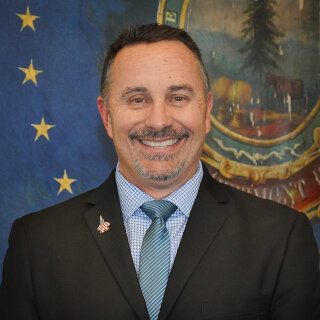
Jed Lipsky
100% support rate
Top opponent
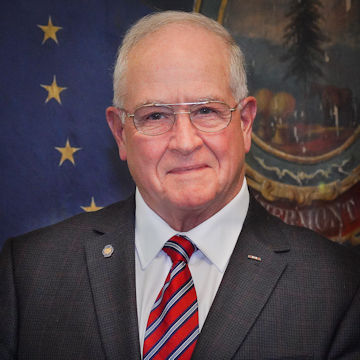
Tom Oliver
17% support rate
Ranked legislators
10
5 support · 5 oppose
Key legislators

Who's moving criminal justice in Vermont

Legislators moving criminal justice in Vermont
Legislator Party Stance Support rate Votes
Jed Lipsky
Jed Lipsky House · District Lamoille-1
I
Strong +
100% 14
Ashley Bartley
Ashley Bartley House · District Franklin-1
R
Strong +
100% 15
Tony Micklus
Tony Micklus House · District Chittenden-Franklin
R
Strong +
89% 15
Leland Morgan
Leland Morgan House · District Grand Isle-Chittenden
R
Strong +
89% 16
Mike Morgan
Mike Morgan House · District Grand Isle-Chittenden
R
Strong +
88% 15
Tom Oliver
Tom Oliver House · District Franklin-4
R
Strong −
17% 13
Russ Ingalls
Russ Ingalls Senate · District Essex
R
Oppose
22% 13
Terry Williams
Terry Williams Senate · District Rutland
R
Oppose
22% 13
Steven Heffernan
Steven Heffernan Senate · District Addison
R
Oppose
22% 12
Zak Harvey
Zak Harvey House · District Rutland-3
R
Oppose
29% 14
Showing 91–100 of 119 bills

All criminal justice bills

introduced · Vermont · House Mar 20, 2025

H 490: An act relating to incentivizing community service sentencing in certain cases

H 490 would reduce the required community service hours for individuals convicted of a second impaired driving offense under Vermont law. It specifically targets people sentenced for a second offense under 23 V.S.A. § 1210(c), aiming to make community service a more appealing sentencing option compared to jail time. The bill cites Vermont’s Restorative Justice Policy (28 V.S.A. § 2a) as justification, arguing aligning the hours encourages community service use. It also references Department of Corrections data to measure potential impacts on incarceration rates, though the bill itself only changes the sentencing requirement.
Sub-Topics Corrections Sentencing
introduced · Vermont · House Apr 1, 2025

H 498: An act relating to prohibiting municipal regulation of homelessness and supporting municipal programs to address homelessness

This bill prohibits Vermont municipalities from passing laws that criminalize basic activities like sleeping, camping, or resting on public property for unhoused individuals. It creates state-funded grants to support municipal programs offering housing assistance, mental health care, job training, and temporary shelter in designated "humanitarian zones" with access to sanitation and water. Municipalities must report annually on homelessness progress and include homelessness strategies in local planning. The bill also requires the state to expand low-barrier housing programs and establish a task force to oversee implementation.
introduced · Vermont · House Feb 12, 2025

H 192: An act relating to prohibiting solitary confinement for children

H.192 prohibits the use of solitary or room confinement for children in secure facilities (like detention centers) except as a temporary measure when a child poses an immediate risk of physical harm to themselves or others. The bill requires staff to first attempt de-escalation techniques, such as talking with the child or involving a mental health professional, before confinement. It limits confinement time to a maximum of 30 minutes for self-harm risks or 3 hours for risks to others, mandates 15-minute check-ins, and requires release when the risk subsides. The law takes effect July 1, 2025, and excludes regular sleeping hours and single-occupancy rooms not used for confinement.
introduced · Vermont · House Feb 26, 2025

H 379: An act relating to second look sentencing

H 379 creates a "second look" sentencing process in Vermont for incarcerated individuals serving 15+ years. It allows people who have served at least 15 years to petition their original sentencing court for a sentence reduction, directly affecting those currently serving long sentences (including life sentences or 50+ year terms). Key mechanisms include mandatory notice to the court, prosecutor, and public defender after 15 years of incarceration, a structured petition process with required documentation, and expedited hearings for those with serious health conditions or who are 60+ years old after 25 years served. The bill aims to reduce Vermont's high rate of life-sentence inmates (20% of the incarcerated population) and lower annual incarceration costs ($134,218 per person).
signed · Vermont · Senate Jun 13, 2025

S 12: An act relating to sealing criminal history records

This bill (S.12) creates a new process for Vermont residents to have certain criminal records sealed from public view. It allows sealing of most misdemeanor offenses and specific non-violent felonies (like certain drug possession or property crimes), provided the offense isn't excluded. Excluded offenses include sex crimes, domestic violence, violations of protection orders, and some drug offenses involving large quantities. Once sealed, these records are no longer accessible to most employers, landlords, or licensing boards, helping individuals with qualifying histories access housing, jobs, and education opportunities. The bill was enacted into law after receiving final approval from the governor on June 12, 2025.
signed · Vermont · House Jun 9, 2025

H 105: An act relating to expanding the Youth Substance Awareness Safety Program

H 105 expands Vermont's Youth Substance Awareness Safety Program to address underage alcohol and cannabis offenses for individuals aged 16 to 21. The bill requires first-time offenders to complete this program instead of facing immediate fines or license suspensions for violations like possessing alcohol, consuming cannabis, or driving with a blood alcohol concentration of 0.02% or higher. Successful program completion avoids penalties, while failure results in civil fines ($300 for first offense) and license suspensions (30 days for first offense, 180 days for impaired driving). The program is administered by the Department of Health’s Division of Substance Use Programs and focuses on treatment needs rather than criminal penalties.
Sub-Topics Drug Policy
introduced · Vermont · Senate Feb 27, 2025

S 94: An act relating to the duty of the Attorney General to enforce certain criminal offenses

This bill designates Vermont's Attorney General as the primary enforcement authority for specific criminal cases, directly affecting how these cases are handled by state prosecutors. It requires the Attorney General to lead prosecutions in 13 defined categories, including cases involving law enforcement excessive force, crimes by elected officials, multi-county offenses, human trafficking, public assistance fraud, and certain wildlife violations. State's Attorneys may still handle these cases if they stipulate with the Attorney General, but without such agreement, the Attorney General takes primary responsibility. The changes will take effect on September 1, 2025.
introduced · Vermont · House Jan 9, 2025

H 25: An act relating to imposing Impaired Driver Rehabilitation Program fees based on a person’s ability to pay

H 25 amends Vermont law to replace fixed fees for the Impaired Driver Rehabilitation Program with an income-based fee structure. It requires the Department of Health to set fees based on an individual’s gross income relative to the federal poverty level: people earning 175% or less of the federal poverty level pay no fees, while those earning up to 575% qualify for discounted fees. Participants must disclose income confidentially for fee assessment, and collected fees will fund the program’s operations. The changes take effect July 1, 2025, with implementing rules due by January 1, 2026.
introduced · Vermont · House Feb 14, 2025

H 221: An act relating to the Firearm Surrender Order Compliance Working Group

H 221 creates a temporary working group to develop a uniform process for ensuring compliance with court orders requiring individuals to surrender firearms, primarily affecting domestic violence victims and safety systems. The group, composed of officials from law enforcement, courts, domestic violence advocates, and firearm storage entities, will study current challenges and recommend legislative or policy changes by November 2025. It will focus on creating statewide accountability for firearm surrender orders in both family and criminal courts, assessing resource needs for courts and law enforcement, and consulting with existing domestic violence programs. The working group will disband on January 15, 2026, after submitting its recommendations to the legislature.
introduced · Vermont · House Feb 19, 2025

H 264: An act relating to safe storage of firearms

H 264 requires Vermont firearm owners to store guns securely - locked and separate from ammunition - when children or prohibited persons (e.g., those banned by law from owning guns) might access them. It directly affects all gun owners in homes or premises under their control. Key provisions include fines up to $1,000 or jail time for negligence leading to a crime, and up to $5,000 or five years in jail if access causes death or serious injury. Dealers must post mandatory safety signs about risks like accidental child access or suicide. The law takes effect upon passage.
Sub-Topics Corrections Firearms
Showing 91 to 100 of 119 bills
Previous 1 9 10 11 12 Next