

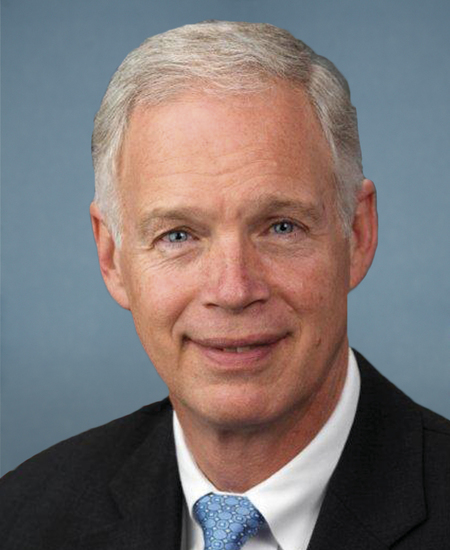
Photo of Ron Johnson
R United States Senate · Wisconsin

Sen. Ron Johnson

Compare
Total votes
1,037
all sessions
Attendance
99%
9 missed
Near the chamber average
With party
92%
of cast votes
Lower than 77% of chamber peers
Bipartisan score
5%
crosses aisle rarely
Near the chamber average
Sponsored
391
bills & resolutions
Lower than 96% of chamber peers
Committees
9
assignments
391 bills and resolutions

Sponsored bills

Total
391
Primary
54
Co-sponsor
337
This page
391
matching current filters
Co-sponsor S 184
Introduced · Utah Senate · Co-sponsor
Regulations from the Executive in Need of Scrutiny Act of 2023

Maddy summaryThe Regulations from the Executive in Need of Scrutiny Act of 2023 would require Congress to approve most major federal regulations before they take effect. Major rules, defined as those with significant economic impact (estimated at $100 million or more annually), would need a joint resolution of approval from both chambers within 70 days. Agencies would be required to submit detailed reports to Congress before rules take effect, including cost-benefit analyses, economic effects, and other relevant information. This would increase congressional oversight of the regulatory process, though it includes exceptions for national security, emergencies, and monetary policy rules.

Introduced Feb 1, 2023 1 co-sponsor
Co-sponsor S 197
In committee · Utah Senate · Co-sponsor
American Values Act

Maddy summaryThis bill permanently prohibits U.S. federal funds from being used for abortions or involuntary sterilizations in foreign aid programs and the Peace Corps. It amends the Foreign Assistance Act to ban funding for abortions as family planning, involuntary sterilizations, related biomedical research, abortion lobbying, or organizations supporting coercive programs. The Peace Corps Act is similarly amended to prevent using Peace Corps funds for abortions. These changes apply to all programs funded under these laws, directly affecting U.S. international aid recipients and Peace Corps operations. The policy change makes existing restrictions permanent, removing the need for annual congressional action to maintain them.

In committee Jan 31, 2023 1 co-sponsor
Co-sponsor S 135
In committee · Utah Senate · Co-sponsor
Prevent Government Shutdowns Act of 2023

Maddy summaryThis bill would prevent government shutdowns by automatically continuing funding for most federal programs at the previous fiscal year's level if Congress fails to pass a full budget by the start of the new fiscal year. The automatic funding would continue in 14-day increments until a budget is enacted, with the government returning to normal funding levels once a budget is passed. During these automatic funding periods, government employees (including congressional staff) would face restrictions on travel, with limited exceptions for returning to Washington, D.C. or responding to national security events. The bill also establishes specific procedures for Congress to prioritize budget negotiations during these periods. This would affect the entire federal government and its operations during budget stalemates.

In committee Jan 30, 2023 1 co-sponsor
Co-sponsor S 123
Introduced · Utah Senate · Co-sponsor
BAD IRS Activities Act

Maddy summaryThis bill (S 123) modifies IRS reporting requirements for third-party payment networks. It sets new thresholds requiring reporting only for transactions exceeding $20,000 in total value or 200 individual transactions, reducing reporting burdens for smaller payments. The bill directly affects payment processors (like PayPal or credit card companies) that handle transactions for businesses. Additionally, it rescinds unobligated IRS enforcement and operations funds from prior legislation, effective upon enactment. The key policy change simplifies reporting obligations for lower-volume transactions while reducing specific IRS funding.

Introduced Jan 30, 2023 1 co-sponsor
Co-sponsor S 105
In committee · Utah Senate · Co-sponsor
Children Have Opportunities in Classrooms Everywhere Act

Maddy summaryThis bill would change how federal education funds are distributed by allowing funds to follow students to the schools they attend, rather than being tied to school districts. It provides financial support to low-income students (from households with income ≤130% of poverty level) who attend public, private, or home schools. The bill establishes two types of funding: a "concentration distribution" based on school district poverty rates (ranging from $50-$300) and a "basic distribution" based on family income. Funds would be distributed to the student's school or deposited into their 529 education savings account, with privacy protections for collected data.

In committee Jan 26, 2023 1 co-sponsor
Co-sponsor S 110
In committee · Utah Senate · Co-sponsor
A PLUS Act

Maddy summaryThe A PLUS Act (S 110) allows states to consolidate federal education funds under a "declaration of intent," giving them flexibility to manage programs like Title I under the Elementary and Secondary Education Act (ESEA) while reducing administrative burdens. States must submit a declaration outlining eligible programs, commit to using funds to supplement state funding (not replace it), and report annually on student progress to parents and taxpayers. Key provisions include limiting administrative costs to 1% of consolidated funds (or 3% if excluding Title I), requiring accountability for disadvantaged students, and prohibiting consolidation of Individuals with Disabilities Education Act (IDEA) funds. The bill directly affects states, local school districts, and parents through streamlined fund use and transparency requirements.

In committee Jan 26, 2023 1 co-sponsor
Co-sponsor S 82
Introduced · Utah Senate · Co-sponsor
Full Faith and Credit Act

Maddy summaryThis bill requires the U.S. government to prioritize payments for Social Security benefits, military pay, veterans' benefits, Medicare, and debt held by the public if the national debt reaches its legal limit. It mandates that the Treasury automatically increase the debt ceiling by the amount needed to cover these priority payments during any two-week period where revenue would otherwise fall short. The law directly affects Social Security recipients, active-duty military personnel, veterans, Medicare beneficiaries, and holders of U.S. Treasury debt. Key provisions include automatic debt limit adjustments based on revenue projections and holding excess funds for future payment periods. The bill aims to prevent default on these critical obligations without requiring new congressional action during debt limit crises.

Introduced Jan 26, 2023 1 co-sponsor
Co-sponsor S 62
In committee · Utah Senate · Co-sponsor
No Taxpayer Funding for Abortion and Abortion Insurance Full Disclosure Act of 2023

Maddy summaryThis bill prohibits federal funds from covering abortions in most circumstances, including health benefits plans, with exceptions for cases of rape, incest, or when a pregnancy endangers a woman's life. It specifically bars the use of Affordable Care Act (ACA) premium tax credits and cost-sharing reductions for health plans that cover abortion, requiring insurers to disclose abortion coverage details separately in marketing materials. The law applies to all federal health programs and ACA marketplace plans, ensuring taxpayer dollars aren't used for abortion services or coverage. It does not affect private insurance plans purchased with non-federal funds or separate abortion coverage options.

In committee Jan 25, 2023 1 co-sponsor
Primary S 69
In committee · Utah Senate · Lead sponsor
SOAR Permanent Authorization Act

Maddy summaryThe SOAR Permanent Authorization Act permanently authorizes annual funding of $75 million for the District of Columbia's Opportunity Scholarship Program, replacing previous funding levels. It requires participating schools to be fully accredited by a DC-recognized body or meet specific U.S. immigration program standards. The bill updates evaluation requirements to focus on student academic progress (not just achievement), compares scholarship program outcomes to public school peers, and prioritizes tutoring for students from lowest-performing schools when funds are limited. This directly affects D.C. students eligible for opportunity scholarships and the organizations administering the program.

In committee Jan 25, 2023 0 co-sponsors
Co-sponsor S 57
In committee · Utah Senate · Co-sponsor
Student Empowerment Act

Maddy summaryThe Student Empowerment Act (S 57) expands the use of 529 college savings plans to cover more elementary and secondary school expenses. It allows families to use these tax-advantaged accounts for tuition, curriculum materials, books, online resources, tutoring by licensed instructors, standardized test fees, dual enrollment courses, and licensed therapies for students with disabilities. This applies to students in public, private, religious, and homeschool settings, directly benefiting parents and students using 529 plans for K-12 education. The amendment takes effect for distributions made after the bill's enactment date.

In committee Jan 24, 2023 1 co-sponsor
Showing 211 to 220 of 391 bills
Previous 1 21 22 23 40 Next